Many communication problems do not start because people have completely different opinions. They often begin with small misunderstandings that are left unresolved. A comment that was meant to be helpful may sound critical. A question intended to show concern may be interpreted as judgment. Before people realize it, a simple conversation can turn into an argument.
The challenge is that communication involves more than choosing the right words. Emotions, timing, tone, and personal experiences all influence how messages are received. Even when people have good intentions, unclear communication can create unnecessary tension.
Learning how to communicate clearly is not about avoiding every disagreement. Differences are a natural part of relationships. The goal is to express thoughts and feelings in a way that encourages understanding instead of creating defensiveness.
Why Clear Communication Is Often Difficult
Many people assume that if they know what they mean, others will understand them. However, communication does not work that way.
Everyone interprets conversations through their own experiences, expectations, and emotional state. The same sentence can create completely different reactions depending on the person hearing it.
For example, someone may say, “You never listen to me,” because they feel ignored. However, the other person may only hear criticism and immediately become defensive. The original need behind the statement gets lost because the conversation focuses on the accusation instead.
Clear communication requires more awareness of both the message and the emotional meaning behind it.
Focus on Expressing Needs Instead of Blame
One of the biggest reasons conversations become conflicts is that people express frustration before explaining what they actually need.
Statements that begin with blame often make others feel attacked. When people feel criticized, they are more likely to defend themselves instead of listening.
A more effective approach is to explain the situation, describe your feelings, and communicate what you hope to achieve.
Instead of saying:
“You never care about what I say.”
A clearer approach may be:
“I feel disconnected when we do not talk about important things. I would like us to spend more time understanding each other.”
The difference is not only in the words. It changes the direction of the entire conversation.
Listen Before Preparing Your Response
Many communication problems happen because people listen only to respond.
During disagreements, it is common for people to focus on preparing their next argument rather than understanding the other person’s perspective. This often creates a cycle where both sides feel unheard.
Active listening requires paying attention to the meaning behind someone’s words. It means asking questions, acknowledging emotions, and making an effort to understand before sharing your own opinion.
Being heard does not always mean someone agrees with you. It means the other person recognizes that your perspective matters.
Manage Emotions Before Continuing Difficult Conversations
Strong emotions can make communication much harder.
When people feel angry, frustrated, or hurt, they may say things they do not truly mean or communicate in ways that damage trust. Taking a moment to calm down can create space for a more productive conversation.
This does not mean avoiding difficult discussions. Avoiding important conversations often creates bigger problems later.
The goal is to approach challenging topics with enough emotional awareness that both people can participate in finding a solution.
How Say It Right Every Time by Miles Carter Helps Improve Communication
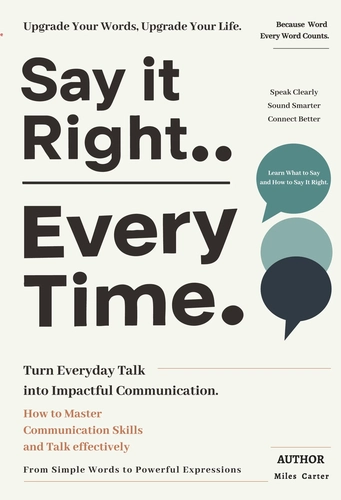
Many people know they should communicate better, but they are unsure where to begin. They may understand the importance of listening and honesty, yet still struggle when emotions appear or conversations become complicated.
Say It Right Every Time by Miles Carter focuses on the practical side of communication: how people express themselves, how messages are understood, and how everyday conversations can become more effective.
The book explores why misunderstandings happen and how small changes in communication habits can improve relationships. Rather than focusing only on speaking techniques, it encourages readers to think about the connection between thoughts, emotions, and the words they choose.
One of the most valuable ideas behind the book is that communication is not just about delivering information. It is about creating understanding between people.
For readers who often feel misunderstood, struggle with difficult conversations, or want to improve their relationships, Say It Right Every Time provides practical guidance for becoming a more thoughtful communicator.
Simple Habits That Make Conversations Better
Improving communication does not require completely changing the way you interact with others. Small adjustments can create meaningful improvements over time.
Pause Before Responding
Taking a moment before answering can prevent emotional reactions and create more thoughtful conversations.
Be Specific About What You Mean
Clear communication becomes easier when people explain their thoughts and needs directly instead of expecting others to guess.
Pay Attention to How Your Words Are Received
Good communication requires awareness of both intention and impact. Even positive intentions can create problems if the message is unclear.
Final Thoughts
Clear communication is not about winning conversations or proving that your perspective is correct. It is about creating a space where people can understand each other, even when they have different opinions.
The ability to express yourself calmly, listen carefully, and respond with awareness can improve relationships in every area of life.
For anyone who wants to communicate more effectively and reduce unnecessary misunderstandings, Say It Right Every Time by Miles Carter offers valuable insights into building stronger communication habits and creating more meaningful conversations.