Communication problems can happen even when people have good intentions. You may know exactly what you want to say but struggle to explain it clearly, or you may believe your message is obvious while the other person understands it differently.
These moments happen in friendships, families, romantic relationships, and workplaces. A conversation can become frustrating when one person feels misunderstood, another feels ignored, or both sides react to what they think the other person meant rather than what was actually said.
Learning how to communicate with others effectively is therefore about more than speaking clearly. It also involves listening, understanding context, expressing emotions appropriately, and becoming aware of the way your communication affects other people.
Start by Knowing What You Actually Want to Say
Clear communication begins before the words leave your mouth. When thoughts are disorganized, emotional, or unclear even to yourself, it becomes much harder for another person to understand your message.
Before an important conversation, take a moment to identify your main point. Knowing whether you want to explain something, ask for help, express a concern, or resolve a disagreement can make your communication much more focused.
Say What You Mean Without Making the Other Person Guess
People sometimes expect others to understand what they mean without enough explanation. This can create unnecessary frustration because different people naturally interpret situations in different ways.
Instead of relying on hints or assumptions, communicate your main idea directly. Clear expression does not require sounding formal or complicated. In many situations, simple and specific language is more effective than saying a lot without explaining the point.
Listen Before Preparing Your Response
Communication is not a one-way process. Even when you are confident about what you want to say, listening carefully can help you understand the other person’s actual meaning.
Try to hear the complete message before immediately preparing your reply. Pay attention to the words being used, the context around them, and the emotion behind what is being said.
This can prevent conversations from becoming two people speaking at each other rather than genuinely communicating.
Be Careful With Assumptions
A large number of misunderstandings begin with assumptions. You may assume someone is angry because of their tone, assume they understood your intention, or assume you already know what they are going to say.
Instead of filling in the missing information yourself, ask a question. Clarifying what another person means can often prevent a small misunderstanding from becoming a larger conflict.
Pay Attention to How Your Message Is Received
Effective communication does not end when you finish speaking. The other person’s response can tell you whether your message was understood in the way you intended.
If someone looks confused, reacts unexpectedly, or asks you to explain something again, that is an opportunity to clarify rather than becoming defensive. Being willing to adjust your explanation is part of communicating effectively.
Practice Saying Difficult Things With More Awareness
Some of the most important conversations are also the easiest to mishandle. When emotions are strong, people can speak too quickly, become defensive, or say something harsher than they intended.
One useful habit is to slow down before responding. Give yourself enough time to understand what you are feeling and what you actually want the conversation to accomplish.
Say It Right Every Time by Miles Carter focuses on precisely this kind of everyday communication awareness. The book encourages readers to become more intentional about how they express themselves and consider how their words influence conversations.
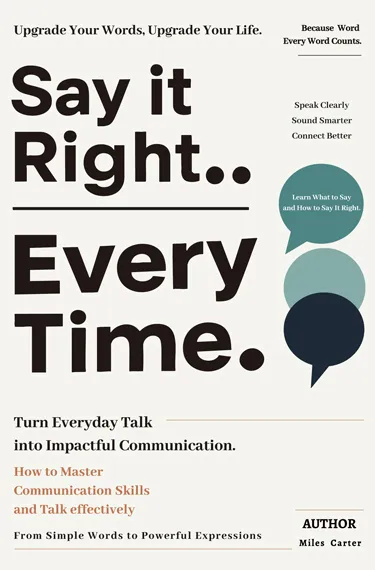
Say it Right..Every Time.
Miles CarterPractical communication tools for the moments that matter — say what you mean, calmly and confidently.
Build Better Communication Habits Over Time
Learning how to communicate with others effectively is not about mastering a list of perfect phrases. Communication is a skill that develops through repeated practice and self-awareness.
You may notice that you interrupt too quickly, explain too little, avoid certain conversations, or react defensively when someone disagrees with you. Recognizing these habits gives you the opportunity to change them.
Small improvements can make everyday interactions clearer and more productive.
Why Say It Right Every Time Is Worth Reading
For readers who want to learn how to communicate with others effectively, Say It Right Every Time by Miles Carter offers a practical place to begin.
The book focuses on the communication habits that shape ordinary conversations, from expressing your thoughts clearly to becoming more aware of how your words are understood. Instead of treating communication as a fixed personality trait, it approaches it as something that can be practiced and improved.
For anyone who wants clearer conversations, fewer misunderstandings, and stronger everyday connections, this book provides a practical perspective on becoming a more intentional communicator.