Last Tuesday I sat in my car in the summer camp parking lot, holding three write-up slips in my hand. Warning. Level one. Level two. My son had burned through all of them in three days. All for disrespect. I had talked to him about respect a dozen times before camp started. He nodded. He seemed ready. Then this.
I sat there and thought, what do I actually do now? If you are reading this, you are probably wondering the same thing. How do you deal with a disrespectful child when the behavior feels baked in? I am not a perfect parent. Some days I am barely a decent one. But here is what I have learned, and what has slowly started to work.
Quick Things to Try Today
- Pick one behavior you want to change, not five.
- Say what you want, not what you do not want.
- Catch him being respectful and name it out loud.
- Tell every adult in his life the same plan.
- Stay calm when you correct him, even if you do not feel calm.
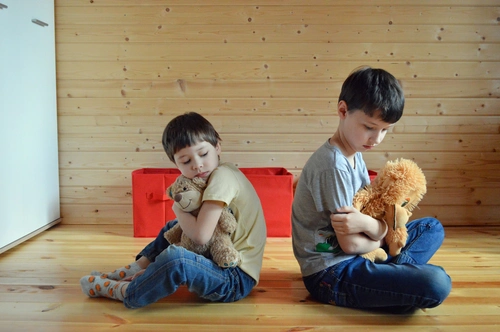
Why Does My Child Act Disrespectful at School but Not at Home?
This was the question that kept me up at night. My son listens to me. Mostly. But other adults? Teachers? Camp counselors? Different story.
Here is what I finally understood. Kids often behave best with the person they feel safest with. That was me. Everyone else got the leftovers. Is that fair to those adults? No. Is it a sign he hates them? Also no. It is a sign he does not yet know how to handle frustration with anyone but me.
Ask yourself some honest questions. When did the behavior start? What changed around that time? A new baby? A move? A breakup? A new adult in the house? My son went through several big changes in a few years. That is a lot for a small person.
A child psychologist once noted that kids do well when they can. When they cannot, something is getting in the way. That something might be a skill they have not learned yet. It might be a feeling they cannot name.
So before you ask “why is he so disrespectful,” try asking “what is he missing?” The answer might surprise you.
How Do You Teach Respect to a Child Who Seems to Have None?
You do not lecture it into him. I tried that. Multiple times. It did not work.
Respect is learned by watching and by practicing. That means two things. First, he needs to see adults disagree without mocking each other. Second, he needs chances to practice being respectful when the stakes are low.
Here is something that helped us. Every Sunday, we practiced a hard moment. “Okay, pretend I just told you to turn off the game. What do you say?” We did it silly at first. Then it got real. He started using the words at actual hard moments.
Some parents find a reward chart helps. Not a punishment chart. A practice chart. One sticker for every time he handles frustration without a smart remark. Ten stickers, he picks the movie. This is not bribery. It is rehearsal with a payoff.
What words do you actually say in the moment? Try these:
- “I hear you. The rule still stands.”
- “You can be mad. You cannot be rude.”
- “Try that again with a calmer voice.”
- “That tone is not okay. Take a breath and start over.”
Short. Calm. Repeat as needed. It will feel like it is not working for a while. Keep going.
The Consistency Rule (A Tool That Finally Helped Us)
Here is the tool my family uses. We call it the Consistency Rule. It sounds simple because it is.
Every adult in my son’s life agrees on three things:
- The same three house rules apply everywhere.
- We tell each other when something big happens, same day.
- We never trash-talk each other in front of him.
That third one matters more than people think. If he hears me roll my eyes at another adult, why would he respect that person? Kids are copy machines. They copy what they see, not what we say.
The first month was bumpy. We had a rough call. But we stuck with it. The camp counselor told me two weeks later that something had shifted. Not fixed. Shifted.
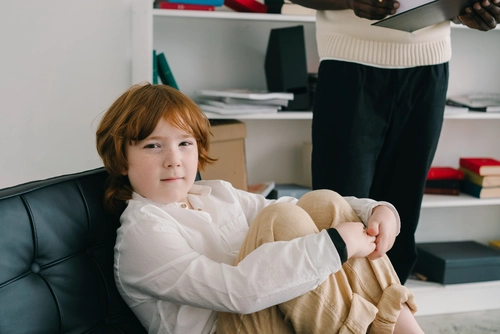
What If the Behavior Keeps Happening?
It will. For a while. I want to be honest with you about that.
A child who has practiced disrespect for years does not unlearn it in a week. My son still has bad days. Some weeks are great. Some weeks I am back in that parking lot, staring at a write-up.
What has changed is my response. I used to hawk-eye him, waiting to catch him being rude. That made everything worse. Now I look for the moments he gets it right, and I say so. “Hey. You were frustrated and you still used a calm voice. I saw that.” His face changes when I say it.
If things are not improving after a few months of consistent effort, it is okay to ask for more help. A pediatrician can point you toward someone who works with kids and families. That is not a failure. It is just another tool.
A question to sit with: is your child being disrespectful, or is he overwhelmed and out of skills? The answer changes everything about what you do next.
FAQ
Q: How do I deal with a disrespectful child without punishment?
A: Focus on teaching, not punishing. Name the behavior you want, practice it during calm moments, and stay consistent. Consequences can still exist, but they should be predictable and connected to the behavior, not delivered in anger.
Q: Why does my child only act disrespectful with certain adults?
A: Kids often test boundaries with the adults they feel safest around. It can also mean they are struggling with change, stress, or a skill they have not learned yet. Look for the pattern, not just the behavior.
Q: What if my child laughs or ignores me when I correct him?
A: Stay calm and repeat the same short phrase. “You can be mad. You cannot be rude.” Do not add a lecture. The consistency of your response matters more than the volume.
Q: How long does it take to see improvement?
A: It varies. Some parents notice small shifts in a few weeks. Others need months. The key is being the same calm, consistent adult every time, not just on good days.
Q: When should I ask for professional help?
A: If the behavior is affecting school, friendships, or safety, or if it is not improving after months of consistent effort, talk to a pediatrician or family counselor. Asking for help is a strength, not a failure.
One Last Thing
I still have those three write-up slips. They are in my glove box. Some days I look at them and feel like I am failing. Other days I look at them and remember that was the week I stopped yelling and started teaching.

