I remember standing outside a grocery store, holding the pieces of his phone. One moment he was checking his balance at the ATM. The next, the screen was shattered on the pavement. He stormed off, fuming, while I crouched to gather the battery and back cover. I had no idea what just happened. But I’d seen this before. A tiny inconvenience and the day implodes.
That’s when I started asking myself the question that brought me here: how do you actually deal with a partner who gets angry easily without making yourself small in the process?
I’m not a therapist. I’m just someone who has been on the receiving end of sudden, fiery anger and tried to figure out what works. What I’m sharing here is not a cure. It’s what made a difference in my own relationship, one small shift at a time. If you’ve ever held your breath waiting for the next explosion, you’re not alone.
Quick Ways to Deal With a Partner Who Gets Angry Easily Today
If you’re in the middle of a tense moment right now, start here:
- Stop trying to fix it. Logic in the middle of an emotional flood sounds like dismissal.
- Create space. Say “I can see you’re upset. I’ll be right over there when you’re ready.”
- Keep your voice low and your body language open. How you say it matters as much as what you say.
- Use a code word if you have one. If not, suggest a pause—calmly, not as a weapon.
- Don’t rehash the blow-up right after. Circle back the next day, when emotions have settled.
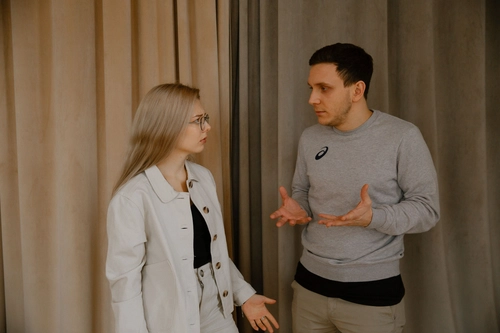
Why Does My Partner Get So Angry Over Little Things?
For the longest time I thought it was about the phone, the forgotten dinner plan, the sarcastic comment. It’s not. Not really. The anger is rarely about the spark. The spark just finds a pile of kindling that was already there.
Many people who blow up easily carry stress they don’t know how to name. Something goes wrong, and instead of saying “I feel overwhelmed,” the body flips into fight mode. It looks like rage over a dead phone, but underneath there’s a whole day of tension, unspoken irritation, or old stuff that never got released.
In my partner’s case, he had spent years learning that anger was the only emotion that got a response. Sadness or fear were ignored. So anger became the default language for anything uncomfortable.
Does that make it okay? No. But understanding it helped me stop taking every outburst as a personal attack. I was not the cause. I was just standing in the splash zone. That recognition changed how I responded.
How to Deal With a Partner Who Gets Angry Easily Without Making Things Worse
Level 1: What to Do in the Moment
Stop trying to fix it.
When his phone hit the ground and his face tightened, my instinct was to jump in: “It’s okay, we’ll get a new one, calm down.” Every word poured gasoline. What I didn’t know then is that in the middle of an emotional flood, logic sounds like dismissal.
I started doing one small thing: I stopped trying to talk him out of it. I’d say something like, “I can see you’re really upset. I’m going to grab a coffee. I’ll be right over there when you want me.” Then I’d walk a few steps away. Not storming off. Not punishing. Just creating space.
That space is everything. It tells him that I’m not leaving, but I’m also not going to absorb the blast. It took me several tries to get the tone right. The first time I tried it, I sounded cold and he got angrier. But eventually I learned to keep my voice low, my body language open, and my exit calm.
What happens after matters just as much. When he cooled down, I didn’t rehash the phone. I asked, “What was going on for you before that?” Sometimes he’d shrug. Other times he’d mention a fight at work that left him brittle. Naming the real thing started loosening the anger’s grip.
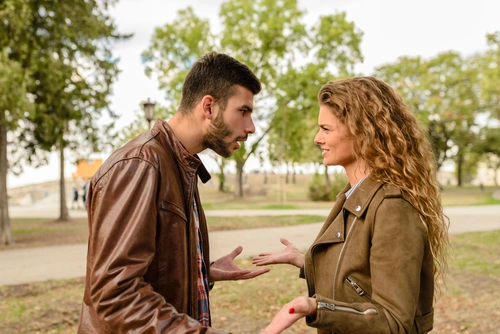
Level 2: A Code Word for When Things Spike
We needed a shared tool.
We agreed on a code word during a calm Sunday morning. I said, “I want to find a way to hit pause so we don’t say things we regret. Can we pick a word that means ‘I need space right now’?” He actually liked the idea. He told me later that having a signal felt like a pressure release he never had before.
We chose “orange.” It sounds silly. But in a moment when he was about to erupt, or I felt my own frustration climbing, one of us could say “orange” and it meant: We pause. No questions. No following. Ten minutes of separate space.
The first time he used it, I was the one getting sharp with him about a misplaced key. He looked at me and said, “Orange.” It stopped me cold. I went for a walk around the block. When I came back, the edge was gone. Did it work every time? No. But it became a shared language of safety. I wasn’t walking into a minefield—I had a map.
Level 3: The Harder Conversations
Why he controls his anger with others but unleashes on you.
This one stung. I’d watch him laugh with a coworker on the phone minutes after screaming at me. It felt deeply unfair. Why hold it together for strangers and fall apart with me?
Over time I realized it wasn’t about respect. It was about safety. With me, he didn’t have to pretend he was fine. That’s not an excuse. It’s an explanation that helped me have the conversation we needed to have.
I brought it up not as an accusation but with genuine curiosity. “I notice you can switch it off around others. What feels different with me?” He said something I didn’t expect. “Because with you, I’m not afraid you’ll leave if I lose it.”
We sat with that. Then I told him the truth: “I’m not going anywhere. But I need you to know that when I’m the only one who gets the storm, it wears me down. I need the version you give others sometimes too.” That conversation didn’t fix it overnight, but it marked a shift.
Setting boundaries without sounding like you don’t care.
Boundaries can sound cold when you’re in love. But I learned that protecting my own calm wasn’t selfish—it was necessary. I started saying things like, “I want to understand what’s going on, but I can’t help when we’re yelling. Let’s pause and come back.” It’s not about walking away from him. It’s about walking away from the dynamic.
At first he took it as rejection. I had to clarify: “I’m not punishing you. I’m making sure I don’t say something I’ll regret.” After a few times, he started to believe me. And I noticed something: when I stopped absorbing every outburst, he had to feel the weight of his own anger. That’s uncomfortable. But it also made him more willing to look at it.

What to do after the storm has passed.
The repair conversation is the part I used to skip. Once the anger cleared, I’d pretend nothing happened just to keep the peace. Big mistake. It taught us both that the pattern was acceptable.
Now I circle back gently—never on the same day. Maybe the next morning over coffee. I say, “I know yesterday was a lot. Can we talk about what was underneath it?” If he’s open, I listen without fixing. If he’s not, I don’t push. But I name my own experience too: “When the anger gets big, I feel shut down. I want to find a way we can handle it together.” That’s not blaming. That’s inviting.
We’ve had some hard conversations this way. He’s told me about work stress, family patterns, and his own frustration with himself. I’ve told him about the loneliness of always being the calm one. Neither of us is the villain here. We’re two people trying to unlearn old scripts and write something steadier.
FAQ: How to Deal With a Partner Who Gets Angry Easily
Q: Why does my partner get angry so easily over small things?
A: Small triggers often aren’t the real cause. They’re the final straw after a pile of accumulated stress, exhaustion, or unspoken frustrations. The anger is rarely about the spark itself. Understanding that helps you stop taking it personally.
Q: How do I calm him down when he’s angry?
A: You don’t. Trying to calm someone down mid-explosion usually backfires. Instead, create space. Say something like “I can see you’re upset. I’ll be right over there.” Then let him regulate his own nervous system. Your job isn’t to fix his feelings.
Q: How do I set boundaries without sounding cold?
A: Use “I” statements. “I want to understand, but I can’t think clearly when we’re yelling. Let’s pause and come back.” This frames the boundary as something you need to show up well, not as rejection.
Q: Why does he control his anger around others but lose it with me?
A: Because with you, he feels safe enough to fall apart. That’s not an excuse for the behavior, but it is an explanation. It also means you’re the one he trusts. The goal isn’t to make him stop being honest. It’s to help him find a healthier way to express it.
Q: What if he won’t talk about it after the anger passes?
A: Don’t push. You can gently say, “I know yesterday was a lot. I’m here when you want to talk about it.” Then leave the door open. Some people need time to process before they can name what was really going on.
One Last Thing
I still see him get irritated over small stuff. The difference is, I don’t brace for impact like I used to.
The other day, his laptop froze and he let out a string of curses. I looked over. He caught my eye, let out a shaky breath, and said, “I’m really frustrated right now.” That’s all. No throw. No storm.
I said, “That sucks. Want me to make tea?” And he nodded.
We’re not fixed. But we’re learning.
References
- Lerner, H. (1985). The Dance of Anger: A Woman’s Guide to Changing the Patterns of Intimate Relationships. Harper & Row.
- Gottman, J., & Silver, N. (1994). Why Marriages Succeed or Fail. Simon & Schuster. (Chapter on emotional flooding)
- Rosenberg, M. B. (2003). Nonviolent Communication: A Language of Life. PuddleDancer Press.
