When your mind is racing, it can feel almost impossible to slow it down. One thought quickly turns into another, then another, until you are thinking about several problems at once without actually resolving any of them. This can happen when you are stressed, worried about the future, replaying something from the past, or simply trying too hard to find certainty.
Racing thoughts can also become especially frustrating at the end of the day. When everything around you becomes quiet, there may be fewer distractions from the thoughts that have been building throughout the day. This can leave you lying awake while your mind continues going through conversations, decisions, responsibilities, and possible future outcomes.
Learning how to deal with racing thoughts starts with understanding that the goal is not to force your mind to become completely empty. Thoughts are a normal part of human experience. A more useful goal is learning how to recognize when thoughts have become repetitive and how to respond without automatically following every one.
Recognize When Your Thoughts Are Going in Circles
One of the first things to notice is whether your thinking is actually helping you solve something. Productive thinking usually moves toward a decision, action, or clearer understanding, while repetitive thinking tends to return to the same questions again and again.
You might find yourself replaying a conversation without learning anything new, imagining several negative outcomes without taking action, or repeatedly questioning a decision that has already been made. Recognizing these patterns can help you understand that the issue may not be the individual thought but the cycle surrounding it.
Stop Treating Every Thought as an Urgent Problem
Racing thoughts often feel urgent because the mind gives them immediate attention. When a worrying possibility appears, you may instinctively start analyzing it as though you need to solve it right away.
Not every thought deserves that level of attention. Some thoughts are simply possibilities, memories, fears, or mental noise. Learning to notice a thought without immediately trying to solve it can create more distance and reduce the pressure to keep analyzing.
Pay Attention to What Triggers the Mental Cycle
Racing thoughts can have different triggers for different people. Stress, uncertainty, lack of sleep, and emotional exhaustion can all contribute to unwanted or repetitive thinking.
Take some time to notice when your thoughts tend to speed up. Is it after a stressful conversation? When you are trying to make an important decision? Late at night when you finally have time to think? Recognizing these patterns can help you become more aware of the situations that make your mind especially active.
Focus on What You Can Actually Do
A racing mind often spends a great deal of energy on things that cannot be completely controlled. You may think about how another person will react, what might happen several weeks from now, or whether you made the perfect decision.
Instead of trying to solve every possible future scenario, bring your attention back to the next useful action. Ask yourself what you can actually change, decide, prepare for, or address right now.
This does not mean ignoring genuine problems. It means separating useful action from endless mental preparation.
Learn to Step Outside the Anxiety Cycle
This is where Break the Anxiety Circle by Miles Carter becomes especially relevant. The book focuses on the repeating patterns that can connect thoughts, emotions, and anxious reactions, helping readers recognize how one thought can trigger another and gradually create a cycle.
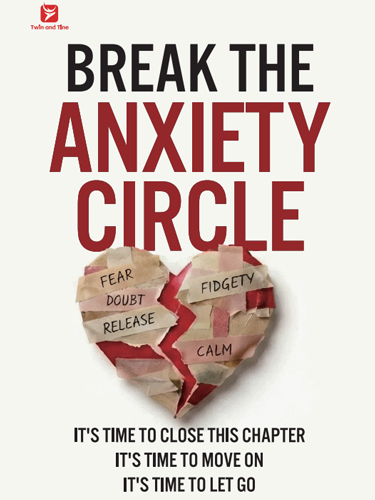
Break the Anxiety Circle
Miles CarterA mental reset for people trapped in the overthinking loop. Understand why your mind won’t stop racing — and how to break free from anxiety, people-pleasing, and emotional exhaustion.
Rather than simply telling readers to stop worrying, the book encourages them to understand how the cycle works. Once you can recognize the pattern, you have a better opportunity to respond differently instead of automatically continuing the same mental process.
Create a Healthier Response to Racing Thoughts
Trying to force racing thoughts away can sometimes make you pay even more attention to them. A more practical approach is to recognize what is happening and create some space before deciding what to do next.
You can acknowledge that your mind is active, identify the main concern, and then decide whether there is something useful you can actually do. If there is, take that action. If there is not, allow yourself to return your attention to something happening in the present.
Why Break the Anxiety Circle Is Worth Reading
For anyone trying to learn how to deal with racing thoughts, understanding the cycle behind those thoughts can be more useful than simply trying to suppress them.
Break the Anxiety Circle by Miles Carter focuses on recurring anxiety patterns and the connection between thoughts and emotional reactions. It provides a practical perspective for readers who feel caught in repetitive worry and want to understand why their minds keep returning to the same concerns.
If your thoughts often feel like they are running in circles, this book offers a useful starting point for recognizing those patterns and developing healthier ways to respond.
Break the Anxiety Circle
Miles CarterA mental reset for people trapped in the overthinking loop. Understand why your mind won’t stop racing — and how to break free from anxiety, people-pleasing, and emotional exhaustion.