You finish a conversation and immediately start replaying it. You make a decision, then spend the next few hours wondering whether you chose wrong. Nothing is actually happening, yet your mind keeps generating new possibilities, explanations, and things you should have said differently.
At some point, thinking stops helping and starts draining you. The frustrating part is that overthinking often feels productive while you are doing it, because you are trying to prevent mistakes, understand what happened, or prepare for what might come next. The problem is that more thinking does not always produce more clarity.
So how do you actually get out of your head?
The answer depends on what is keeping you there in the first place. Three books offer particularly different ways of looking at that problem.
The Same Situation Can Produce Three Completely Different Mental Loops
Imagine you send a short message to a friend and they do not reply for several hours.
One person thinks, “They’re probably busy,” and moves on. Another starts wondering whether the message sounded strange. A third person begins imagining that the friendship has changed and searches through previous conversations for evidence.
The external situation is exactly the same. What changes is the mental process that follows it.
This is important because getting out of your head is not simply about forcing yourself to “stop thinking.” It is about noticing what your mind does when uncertainty appears and understanding why that particular response feels so difficult to interrupt.
When Your Mind Keeps Turning One Thought Into Ten More
This is where Break the Anxiety Circle by Miles Carter offers a useful perspective.
The book looks at the relationship between thoughts, emotions, and repeated reactions. A thought can create discomfort, the discomfort can trigger a familiar response, and that response can keep your attention locked onto the original concern.
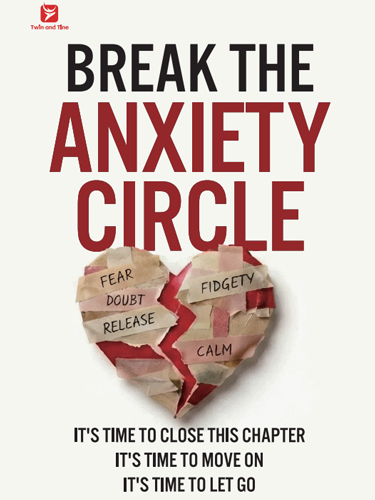
Break the Anxiety Circle
Miles CarterA mental reset for people trapped in the overthinking loop. Understand why your mind won’t stop racing — and how to break free from anxiety, people-pleasing, and emotional exhaustion.
For example, you might wonder whether you handled a conversation badly. You replay what you said, decide that one sentence sounded wrong, imagine what the other person might think, and then replay the conversation again looking for another clue. Each round feels like you are getting closer to an answer, but you are actually giving the same uncertainty more attention.
Break the Anxiety Circle encourages readers to look at that larger pattern rather than treating every individual worry as a brand-new problem.
That shift matters because the content of your thoughts may change constantly while your response remains the same. Today it is a conversation, tomorrow it is a decision, and next week it may be something happening in the future. The subject changes, but the cycle can stay remarkably consistent.
A Different Way to Look at the Problem
Instead of asking, “How do I figure this out?” the book encourages a more useful question: “What am I doing right now because I feel uncertain?”
That could mean checking, replaying, seeking reassurance, avoiding a decision, or continuing to analyze something that has already been considered from every reasonable angle.
Once you recognize the behavior surrounding the thought, the mental loop becomes easier to see as a pattern rather than as an urgent problem that must be solved immediately.
When the Problem Is the Conversation Going On Inside Your Head
Not every form of overthinking is about future anxiety. Sometimes you are stuck in an internal conversation about something that already happened.
You replay someone’s tone. You wonder what they really meant. You criticize your own response and imagine how the situation might have gone if you had acted differently.
Chatter by Ethan Kross takes a closer look at this kind of inner dialogue.
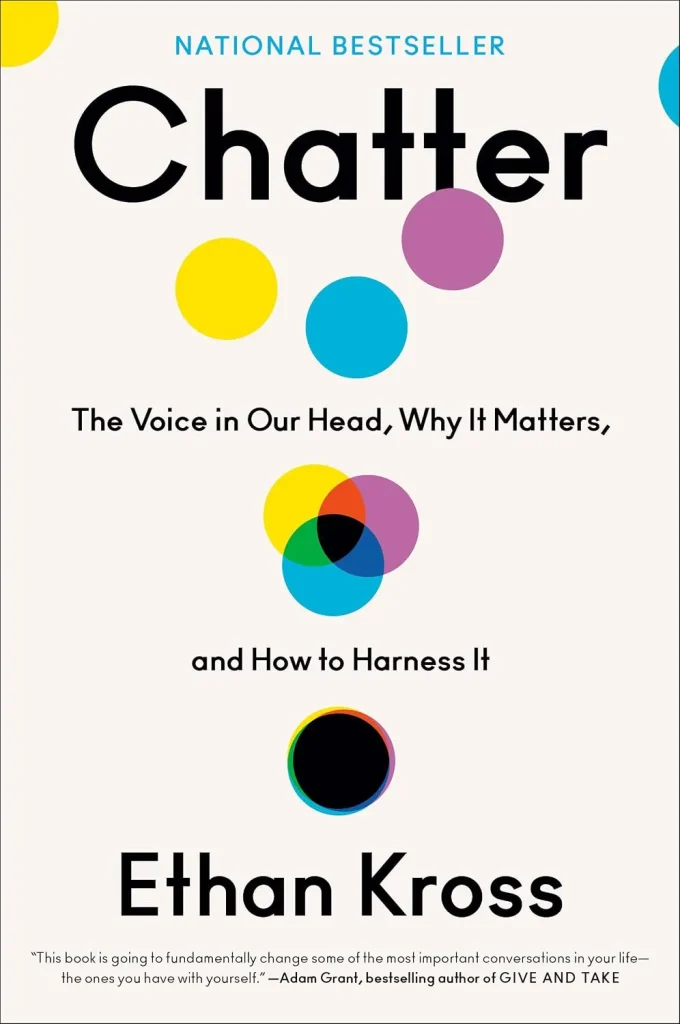
The book explores how the voice in your head can become particularly unhelpful when you are stressed or emotionally involved. Instead of simply telling yourself to think positively, it examines ways to create more distance from the internal commentary that can keep a difficult situation alive long after it has ended.
This creates an interesting contrast with Break the Anxiety Circle.
Break the Anxiety Circle is especially useful for noticing the broader cycle connecting thoughts, emotions, and reactions. Chatter focuses more closely on the inner voice itself and what happens when that voice becomes too dominant.
If your mental exhaustion often comes from replaying conversations or criticizing yourself internally, that distinction may be important.
When You Keep Worrying Because You Think Worry Is Protecting You
There is another reason people struggle to get out of their heads: part of them believes the thinking is necessary.
You may think that running through every possible outcome will help you prepare. You may feel that checking one more time will prevent a mistake. You may believe that reaching the “right” answer will finally allow you to relax.
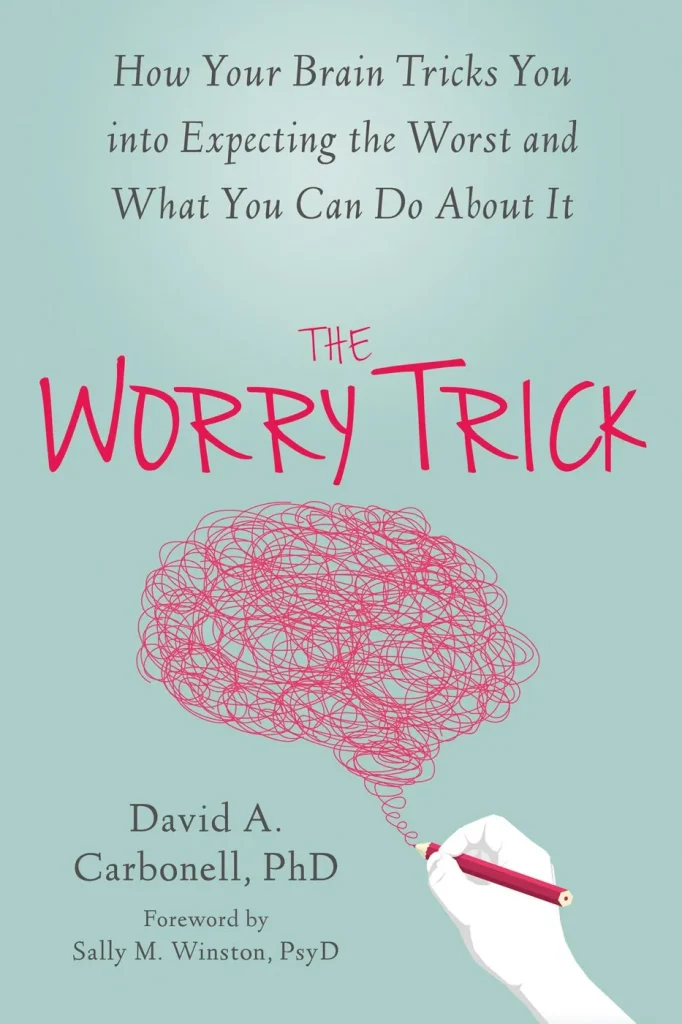
The Worry Trick by David A. Carbonell examines this relationship with worry.
The book looks at the way worry can become a habitual response to uncertainty. The problem is not just that you have anxious thoughts; it is that your mind starts treating worrying itself as something useful or protective.
That can make stopping particularly difficult.
If you believe that thinking harder keeps you safe, then stepping away from the thought can feel irresponsible. You are not simply trying to stop worrying—you are trying to convince yourself that you do not need to worry in order to be prepared.
This is one reason the book offers a useful third perspective. It challenges the assumption that more worry necessarily means more preparation.
So What Is Actually Keeping You Stuck?
The three books suggest three different possibilities.
You may be caught in a repeating cycle of thoughts, emotions, and reactions. In that case, Break the Anxiety Circle offers a useful framework for seeing the whole pattern.
You may be trapped in a constant internal conversation, especially around past situations and self-criticism. Chatter gives you a closer look at that experience.
Or you may be treating worry as a form of protection, believing that more mental preparation will eventually give you certainty. The Worry Trick addresses that particular habit.
These are related problems, but they are not identical. That is why simply telling yourself to “stop overthinking” can feel so ineffective.
Why Trying to Think Your Way Out Usually Fails
If your solution to overthinking is more thinking, you are still using the same tool that created the problem.
Suppose you are unsure whether someone is upset with you. You analyze their message, remember your last interaction, consider several explanations, and imagine what you should say next. Eventually you reach a point where there is no new information, but your mind keeps going anyway.
At that point, you are no longer gathering information. You are trying to manufacture certainty.
And certainty is often impossible.
You cannot completely know what another person thinks. You cannot predict every future outcome. You cannot go back and rewrite a conversation that has already happened.
Getting out of your head therefore often requires recognizing that the next ten minutes of thinking are not going to produce the answer you are hoping to find.
The Goal Is Not to Empty Your Mind
A common misunderstanding is that the solution to overthinking is having no thoughts at all.
That is not realistic.
Your mind will continue to notice things, make predictions, remember experiences, and react to uncertainty. Trying to eliminate every uncomfortable thought can simply create another struggle: now you are worrying about the fact that you are worrying.
A more useful goal is to become less automatically obedient to your thoughts.
A thought can appear without requiring an investigation. A question can remain unanswered for a while. A possibility can exist without becoming a problem you have to solve immediately.
That is a very different relationship with your mind.
A Simple Test: Is This Thought Taking Me Somewhere?
The next time you notice yourself going in circles, ask yourself whether the thinking is producing anything new.
Are you making a decision?
Gathering useful information?
Taking a concrete action?
Preparing for something specific?
Or are you simply revisiting the same material in slightly different forms?
If nothing new is being added, you may be dealing with repetition rather than problem-solving.
Recognizing that difference is one of the first steps toward getting out of your head.
Why Break the Anxiety Circle Is the Strongest Starting Point
Among these three books, Break the Anxiety Circle is particularly relevant for readers who feel that the problem is bigger than one specific worry.
Your mind may not be stuck on the same subject every day. Instead, the subject keeps changing while the mental process stays the same. You worry, analyze, seek certainty, feel temporary relief, and then another concern takes its place.
That is why understanding the cycle can be more useful than simply trying to eliminate one thought.
The book gives readers a way to step back and observe the pattern itself. Once the pattern becomes visible, it becomes easier to question whether following it is actually helping.
Final Thoughts
Getting out of your head does not mean becoming someone who never thinks deeply. Thinking can help you solve problems, make decisions, and understand your experiences. The problem begins when thought becomes repetitive without moving you toward a useful conclusion.
Break the Anxiety Circle, Chatter, and The Worry Trick each approach that experience from a different angle. One looks at the larger cycle, one examines the inner voice, and one questions the habit of using worry as a form of protection.
The most useful place to begin is the part you recognize most clearly in yourself. Once you can see what your mind is doing, you have a much better chance of deciding when to keep thinking—and when it is time to step out of the loop.