My daughter was two and a half when she started showing up at my bedside like she had an alarm set. 1:40am. Every night. She would stand there holding her washed-out blankie, not saying a word. Just standing.
I tried reasoning. I tried carrying her back. I tried pretending to be asleep. Some nights my husband would walk her back to her bed and she would cry until she gagged, and the two of us would sit on the living room floor in silence.
It took me a while to understand something. She was not coming for my bed. She was coming for me.
Quick Answer: How do I get my toddler to sleep in their own bed?
You do it with a consistent routine, a short script, and a calm walk-back every single time they come out. No anger, no negotiating, no exceptions. The first week is hard. It gets easier.

Why Is This So Much Harder Than It Sounds?
Here is what most people will not tell you. There is almost no version of this with zero tears. If someone promises you that, they are selling something.
But there is a difference between tears and cruelty.
A friend of mine tried something that stuck with me. She knelt down to her three-year-old and said, from tonight on, you sleep in your own bed. If you come out, I will walk you back. Because you need sleep, and so do I.
She did not smile. She did not use a negotiating voice. She said it like a fact.
The first night, he cried for about ten minutes. The second night, five. By the fifth night, almost nothing.
The key is not what you say. It is what you do after. Every time they come out, you walk them back. No anger. No explanation. No deal-making. The twelfth time is the same as the first.
It sounds simple. It feels like moving a boulder. I have done it. On night seven I sat on the hallway floor and wanted to quit.
Three nights later, she stayed in bed.
The Three-Line Goodnight
This is the ritual we ended up using. I borrowed it from a friend who teaches preschool and changed it a little.
Three sentences. Same words every night. Not one word different.
Line one. Review the day. Today we went to the park. You fed the ducks. You fell down.
Short. Specific. No mention of tomorrow.
Line two. Confirm the location. I am in the next room. You are here. When it is light, we will see each other.
Line three. Hand it to something. The bunny stays with you. It is yours.
Then lights off. Walk out. Do not look back.
I thought it was too mechanical. Would she buy it?
She did. Around night nine, she lay down on her own, held the bunny, and said something I still remember.
Mom, you can go to the next room.
I stood in the doorway for a long time.
Age Makes a Difference
Around age two. They run on physical memory. They will not remember what you said, but they will remember the order. Bath, lotion, that one beat-up book, the same song. Change the order and they panic.
Around three and a half. They start to negotiate. One more story. I am thirsty. My feet are cold. This is not defiance. It is them trying to take part in the decision. You can give two choices. Lights off first or one more hug first. Only two. I once offered three. We were still talking at 10:30pm.
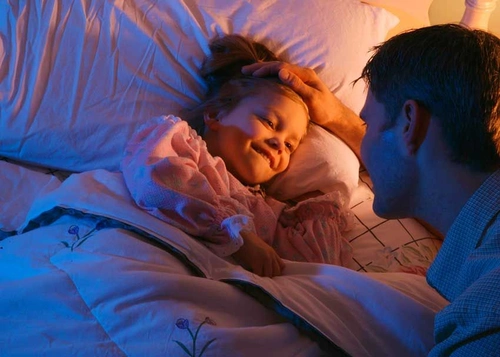
What If They Cry and Cannot Stop?
Check two things. Are they scared, or are they mad?
If they are scared, the cry shakes. They reach for you. Go in. Hold them. Say I am here. Then leave. Do not lie down. Do not turn on the big light.
If they are mad, the cry is flat and rhythmic. They get louder when you walk in. Stay outside. Two minutes. Three minutes. They will wear themselves out.
My daughter was the first kind. My husband, according to his mother, was the second. He cried for two weeks. Two weeks sounds like forever. In the span of a childhood, it is nothing.
What You Do During the Day Shows Up at Night
This part gets skipped a lot.
A child who gets enough holding during the day does not need to climb into your bed to get it at night. I did not believe this at first. Then I tried it. Every day after work, I put my phone away and gave her twenty real minutes. Nothing else. Just following her lead.
That week, her nighttime visits went from three to zero. It was not every week. But the direction was right.
One more thing. Screens off an hour before bed. I learned this the hard way. One night she watched a show and then lay awake for forty minutes, eyes wide open. The light tells their brain the day is not over yet.
FAQ
How long does it take for a toddler to sleep in their own bed?
Most families see a shift within one to two weeks if they are consistent. Some kids take longer. The key is doing the same thing every single night.
Should I let my toddler cry it out?
That depends on your child and your comfort level. The walk-back method is a gentler middle ground. You respond, but you do not stay.
What if they come into my bed in the middle of the night?
Walk them back. Calmly. Every time. If you let them stay sometimes and not others, the message gets confusing.
Is it okay to lie down with them until they fall asleep?
In the beginning, maybe. But if the goal is for them to sleep independently, you eventually need to leave before they are fully asleep.
What if nothing works?
If your child is genuinely terrified, not just testing, talk to a pediatrician. Sometimes there is more going on than a sleep habit.
A Closing Thought
One night she did not come out. I woke up anyway and walked to her doorway, using the hall light to check on her.
Her blankie was on the floor. She was sleeping hard.
I stood there for maybe two minutes. I am not sure I would call it happy. Something quieter than that.
A toddler sleeping in their own bed does not mean they stopped needing you. It means they know you are there, so they can sleep without checking.
Those two things are the same thing.
References
- American Academy of Pediatrics. Healthy Sleep Habits: How Many Hours Does Your Child Need? HealthyChildren.org.
- Mindell, J. A., & Williamson, A. A. Benefits of a bedtime routine in young children. Sleep Medicine Reviews, 2018.
- National Sleep Foundation. Children and Sleep. SleepFoundation.org.

The Parent You Aspire to Be
Miles CarterPractical guidance for tantrums, backtalk, lying, screen addiction, emotional outbursts, and everyday parenting struggles.

