You ask: “Who spilled the milk?” Your 7-year-old says, “I don’t know.” The cookies are gone. “Did you eat them?” “It wasn’t me.” The homework is full of eraser marks. “What happened?” “It came like that.”
Quick Answer: A 7-year-old stops lying when fear of punishment is reduced and truth-telling is consistently met with calm responses and positive reinforcement instead of interrogation or anger.
You know he is lying. He knows you know. And yet it keeps happening. Every time you catch him, the lies become smoother, more careful. It feels like a cycle you cannot break.
The truth is: a 7-year-old is not trying to deceive you out of malice. He is trying to avoid fear, shame, or disappointment.
Why a 7-Year-Old Lies
Lying at this age is often a fear response, not a moral failure. A child is beginning to understand that his inner thoughts are separate from what adults can see or know. This is normal cognitive development.
At the same time, a 7-year-old is highly sensitive to emotional reactions. Disappointment, anger, or punishment can feel overwhelming. So the brain quickly chooses the safest option in the moment: deny, avoid, or hide the truth.
In other words, the goal is not to deceive you. The goal is to protect himself.
Method One: Remove the Trigger for Lying
Many children lie because they are placed in situations where honesty feels unsafe.
Questions like “Who did this?” or “Was it you?” force a child into defense mode. The brain quickly calculates: truth = trouble, lie = safety.
So instead of asking who caused the problem, remove the need for confession entirely.
Try this instead:
Milk spills → “Oh no, milk spilled. Let’s clean it up together.”
Cookies are gone → “Looks like the cookies are finished. Next time, just tell me if you’re hungry.”
You are no longer investigating. You are solving. This removes fear from the situation.
Method Two: Make Telling the Truth Feel Safe
Children constantly weigh the cost of truth versus lying. If truth leads to anger, punishment, or shame, they will choose lying again.
So instead of punishing lying, reward honesty immediately.
When your child admits the truth, respond first with calm appreciation:
“Thank you for telling me the truth.”
Only after that do you address the behavior itself.
For example:
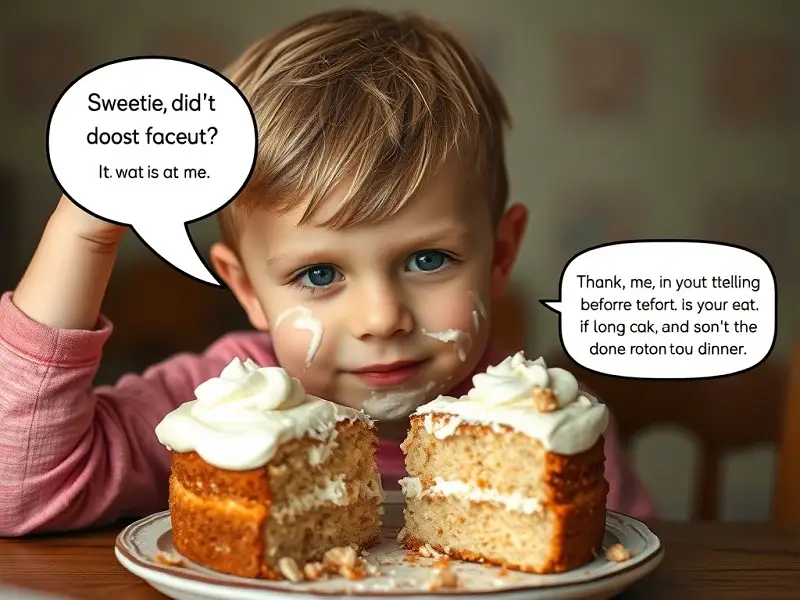
The cake is half gone. Your child admits it. You say: “Thank you for telling me the truth.” Then calmly: “Next time, please ask before eating it so we can plan for dinner.”
This order matters. The brain remembers emotional safety before correction.
Why This Works
Children do not stop lying because they are punished. They usually become better at hiding it.
Children stop lying when honesty consistently leads to emotional safety, clarity, and calm responses from adults.
Over time, the brain learns: truth is safe, and lying is unnecessary.
One Last Thing
The next time your child lies, pause before reacting. Do not start with “Who did it?”
Instead, say: “Let’s fix it together.”
That small shift changes everything. It turns fear into safety, and secrecy into honesty.
This approach helps reduce lying behavior in children by replacing fear-based reactions with trust-based communication.