My 21-month-old daughter collapsed on the kitchen floor because I said no more crackers. Her screams ricocheted off the cabinets. I stood frozen, heart pounding, hearing my own father’s angry voice in my head. I grew up in a home where boundaries came with shouting. I swore I’d never yell. So I gave her the crackers. And I felt like a failure. If you’ve found yourself here, paralyzed between being too strict and too permissive, I see you. Not sure what the right approach is to handling tantrums? Me neither, for a long time.
Quick Tantrum Tips for Sensitive Kids
If you’re in the thick of it, try these:
- Keep your voice low and slow, even when she’s loud.
- Use earplugs to dial down the sensory overwhelm.
- Offer one tiny choice after you’ve held the boundary.
- Remind yourself: crying doesn’t mean you’re doing it wrong.
- Hug if she’ll let you. Sit nearby if she won’t.

Why Are Highly Sensitive Child Tantrums So Intense?
A highly sensitive child experiences the world at full volume. Lights are brighter. Noises are sharper. The seam on her sock can feel like a personal attack. So when I said “no more crackers,” it wasn’t just a denied snack. It was rage, betrayal, the end of everything. She doesn’t have the words to say all that. The tantrum is her only language.
I used to think I caused the meltdowns by being inconsistent. But now I understand that her nervous system simply fires faster. The part of her brain that handles logic? Not built yet. She’s working with raw emotion. My job isn’t to stop the feelings. It’s to help her ride them out without breaking our connection.
I also had to face my own wiring. Growing up with strict, angry parents taught me that boundaries equal danger. So when I set a limit, my body braces for conflict. Giving in felt safer than hearing her cry. That’s not spoiling her. That’s me trying to protect myself. Realizing that shifted everything.
How to Handle a Highly Sensitive Child’s Tantrum Without Giving In
First, I had to learn what boundaries without anger look like. It’s not a cold, rigid stance. It’s a warm wall. I stand firm, but my face stays soft. I say, “I know you want crackers. We’ll have more later.” Then I let her fall apart. And I stay.
What actually helped me was practicing when I wasn’t in the storm. I’d breathe deeply in the shower and remind myself, “Her feelings are not an emergency.” During the tantrum, I’d slip in earplugs. The muffled shrieks no longer scrambled my nervous system. I could think. I could stay.
Holding the line on things like teeth brushing or “Mama can’t pick you up right now” still triggers the meltdown. But now I treat it like weather. It will pass. I say very little. I might murmur, “You hate this. I’m right here.” That’s it. No long explanations. No apologizing.
The middle ground that scared me so much? It’s not about waiting out the tantrum with gritted teeth. It’s about being a calm presence while she cries. Acknowledge the fire. Don’t throw water on it, but don’t run away.
And follow through matters. If I say no crackers now but cave after ten minutes, I teach her that screaming works. I’m not being mean. I’m being a trustworthy container. In their wisdom, toddlers sense when we mean it. They actually feel safer with a leader who doesn’t wobble.
A Simple Approach for Tantrums
I developed a little ritual that saves my sanity. It has three parts:
Step 1: Anchor yourself first. Place your hand on your chest. Take one slow breath. Swallow the urge to fix or flee. If your body is a storm, your child senses it. So anchor down. I think, “I am the shore. She is the wave.”
Step 2: Anchor her with a single truth. Not a lecture. A truth. “You wanted to play. Now it’s bedtime. I get it.” Or, as someone I know says, “I know it’s hard.” That’s it. Don’t pile on reasons. Just be a mirror for her disappointment.
Step 3: Release the tension with a small choice. “Do you want to stomp your feet or squeeze my hand?” “Shall we walk to the bedroom or hop like rabbits?” The choice gives her a sense of power after being told no. Some kids won’t choose right away. That’s okay. You choose for them gently. “I’ll carry you, and we can hop tomorrow.” Then you do it. Kindly. Without anger.
I’ve used this during the worst pre-dinner meltdowns. Yes, she still cries. But the duration shrinks. And I don’t feel hollow afterwards.
What If She Doesn’t Want Hugs During a Tantrum?
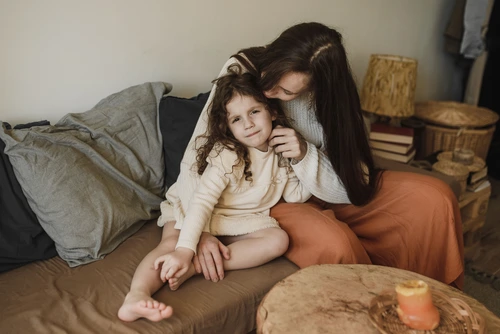
I grew up with very little physical affection, so reaching out felt unnatural at first. I tried the “hug it out” advice some friends gave me. She shoved me away. Turns out, many sensitive kids need space before they can accept touch.
Now I sit close but not touching. I say, “Mama is here. When you’re ready, I can hold you.” Often, after the peak of the crying, her little hand would reach for me. I’d pull her in. The hug became a choice, not a restraint. That respect calms her faster. And it heals something in me too. I’m learning that closeness can be safe.
Following Through When Every Nerve Is Fried
Some days I’m so overstimulated that I’d give her the whole box of crackers to make the noise stop. On those days, I shorten the ritual. “You’re sad. I’m here. No crackers.” I might put on noise-canceling headphones and hum. I stay physically present but mentally I let myself step back.
I remind myself: Perfection isn’t the goal. Repair is. If I lose it and raise my voice, I apologize later. “Mama got frustrated. I’m sorry. I’m working on staying calm.” My daughter is 21 months, and she understands more than I gave her credit for. She once touched my cheek after I said sorry. I sobbed.
Holding firm doesn’t mean stone-faced. It means being human and still choosing the boundary next time. That’s what breaks the cycle for parents like us, who fear becoming our own parents.
FAQ
Q: What causes highly sensitive child tantrums to be so explosive?
A: They process sensory input deeply and feel emotions with huge intensity. A small disappointment registers as a catastrophic loss. They aren’t being dramatic. Their brains are simply wired that way.
Q: How can I avoid yelling during highly sensitive child tantrums when I’m triggered?
A: First, lower your own sensory load. Earplugs, deep breaths, stepping a few feet away for a moment. Naming your own feeling, “I’m overwhelmed,” internally can stop the outburst. Many parents find that saying mantras like “this is not an emergency” helps them stay regulated.
Q: Is it okay to give in sometimes during a sensitive child’s tantrum?
A: The occasional slide won’t ruin everything. But consistency builds security. If you give in most of the time, the tantrums will intensify because she learns it’s worth the effort. Choose a few non-negotiable boundaries and hold them even when you’re tired.
Q: When do highly sensitive children outgrow tantrums?
A: It varies, but many see a big shift around age 4 when language catches up. Emotional coaching from a young age can shorten the duration and give them tools. The intensity may not disappear, but it gradually becomes more manageable.
Q: What if my partner and I handle tantrums differently?
A: That’s common. Talk about it when you’re both calm, not during a meltdown. Agree on a few non-negotiables—like no yelling, no shaming—and give each other grace on the details. Consistency matters, but so does modeling repair. If you disagree in front of your child, you can say, “Mommy and Daddy see this differently. We’ll figure it out.”
One Last Thing
Yesterday my daughter asked for a cookie before dinner. I said no. She flopped over and wailed. I breathed, anchored, and sat beside her. Within two minutes she stopped, looked at me, and said, “Mama hug?” I pulled her into my lap. She smelled like jam and playground dirt. In that moment, I realized that I wasn’t becoming my parents. I was becoming her safe place. And if you’re in the trenches right now, wondering if you’re doing any of this right: your presence is already rewriting a generation.
References
- Siegel, D. J., & Bryson, T. P. (2012). The Whole-Brain Child: 12 Revolutionary Strategies to Nurture Your Child’s Developing Mind. Bantam.
- Markham, L. (2012). Peaceful Parent, Happy Kids: How to Stop Yelling and Start Connecting. Perigee.
- Aron, E. (2002). The Highly Sensitive Child: Helping Our Children Thrive When the World Overwhelms Them. Broadway Books.