I watched my child lose a board game to a sibling last Tuesday. They shouted, “I feel so frustrated!” and then swept every piece onto the floor. They had the word right. The behavior, not so much.
That moment stuck with me. I see this pattern everywhere now. Kids can label their feelings perfectly. They just cannot do anything with them. Learning how to handle strong emotions in kids is not about better vocabulary. It is about what happens after the words.
Quick Ways to Handle Strong Emotions Today
- Name the feeling, then immediately ask, “What is your plan?”
- Practice one calming move daily, before you need it.
- Model your own frustration out loud, then handle it.
- Create a calm-down corner in your home this week.
- Praise coping, not just emotional vocabulary.
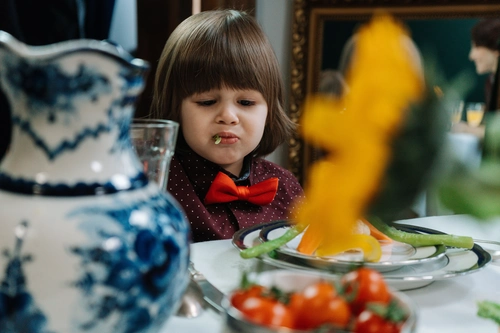
Why Do Kids Melt Down Even When They Can Name Their Feelings?
There is a parenting trend that has done real good. Children today say things like “I feel sad that I lost the game” far more often than my generation ever did. That part is wonderful.
But something got lost. Naming a feeling became the finish line instead of the starting line. I hear it in my own home every week. A child will announce, “I am angry,” and then flip a chair. The label arrived. The meltdown arrived right behind it.
Why does this happen? A word is not a skill. Saying “I feel disappointed” takes one second. Calming a disappointed body takes practice, repetition, and a grown-up who shows them how. Many kids learned the vocabulary from a screen or a catchy song. Nobody taught them the second half.
Some parents wonder if the pandemic played a role too. Two years of limited playdates meant fewer chances to practice sharing, losing, and waiting. Those boring little moments are where coping skills grow.
How Do I Teach My Child to Actually Cope With Big Feelings?
Start by treating coping like any other skill. You would not expect a child to tie shoes after one lesson. Do not expect calm-down skills to stick after one talk either.
Here is what works in my house:
- Practice when everyone is calm. We rehearse belly breathing at breakfast, not during a meltdown. My child calls it “balloon breathing.” Silly, but it sticks.
- Give a menu, not a lecture. Counting to ten, walking away, squeezing a fidget, getting a drink of water, finding a quiet corner. Different kids need different tools.
- Name the feeling, then name the next step. “You are mad the tower fell. Mad is okay. What can we do with mad?”
One phrase I use constantly: “You can feel it AND keep going.” My child now mutters it during boring errands. “I do not like this, but I can hang in there.” Hearing that from a young child is better than any gold star.
The “Mess Up Out Loud” Method
This is my favorite tool. I learned it from another parent, and it changed our evenings.
The idea is simple. Let your child watch you handle frustration in real time. Not perfectly. Honestly.
Here is how it looks. We are coloring together. I “accidentally” scribble outside the lines of my flower. Then I say, out loud:
“Oh no. I messed up my flower. I really did not want it to look like that.” (Pause. Two slow breaths.) “Okay, I am going to try to fix it.” (I try. It does not help.) “Ugh, I still do not like it.” (More breaths.) “Well. I am not happy with this flower, but I am going to keep coloring anyway.”
Then, when the page is done, I point out the parts I do like. The green stem. The orange center.
Why does this work? Because most frustrated moments do not end with the child feeling happy again. There is no fix. The goal is to feel the feeling, accept it, and keep going. When kids see us do that, they copy it.
My child’s version: “I do not LIKE that, but I can hang in there.” They say it like a little mantra. When they do, I thank them. I tell them their patience helped us finish faster, which means more time to play. That part matters.
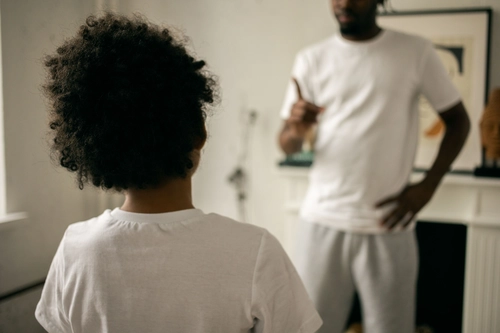
What to Say Instead of “You’re Okay”
I used to rush in with comfort. “It is fine! You will win next time!” I thought I was helping. My child would cry harder.
Here is what I learned. Encouragement can accidentally silence a feeling. When a child hears “you will do better next time,” they hear “stop being sad now.” The sadness does not leave. It just goes underground.
So I changed my script. Now I mostly reflect the feeling back.
- “That was really disappointing.”
- “You wanted to win. Losing stinks.”
- “You are upset. I get it.”
Nine times out of ten, my kids calm down faster when I say less. The feeling gets acknowledged, and then it can move along.
What Does a Calm-Down Corner Look Like at Home?
A calm-down corner is not a naughty corner. The difference matters.
Pick a spot. Add a cushion, a few fidget toys, some breathing cards, maybe crayons and paper. Call it the calm-down corner. Then practice using it when your child is calm. “Let us try the corner for fun. What would you do here if you felt mad?” Practice makes it familiar. Familiar makes it usable when the storm hits.
Some kids go there on their own. Others need you to walk with them. Both are fine. The goal is a safe place to feel, not a punishment.
Why Does Encouragement Sometimes Backfire?
This one surprised me. Have you ever told your child “You will do better next time” and watched them get angrier?
Some kids hear encouragement as pressure. It can feel like you are skipping past their frustration. I have heard adults describe being that kid. They wanted their feeling validated. Encouragement negated it. Now with their own child, they just name the feeling back. “You are really frustrated right now.” That seems to help him calm down and move on.
So try this. Match your response to your child.
| If your child… | Try this first… |
|---|---|
| Wants to be heard | “That was really hard.” |
| Wants a solution | “What could we try next?” |
| Shuts down quietly | Sit nearby, no words |
| Explodes loudly | Stay calm, keep them safe |
Age-by-Age: What Coping Looks Like
| Stage | What They Can Do | What You Can Try |
|---|---|---|
| Very young | Name basic feelings | Simple choices: “Hug or breathe?” |
| Young child | Use one calm-down tool with help | Practice one ritual daily |
| School-age | Use tools alone, sometimes | Let them pick their own strategy |
| Older child | Reflect and plan ahead | Talk through what worked afterward |
My youngest still needs me to breathe with them. My older child can walk away on their own now. Most of the time.
Why This Matters More Than We Think
Here is the hard part. Kids who melt down unpredictably get avoided. I have watched it on the playground. Other children drift toward the kids who can recover. Nobody teaches this on purpose. It just happens.
I am not saying feelings are bad. They are not. I am saying a feeling without a coping skill is like a car without brakes. The engine works fine. The stopping part does not.
My kids will be adults someday. I will not be there to coach them through a bad day at work. What I can do now is hand them tools they can carry. Counting. Breathing. Walking away. Coming back.
FAQ
Q: How do I handle strong emotions in kids when I am losing my own patience?
A: Step away for ten seconds if you can. Model the exact skill you want them to learn. “I am frustrated too. I need a minute.” That sentence teaches more than any lecture.
Q: Is it bad that my child labels feelings but still tantrums?
A: Not at all. The label is step one. Coping is step two. Most kids need months of practice before the two connect.
Q: What if my child refuses every calm-down tool?
A: Offer choices instead of commands. “Do you want to breathe or get a drink?” A tiny bit of control often breaks the standoff.
Q: How long does it take for coping skills to stick?
A: Longer than any of us want. In my experience, months of repetition. Some weeks it feels like zero progress. Then one day, they breathe on their own.
Q: Should I worry if my child’s tantrums seem bigger than other kids’?
A: Every child develops coping skills at a different pace. If you have concerns, talk with your pediatrician.
One Last Thing
Last week, my child lost another game. Their face went red. I braced myself. Then they took a loud, dramatic breath, said “I do not like this, but I can keep going,” and asked for a rematch. Not perfect. Not calm. But they stayed in the room, and they stayed in the game. That is what we are building, one messy moment at a time.
References
- Siegel, D. J., & Bryson, T. P. (2014). No-Drama Discipline: The Whole-Brain Way to Calm the Chaos and Nurture Your Child’s Developing Mind. Bantam.
- Faber, A., & Mazlish, E. (2012). How to Talk So Kids Will Listen & Listen So Kids Will Talk. Scribner.
- American Academy of Pediatrics. (n.d.). How to help children calm down. Retrieved from HealthyChildren.org.

