Last weekend, I was at the grocery store with both kids when my youngest wanted a box of cookies I wasn’t planning to buy. When I said no, she sat down in the middle of the aisle and started crying. A few people looked over. My older son stood there staring at the floor, pretending he didn’t know us. My face got warm, my hands were slightly shaking, and for a second I felt my chest tighten. My first instinct was to grab her arm and say, “Get up right now.”
But I didn’t. Because I know that feeling too well. That urge to snap isn’t really anger. It’s anxiety.
Later I talked to a friend about it. She said something similar happens to her — and she used to feel embarrassed every time it happened. When her child takes too long to get ready in the morning, she suddenly yells. She used to think she was just angry. But then she realized she was scared: of being late, of what the teacher might think, of the whole day falling apart. All that fear came out as a yell.
Parenting anxiety often shows up as anger, impatience, or the need to control situations.
The good news is that you can learn to calm your nervous system before those feelings take over.
Why Parenting Anxiety Feels So Overwhelming
Parents Are Under More Pressure Than Ever
Have you ever scrolled through social media and thought, “Why does everyone else seem so calm?” I have. Those moms always look patient. Their kids always cooperate. But here’s the thing — parents today really are under a lot.
There’s so much advice out there. Sleep training has several different approaches. Baby food has endless rules. Discipline advice often contradicts itself. Look at too much of it, and you start feeling like you’re never doing anything right. And who isn’t afraid of making a mistake? Afraid your child might fall behind. Afraid you said something too harsh. Afraid you missed something important. That constant state of managing stress while raising kids wears on you over time.
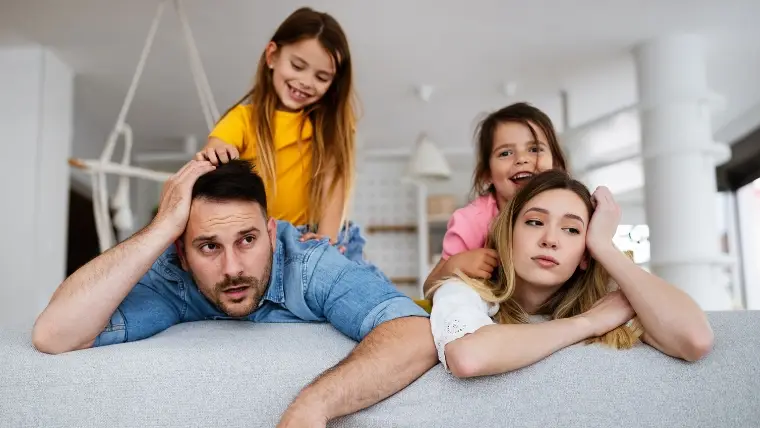
Anxiety Often Looks Like Anger or Control
I’ve learned that anxiety doesn’t always feel like fear. Sometimes it shows up as rushing, nagging, or trying to control every detail. Recognizing that pattern helps me pause before reacting.
Recognizing this difference has helped me catch myself before I snap.
Signs Your Anxiety May Be Affecting Your Parenting
If you’re wondering whether parenting anxiety is part of your daily life, here are some common signs of parental anxiety to watch for:
- You often worry that something bad will happen to your child
- It’s hard for you to relax, even when everything seems fine
- Small situations — like a spilled drink — trigger a big emotional reaction
- You check on your child repeatedly (during sleep, at school, with caregivers)
- You often feel guilty, even when you haven’t done anything wrong
- You have a quiet voice in your head saying you’re not good enough
They mean you care. But when these patterns show up often, they can make parenting feel heavier than it needs to be.
Once I understood what was happening underneath these reactions, I realized I needed tools for the moments when it actually happens.
4 Quick Steps for Instant Anxiety Relief as a Parent
These are simple tips for parents dealing with anxiety — you can try them right away. No special equipment. No quiet room required. You can use these in the grocery store, in the car, while your child is crying.
Step 1: Pause and Breathe
I was making dinner one night. My child was doing a puzzle in the living room and suddenly started crying. I ran over. One piece wouldn’t fit. At the same time, the oil in the pan was smoking. My first thought was, “This is such a small thing, why are you crying?” But I closed my eyes and took one deep breath. Just one. And then I realized — I wasn’t really annoyed at her crying. I was stressed about the pan burning, dinner being late, cleaning up afterward. That one breath helped me separate what was her problem from what was my anxiety.
You can try this too. You don’t need to close your eyes for long. Take a slow breath in. Then let it out even more slowly. Even a few seconds can help your brain shift out of “threat mode.” Your nervous system doesn’t need twenty minutes of meditation. It just needs one pause.
Step 2: Reset Your Thinking
A parenting educator once shared a phrase that stuck with me: “My child is not giving me a hard time. My child is having a hard time.”
It sounds simple. But it takes practice.
Sometimes a child won’t sit still at the table. It might not be defiance. Maybe the chair is uncomfortable. Maybe they’re too tired to say what’s wrong. Same behavior. If you tell yourself “they’re not listening,” your anxiety goes up. But if you ask yourself “is something wrong?” your whole energy shifts.
Your child might be tired. Hungry. Holding in big feelings all day at school. None of that makes their behavior easy to handle. But shifting from “they’re doing this to me” to “they’re struggling” can lower your anxiety in seconds. This is one of the most effective ways to stop worrying about parenting.
Step 3: Return to the Present Moment
There was a time when I worried all the time. Would my child get into a good college? Would she make friends? Was I ruining her future because she didn’t like to read? A friend told me about a simple exercise.
Open your eyes. Find five things you can see. A lamp. A cup. A rug. A curtain. Your own hand. Then press your feet against the floor. Touch the table next to you. That’s it. These grounding techniques can help bring your attention back to the present instead of spinning out about what might happen later.
This doesn’t solve any real problems. But it breaks the anxiety loop. As you practice self-care for parents with anxiety, these small resets become more natural over time. You don’t need to memorize steps. Just look around the next time you feel like you’re about to lose it.
Step 4: Redirect Your Energy Toward Connection
Anxiety often pushes us to control the situation. Connection asks us to slow down instead.
Move closer. Sit beside your child. Get curious about what’s happening before trying to fix it.
Shifting from control to connection not only helps your child feel understood—it can also help calm your own anxiety in the moment.

How Managing Your Anxiety Helps Your Child
Here’s what I’ve noticed. When I’m calmer, my kids are calmer too.
For example, one time I was rushing to get out the door and couldn’t find my keys. I was getting frustrated. My child was putting on shoes but saw me getting stressed and started getting upset too — stopped putting on shoes, sat there whining. I stopped. Took a breath. Told myself the keys were somewhere. Then I sat down and said, “Mommy is feeling a little stressed right now. I’m not upset with you.” My child calmed down and finished putting on shoes by themselves.
Children are often more aware of our emotional state than we realize. They feel your state. When you’re tense, they get tense. When you settle down, they settle down more easily. There’s usually less conflict at home too. And children learn emotional regulation partly by watching how the adults around them handle frustration and worry. How you repair after losing your temper. How you manage anxiety when it shows up. They’re paying attention. Over time, that kind of modeling builds a healthy parent-child relationship where both of you feel more connected.
When Parenting Anxiety May Need Professional Support
Here’s the thing.
If you’re not sleeping well, your mind keeps spinning, sometimes you feel like you can’t breathe, or anxiety is getting in the way of work or being with your family — breathing exercises alone might not cut it.
I know a mom who was always worried her child would get sick. She took her child’s temperature several times a day. One little cough and she wouldn’t sleep all night. She finally saw a therapist. What she learned was which fears were real and which ones anxiety had blown up. She felt better than she expected. Stories like hers are pretty common. Going through something similar doesn’t mean you’re failing as a parent.
Asking for professional help isn’t giving up. It’s taking a real step forward. You can start with your family doctor. Check if your insurance covers counseling. See if your workplace has an Employee Assistance Program. Reaching out doesn’t make you weak — you’re taking care of yourself so you can take care of your kid.
You don’t have to carry this alone. Lots of parents find that with the right help, anxiety becomes more manageable, and they end up feeling closer to their child.
FAQ
Is parenting anxiety normal?
Yes. Most parents experience some level of worry or stress while raising children. It becomes more noticeable during busy or overwhelming moments, but it does not mean you are failing as a parent.
How do I stop overthinking as a parent?
Focus on what is happening right now instead of all the possible outcomes. Even a short pause and a few grounding breaths can help calm your mind when you feel overwhelmed.
Can parental anxiety affect a child?
Yes, children are very sensitive to their parents’ emotional state. When parents feel tense or anxious, children may also become more upset or reactive. Managing your own anxiety can help create a calmer environment for your child.
What are quick ways to calm parenting stress while grocery shopping or in public?
Pause for a moment, take one slow breath, and remind yourself that your child is having a hard time, not giving you a hard time. This small reset can help reduce emotional reactions in stressful public situations.
What does coping with parenting anxiety actually look like?
For me, coping with parenting anxiety usually means I don’t always get it right in the moment. I try to pause for a second, notice what’s actually happening, and respond instead of reacting too fast. It does not mean never feeling anxious, but rather not letting anxiety control your behavior.
Sources:
American Psychological Association – topics on parenting stress and family mental health
National Institute of Mental Health – information on anxiety disorders and support options
Zero to Three – resources on early childhood development and caregiver emotional health
Child Mind Institute – articles on parental anxiety and child behavior