Good conversations are the foundation of strong relationships.
Whether you are talking with friends, family members, coworkers, or new people, the quality of your conversations can influence how others understand and connect with you.
However, many people struggle with meaningful communication.
They may:
- Talk without truly listening
- Focus on responding instead of understanding
- Avoid deeper conversations
- Misinterpret what others mean
Better conversations are not about saying the perfect thing.
They are about creating a space where people feel heard, respected, and understood.
With the right communication habits, anyone can improve the way they connect with others.
Most articles are read once and forgotten.
Some ideas are worth coming back to.
Why Do Better Conversations Matter?
Conversations are more than exchanges of information.
They help people:
- Build trust
- Strengthen relationships
- Solve problems
- Share emotions
- Understand different perspectives
When communication improves, relationships often become healthier.
People feel closer when they know their thoughts and feelings are valued.
1. Listen to Understand, Not Just to Reply
One of the biggest differences between average conversations and meaningful conversations is listening.
Many people listen while preparing their next response.
However, true listening requires attention and curiosity.
You can practice better listening by:
- Avoiding interruptions
- Asking follow-up questions
- Paying attention to emotions
- Showing that you understand
When people feel heard, they are more likely to communicate openly.
2. Ask Better Questions
Good questions can transform ordinary conversations.
Instead of asking questions that only create short answers, try questions that encourage deeper sharing.
For example:
Instead of:
“How was your day?”
Try:
“What was the most interesting part of your day?”
Instead of:
“Are you okay?”
Try:
“What has been on your mind recently?”
Thoughtful questions show genuine interest.
3. Express Your Ideas Clearly
Better conversations require both listening and speaking.
If your message is unclear, even a good conversation can become confusing.
Clear communication involves:
- Knowing your main point
- Choosing simple words
- Avoiding unnecessary explanations
- Being honest about your thoughts
When people understand your message, conversations become more productive.
4. Be Present During Conversations
Modern life creates many distractions.
Phones, notifications, and busy schedules can make people feel disconnected.
Being present means:
- Giving someone your full attention
- Making eye contact
- Showing interest through your responses
- Avoiding multitasking
Small changes in attention can create a big difference in connection.
5. Learn How to Handle Different Opinions
Not every conversation will involve agreement.
Healthy communication means knowing how to respect different perspectives.
Instead of thinking:
“How can I prove my point?”
Try asking:
“What can I learn from this perspective?”
Respectful disagreement can strengthen relationships when people communicate with openness.
Common Habits That Make Conversations Less Effective
Some communication patterns can create distance.
Interrupting Others
Interruptions can make people feel ignored.
Making Conversations Only About Yourself
Strong conversations require balance.
Avoiding Emotional Topics
Difficult conversations are often necessary for deeper connections.
Assuming Instead of Asking
Clarifying questions can prevent unnecessary misunderstandings.
How Say It Right Every Time Helps You Build Better Conversations
Better conversations begin with better communication habits.
Say It Right Every Time by Miles Carter explores how people can improve the way they express thoughts, communicate ideas, and connect with others.
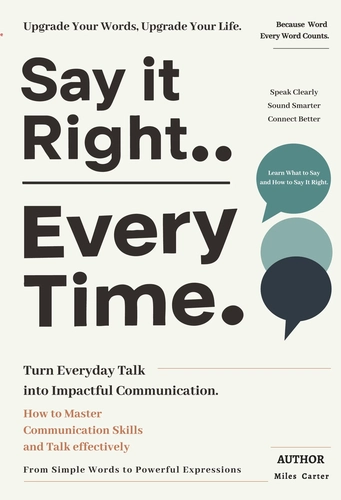
The book helps readers develop:
- Clearer expression
- More intentional communication
- Better conversation habits
- Stronger interpersonal connections
For anyone who wants to communicate with more confidence and create more meaningful conversations, this book offers practical guidance for everyday situations.
Final Thoughts
Better conversations are built through small choices.
Listening carefully, asking thoughtful questions, expressing ideas clearly, and respecting different viewpoints can transform everyday interactions.
Communication is not only about being understood.
It is also about helping others feel understood.
When conversations become more meaningful, relationships naturally become stronger.