If you’ve been wondering how to help siblings get along without losing your mind, this is what finally worked for us.
Last week, my two kids screamed at each other over a blue cup. Within seconds, the cup was on the floor and my daughter had slammed her door. It was never about the cup.
I used to jump in — assign blame, send them to their rooms. Nothing stuck. I remember reading that siblings often fight for attention, not because they hate each other.
If you’re tired of playing referee, here’s what actually helped us. Here’s what I learned about why siblings fight, the mistakes that made things worse, and the small changes that helped my kids fight less.
Quick Action Block: How to Help Siblings Get Along (Start Here)
- Stop being the referee – don’t assign blame immediately.
- Teach emotional language – “I feel _ when _.”
- Catch cooperation instantly – name positive moments in real time.
- Give structured separation time – short, predictable individual space.
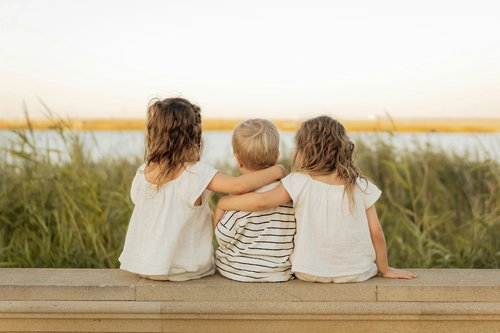
Why Siblings Fight for Your Attention
I used to believe my kids fought because they didn’t like each other. But child development research shows something else: siblings fight mainly because they’re competing for your attention — their most limited resource.
That changed how I saw every “she won’t share” and “he looked at me wrong.” It wasn’t about the cup. It was about who felt seen in that moment.
Some fighting is also normal. Kids are still learning impulse control, sharing, and how to handle frustration. The goal isn’t a fight-free house. The goal is teaching them how to repair after a fight.
What I Tried That Backfired
- Playing detective. “Who started it?” They just blamed each other more. The question itself made things worse.
- “Both of you go to your rooms.” No one learns anything.
- Forced apologies. “Say sorry right now.” They’d mutter it through gritted teeth and then fight again ten minutes later. A forced apology teaches nothing.
- Long lectures. They stop listening.
Small Changes That Slowly Helped
1. I Stopped Being the Judge
The first time I tried not taking sides, my daughter was crying that her brother had taken her doll. My son was screaming that she’d hidden it. Old me would have marched in and pointed a finger. Instead, I stood in the doorway and said, “I see two kids who are really upset. I’m not going to decide who started it. Take five minutes to cool off, then we’ll talk.” Then I walked away.
They didn’t follow me. There was silence, then a quiet “fine.” After a few minutes, they came out. No apology. But ten minutes later, I heard them laughing at something on TV.
A family therapist once told me: “Most sibling fights aren’t about justice. They’re about attention. When you stop being the judge, you stop feeding the fight.”
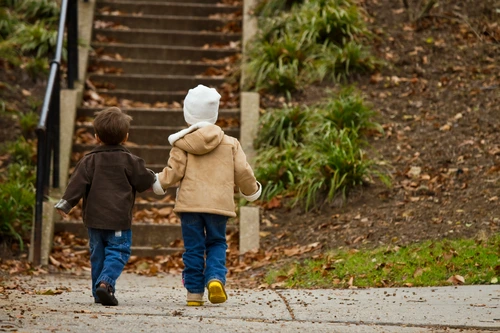
2. I Taught Them a Simple Script
One quiet morning, I taught them: “I feel _ when you _.” We practiced. “I feel frustrated when you grab my toy.” “I feel sad when you call me a name.”
A few days later, they were fighting over the iPad. I heard my daughter pause mid-yell and say, “I feel mad when you grab the iPad out of my hand.” My son paused. He didn’t scream back. He paused. “I wanted to watch my show.” She handed him the iPad and walked away.
3. I Started Catching Them Being Good
One afternoon, I saw my son help his sister reach a cup on a high shelf. He didn’t say anything. She didn’t say thank you. But I said, “I saw you help your sister. That was really kind.” He shrugged — and smiled.
A few days later, my daughter let him have the last cookie without arguing. I said, “That was really nice of you.” The fighting didn’t stop overnight, but the kind moments got more frequent.
4. I Stopped Comparing Them
I once said to my son, “Why can’t you clean your room like your sister?” He stormed off and slammed his door. I realized I was teaching him to resent her. So I started noticing each child separately, without bringing the other into it. “I love how you took care of your space today.” Just about him. Slowly, they stopped competing for “the good one.”
5. I Gave Them Separate Time
Sometimes they just needed distance. I started building in separate playtime — twenty minutes in different rooms. No fighting, no negotiating, just space. The first time I did it, my son complained. I said, “You get a turn too. Let’s set a timer.” When the timer went off, they both came out calmer.
It didn’t fix the fighting, but it lowered the daily tension. A parenting book I read called it “separate togetherness.” You can’t force closeness. Sometimes you have to create room for it.
The Problem-Solving Huddle (For When They Won’t Stop)
One night, they’d been fighting for twenty minutes over a pencil. I tried ignoring it. I tried the break. Nothing worked. So I sat them down and asked three questions:
- “What’s the problem?”
- “What’s one thing you could do to fix it?”
- “What’s one thing the other person could do?”
They didn’t come up with great solutions. But it worked. My daughter handed him the pencil. He did one math problem and handed it back. No apology. The fight was over.
The less I managed their fights, and the more I structured their environment, the more they learned to manage each other.
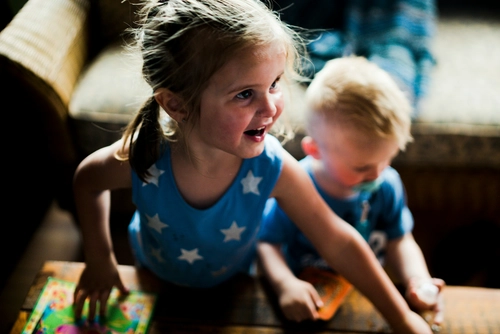
A Real Example That Changed How I See Sibling Fights
My son once broke his sister’s Lego creation. She screamed. He froze. I didn’t assign blame — I asked what would help. “He can help me rebuild it,” she said. Twenty minutes later, they were building together.
When Sibling Fighting Is a Real Problem
Most sibling fighting is normal. But talk to your pediatrician if:
- Fights are physically aggressive (hitting, biting, throwing things that could hurt)
- One child seems genuinely scared of the other
- The fighting is constant and never lets up, even with consistent effort
- Your child shows signs of depression, anxiety, or extreme withdrawal
For most families, this is just part of having more than one kid. An exhausting part — but normal.
Frequently Asked Questions
Should I let siblings fight it out?
Not always. If it’s safe and low-stakes, sometimes letting them work it out can build conflict resolution skills. But if it’s physical, escalating, or one child seems genuinely distressed, step in calmly. Separate them and offer a “cool down” break before problem-solving.
Is sibling fighting a sign of bad parenting?
No. Sibling fighting is developmentally normal. Kids are still learning emotional regulation, sharing, and communication. Frequent fighting doesn’t mean you’ve failed. It means you’re raising humans who are learning how to be human together.
One Last Thing
Yesterday, I heard my kids giggling in the other room. I peeked in. They were building a pillow fort together. No fighting. Just laughing.
They still fight. They still whine. But the good moments are there more often now.
I’m not raising kids who never fight. I’m raising kids who know how to come back together after they do. And that’s enough for me.
References
- American Academy of Pediatrics. (2018). Sibling Rivalry. healthychildren.org
- Siegel, D. J., & Bryson, T. P. (2016). No-Drama Discipline. Bantam Books.
- Faber, A., & Mazlish, E. (2012). Siblings Without Rivalry. W.W. Norton & Company.
Disclaimer
This is my personal experience, not professional advice. Every family is different. If you’re concerned about your children’s relationship or behavior, please talk to your pediatrician or a family therapist.
