Communication Problems Are Not Always About Talking More
You can spend a lot of time talking and still feel like you are not getting through to people.
Maybe your partner misunderstands what you are trying to say. Maybe your coworkers leave a conversation with a different impression from the one you intended. Or perhaps you regularly think of a better way to explain yourself only after the conversation has already ended.
Improving communication is usually less about talking more and more about making your meaning easier to understand.
Start With the Point You Are Actually Trying to Make
When people are nervous or frustrated, they often explain too much.
A simple request turns into a long background story. A small disagreement becomes a list of everything that has gone wrong in the past. By the time you reach the point, the other person may have stopped listening.
Before you speak, get clear on what you actually want the other person to understand. Once you know that, your words usually become much simpler.
Say It Right Every Time
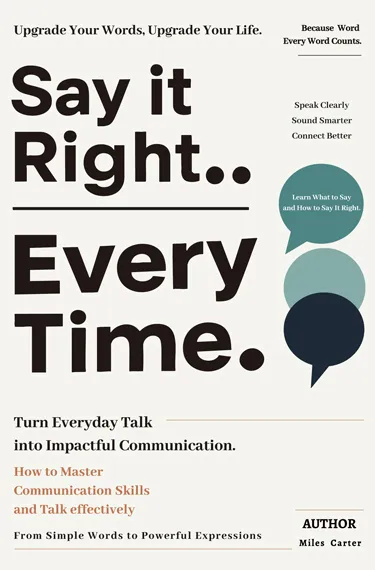
Say It Right Every Time by Miles Carter is a practical choice for readers who want to improve the way they express themselves in everyday situations.
Say it Right..Every Time.
Miles CarterPractical communication tools for the moments that matter — say what you mean, calmly and confidently.
The book focuses on how people communicate ideas, feelings, requests, and opinions so that the message comes across more clearly. That makes it especially useful when the problem is not a lack of confidence alone, but the feeling that your words do not quite match what you mean.

A conversation can go wrong because the speaker is unclear, because the listener interprets the message differently, or because emotions change the way the words come across. Good communication requires paying attention to all three.
Be Specific Instead of Making It Personal
One easy improvement is to focus on what happened rather than deciding what another person’s behavior means.
“You don’t care about this project” gives the other person something to defend. “I didn’t get the information we agreed on, so I could not finish my part” gives them a specific problem to respond to.
That difference may seem minor, but it changes the direction of the conversation. You are discussing something that can be addressed instead of arguing about someone’s character.
Learn to Say What You Need
Communication gets especially difficult when a person expects other people to figure out what they want.
You may hope that a friend notices you are upset. You may expect a colleague to realize that your workload is already full. You may assume your partner understands why something bothered you.
Sometimes they simply do not know.
Being clearer about what you need can save a lot of unnecessary frustration. You do not have to make the request dramatic. A direct sentence is often enough.
Listen for the Meaning, Not Just the Words
Improving communication is not only about speaking.
You can be technically clear and still miss what the other person is trying to tell you. Sometimes a person asks a practical question when what they really want is reassurance. Sometimes an argument about a small issue is connected to something much bigger.
Listening well does not mean agreeing with everything. It means making sure you understand what the other person is actually saying before deciding how to respond.
Pay Attention to When Conversations Go Wrong
You probably have a few recurring situations where communication breaks down.
Maybe it happens when you are tired. Maybe you become defensive when someone criticizes you. Maybe you avoid saying what you think until you are already frustrated.
Notice the pattern.
Once you know what tends to derail your conversations, improving communication becomes much more practical. You are no longer trying to become “a better communicator” in some vague sense. You are working on a specific problem that keeps showing up.
Practice on Ordinary Conversations
You do not need to wait for a major confrontation to work on your communication skills.
Try being more direct when making plans. Say what you actually think about a work proposal. Ask a follow-up question instead of assuming you know what someone meant. Tell a friend when something bothered you before the frustration has had time to build.
Small conversations give you room to practice without the pressure of getting everything perfect.
A Book Can Make the Practice Easier
Reading about communication will not automatically make every conversation go smoothly. What a useful book can do is give you a clearer framework for noticing what you are doing and what you could change.
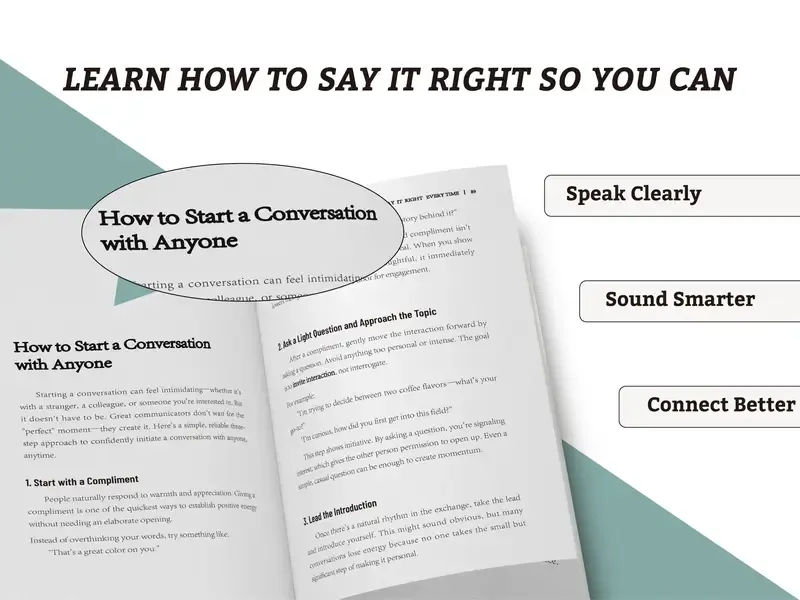
Say It Right Every Time is especially relevant for readers who want practical help with expressing themselves clearly. Rather than turning communication into a complicated theory, it focuses on the everyday moments where a few better choices can make a conversation much easier.
Better Communication Starts With Being Clear
You do not need to become naturally outgoing or exceptionally persuasive.
You simply need to get better at saying what you mean, listening carefully, and addressing problems while they are still manageable. Say It Right Every Time is a useful starting point for readers who want to make those changes in real conversations rather than simply learn another list of communication rules.