I don’t know when the tightness first showed up. Maybe it was a Sunday evening, the kind where the week ahead loomed like a wave you knew you couldn’t outrun. Or the middle of the night, when a single worried thought splintered into a hundred what-ifs. Learning how to let go of anxiety felt like trying to hold water. The harder I squeezed my attention on it, the more it slipped through, only to soak everything later. I’d search for the one trick, the instant fix. You don’t just think a worry. You wrestle it, replay it, argue with it. And that wrestling is what wears you out, far more than the original concern.
I eventually found a set of tools that helped — some for right-now relief, others for reweaving the mental patterns that spin anxiety in the first place. None of them are magic. They’re more like a well-loved kitchen drawer: you reach for the right one depending on what’s simmering. This is not a clinical guide. It’s what one person assembled after too many 3 a.m. staring-at-the-ceiling sessions.
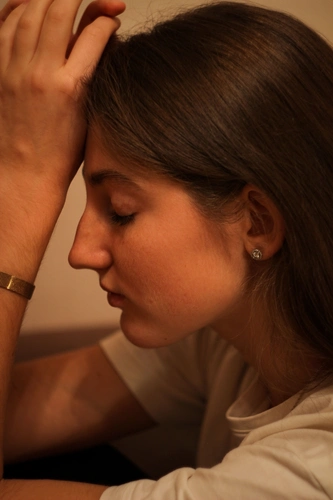
Why Is It So Hard to Let Go of Anxiety?
The mind doesn’t release anxiety because, in a twisted way, the mind believes it’s protecting you. Worrying feels productive. It feels like scanning the horizon for threats. A 2021 study on coping during the pandemic showed that many of us default to rumination because it mimics problem-solving — but it’s really just churning. You go over the same ground without making a single decision. Our brains are prediction machines. When they encounter uncertainty, they fill the gap with worst-case scenarios. That’s the “what-if” spiral. The more you engage, the stronger the neural pathway becomes. Letting go isn’t a switch you flip. It’s a habit of disengagement you build, one wobbling step at a time.
How to Let Go of Anxiety Right Now: Immediate Tools That Work
When you’re in a moment of peak worry, logic rarely helps. Your body is already convinced there’s a tiger in the room. So you start with the body, not the brain. I learned this the hard way, trying to reason with a racing heart. It never listened. These are the immediate relief steps that became my go-to.
Name what’s happening. I’ll say out loud, “This is anxiety. My chest is tight. My breath is shallow.” Naming it puts a tiny gap between you and the feeling. You’re not a bundle of fear; you’re a person noticing a bundle of fear. It sounds too simple to work, but there’s a wordless shift when you label it.
Breathe in a cadence. Try an inhale for a count of 4, and an exhale for a count of 6. The extended exhale signals your nervous system to downshift. I set a timer for one minute. Almost every time, the edge dulls before the minute ends. Another trick: the physiological sigh. Two sharp inhales through the nose, one long exhale through the mouth. Repeat three times. It’s like a reset button for your lungs.
Widen your gaze. An instructor named Bob Soulliere taught me this: pick something at least 200 feet away and let your vision go soft and expansive. Hold it for 20 seconds. Your brain stops scanning for close-up threats. This tiny move can pull you out of panic’s tunnel vision.
Use a grounding mantra. Keep a short phrase ready. Mine is, “This feeling will pass.” It’s not a lie. Feelings always pass, we just forget that in the thick of it. Repeat it like a soothing, patient hum.
The 5-4-3-2-1 Grounding Reset: A Ritual to Let Go of Anxiety
When my mind races like a runaway train, I don’t try to stop the thoughts. I just direct my attention to the room around me. I call it the 5-4-3-2-1 Reset: find 5 things you see, 4 you can touch, 3 you hear, 2 you smell, 1 you taste. It pulls you out of the hypothetical world and into the immediate one, where there’s no future disaster, just a lamp and the hum of the fridge. This isn’t distraction; it’s re-anchoring. It’s a way to let go of anxiety by letting the senses fill the space anxiety was occupying. I used this last week at 2 a.m., standing barefoot on the cold kitchen tiles, naming textures. The spinning stopped. Not completely, but enough to get back to bed.
When Worry Won’t Leave: What to Do After the Immediate Crisis
Short-term fixes buy you breathing room. But the real work of how to let go of anxiety happens in ordinary moments. One of the most effective approaches I stumbled on was something a 2021 study termed “self-acceptance.” Not fighting the anxiety, not scolding yourself for feeling it. Just acknowledging, “I’m a person who worries sometimes, and that’s okay.” This soft stance — a stark opposite of self-criticism — helps you stop feeding the friction. You drop the secondary battle. I began saying to myself, “Of course you feel anxious. You care about this.” The anxiety didn’t vanish, but it lost its extra layer of shame.
Another long-term tool: adopt a problem-solving mindset. Separate the feeling from the actual situation. Ask, “Is there anything I can do right now?” If yes, do it. If no, then the task is not solving, but releasing. I started writing down worries and next to them, one concrete step, or the word “release.” It sounds like a homework assignment, but it slowly trained my brain to distinguish between engaging and spinning.
Why Naming Your Anxiety Patterns Changes Everything
Anxiety has favorite scripts. Catastrophizing, overgeneralizing, “should” statements. I began noticing my own: “If I make one mistake, everything falls apart.” I named it the Domino Brain. Giving it a silly name stripped its power. When it would pipe up, I’d think, “Oh, Domino Brain again. I see you.” It’s a trick from the noticing side of letting go. You watch the thought rather than letting it drive. You don’t have to believe it. You just have to see it.
Frequently Asked Questions About Letting Go of Anxiety
What is the fastest way to let go of anxiety?
The physiological sigh — two quick inhales, one long exhale — often brings a noticeable shift within 30 seconds. It directly calms the nervous system, so even if your mind is still spinning, your body relaxes, which helps the mind follow.
Can you permanently let go of anxiety?
It’s less about permanent erasure and more about changing your relationship with it. Most people find that over time, with consistent coping tools and self-acceptance, the episodes become less frequent, shorter, and less intense. You learn to let go of the struggle, which is the real freedom.
Why do I feel anxious even when I try to relax?
Because the body’s stress response doesn’t switch off on command. When you try to force relaxation, you often become alert to any remaining tension, which creates more anxiety. Gentle grounding, like the 5-4-3-2-1 method, works better than trying to “will” yourself calm.
How to let go of anxiety without using anything external?
Your own breath, your senses, and your self-talk are always available. Practices like cadence breathing, naming your symptoms, and using a personal mantra are internal tools that require nothing but awareness.
One Last Thing:
There’s a gentleness in letting go that you can’t force. The first step isn’t a technique. It’s the quiet truth that you are not your anxious thoughts. You’re the one noticing them. That noticing — that slight, shaky awareness — is where the letting go begins. And each time you practice, you come home a little faster.
