You may have built a life that looks nothing like your childhood—yet still feel a heaviness you can’t name. Maybe you overreact to small things, or feel a sadness that doesn’t match your present. You’re not alone. Unprocessed childhood memories don’t disappear; they wait.
Processing them isn’t about blame. It’s about understanding yourself—giving voice to the child you once were so you can finally move forward with clarity and compassion. Here’s how to begin.
Why We Avoid the Past (And Why We Shouldn’t)
Many of us avoid old memories because we’re afraid. We fear that revisiting the pain will make it worse, or that it will change how we see our family or ourselves.
But avoiding these memories is like holding a beach ball underwater. It takes enormous energy, and the moment you relax, it bursts to the surface. The goal isn’t to drown in the past, but to learn how to swim in it.

A Gentle Path to Processing: 4 Steps
Processing is not linear. You may revisit a memory, feel you’ve dealt with it, and then find it resurfacing later with a new layer. Be patient with yourself.
1. Create a Safe Container
Before you begin, you need a safe space—physically and emotionally. A quiet room, a private journal, or a trusted therapist’s office. The key is to feel secure enough to be vulnerable. Remind yourself: I am safe now. I am an adult, and I am in control of this process.
2. Acknowledge the Fragments
You don’t need to remember everything perfectly. Start with what you have: a feeling, a smell, a song, a single image. Don’t force it. Just notice what comes up. If a difficult memory arises, try not to judge it. Simply say, “This is a memory. This is a feeling.” Acknowledging it is the first powerful step.
3. Change the Perspective
When a memory surfaces, you are likely viewing it through the eyes of the child you were—feeling their helplessness, fear, or confusion. Bring your adult self into the scene.
Imagine your adult self walking into that memory. You are not there to change what happened, but to witness and protect. What does the child in that memory need to hear? Maybe: “I see you. It wasn’t your fault. You are so brave.” This is reparenting yourself. You are giving that child the validation they may never have received.
4. Give it a Voice Through Writing
You cannot fully understand a feeling until you give it a name and a shape. Writing bridges the chaotic emotional brain and the organizing logical brain.
Don’t worry about being a “good” writer. This writing is for no one but you. You can:
- Write a letter you will never send. To a parent, a teacher, a bully, or your younger self.
- Write a dialogue. Have a conversation between your adult self and your child self.
- Write in third person. “The little girl felt scared when…” can make it feel safer.
The goal is to let the words flow without censorship. Let the buried emotions finally have a voice. This is not wallowing; it is releasing pressure that has been building for years. It is finally saying the words you never got to say.
Turning Reflection into a Practice
This journey is powerful, but you don’t have to navigate it blindly. A structured guide can make all the difference—something that offers prompts to unlock forgotten rooms in your mind and provides a safe path to explore them.
This is exactly the purpose of “777 Little Moments in My Life“ by Grace Willow.
It isn’t just a book; it is a companion for your journey inward. With 777 carefully crafted prompts, it helps you unpack old wounds, release buried emotions, and understand yourself more deeply.
As Chapter 01, Trauma & Healing, beautifully states:
“To heal, learn to write what you carried too long.”
This book invites you to turn the page inward—to write the letters you never sent, name what hurt, and give shape to feelings that have lived too long in silence.
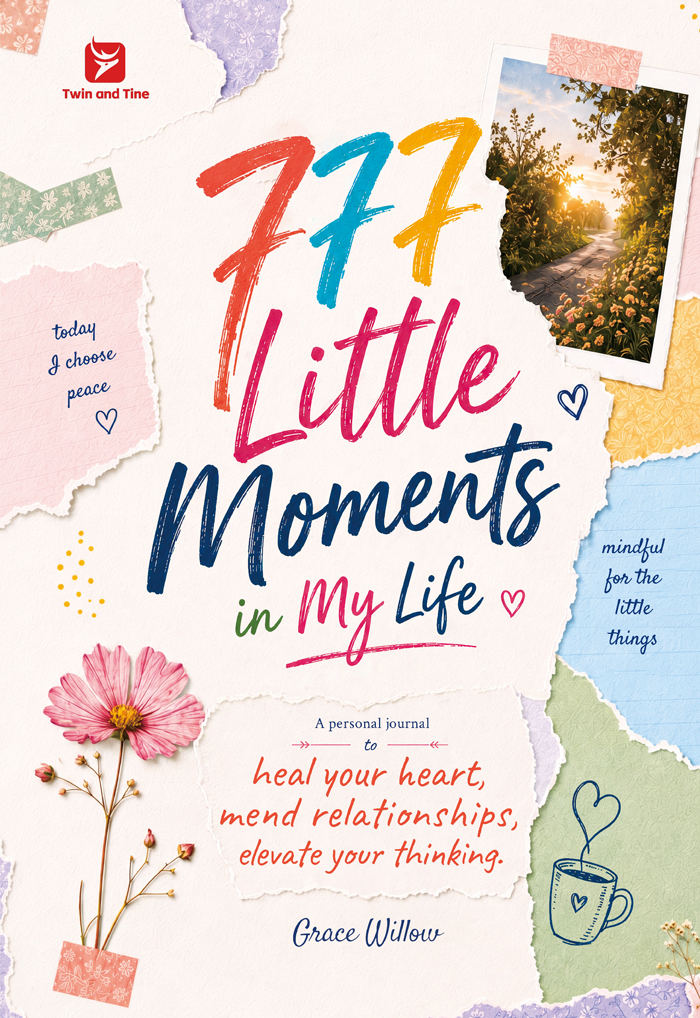
777 Little Moments in My Life
Grace Willow777 prompts to unpack old wounds, release buried emotions, and understand yourself more deeply.
Processing your childhood memories is one of the most courageous gifts you can give yourself. It is the path to understanding yourself more deeply, breaking generational cycles, and living a life not defined by your past, but enriched by your understanding of it.
Your story is yours to write. Now is the perfect moment to begin.
Did this article help you see things differently? Our books turn helpful ideas into practical tools you can return to anytime.



Break the Anxiety Circle
$19.90

From Debt to Wealth
$19.90


