I was on a first date last year when I noticed something odd. She was smiling. She was asking questions. Everything looked fine on the surface. But her feet were pointed toward the door the whole time. And every time I mentioned my work, her eyebrows flicked up for half a second. I did not need her to tell me it was not working. Her body already had.
That moment made me realize how much we miss when we only listen to words. Experts say about 55 percent of communication is body language, 38 percent is tone, and only 7 percent is the actual words. That means most of what we say is not in what we say.
Quick Answer: How do I read people more accurately?
You read people by watching clusters of signals, not single gestures. Look at their eyes, posture, feet, and tone together, and compare what you see to what they are saying.

Start With the Face
The face gives away more than most people realize. The eyes are the first place to look. If someone cannot look away from you, that could be interest. If they cannot look at you at all, that could be nerves or something they are hiding. A hard, unblinking stare is another signal. It usually means something is off.
Then watch the eyebrows. There are only three main emotions that raise them. Surprise, worry, and fear. If someone raises their eyebrows during a calm conversation, something does not add up. They are uncomfortable about something.
And check the smile. A real smile reaches the eyes. You will see small crinkles at the corners. A polite smile stops at the lips. If the crinkles are missing, the smile is hiding something.
What the Body Says When the Mouth Does Not
My friend Marcus has a habit of rubbing his hands together when he is excited. I did not notice it for years. Now I see it every time he is about to pitch an idea he loves. His mouth is still talking about logistics. His hands already told me he thinks it will work.
Here are a few signals worth watching.
Hands. Rubbing them together usually means positive anticipation. Hidden hands, in pockets or under a table, often mean someone is holding back.
Posture. Shoulders back and head up suggests confidence. Slouching and looking at the ground sends a different message. It may not mean low self-esteem, but that is what people read.
Crossed arms and legs. These are physical barriers. Even if someone is smiling, crossed arms say they are not fully open to what you are saying.
Feet. People forget their feet. Feet pointed at you mean you have their attention. Feet pointed toward the door mean their mind has already left.
Leaning in or away. Leaning in means interest and respect. Leaning back means they are tired of the conversation or uncomfortable.
What Tone and Word Choice Reveal
Paralanguage is a fancy word for how someone says something. Tone, pitch, and emphasis matter more than the words themselves.
If someone answers you in a monotone, they are probably not interested. If they use sarcasm, they mean the opposite of what they said. Pay attention to which words they stress. That tells you what they really care about.
And listen to how they talk about other people. Studies show that people who describe others as kind and generous tend to have those traits themselves. The reverse is also true. Someone who constantly badmouths others is telling you more about themselves than about the people they are describing.
A book that helped me go deeper on this is How to Read Someone’s Mind by Miles Carter. It breaks down eye contact, gestures, vocal shifts, and the small patterns that reveal what people are actually thinking. It is practical, not academic, and it helped me stop jumping to conclusions from single signals.
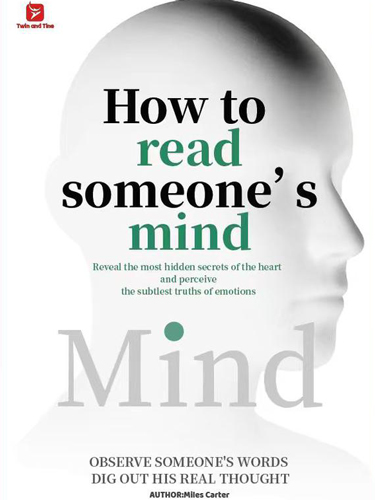
How to Read Someone’s Mind
Miles CarterPractical tools for reading body language, tone, and hidden intentions in real time. Spot what people aren’t saying — before you trust the wrong person.
Small Signals That Add Up
Frequent nodding is usually agreement. But exaggerated nodding can signal anxiety about approval. The person may be worried about what you think of them.
Rubbing the chin usually means someone is deep in thought. A clenched jaw is a sign of stress. Whatever they are saying, their body is telling you they are uncomfortable.
And if someone copies your body language, that is a good sign. It means they feel comfortable with you. We do this unconsciously when we are in sync with someone.
How to Use This Without Being Creepy
Reading people is a skill. Overreading them is a problem. Here is how to stay grounded.
Look for clusters, not single signals. One gesture means nothing. Three together mean something.
Compare to their baseline. Watch how they act when relaxed. Then notice what changes when the topic shifts.
Do not accuse. Ask. If you notice discomfort, say something gentle. “You seem unsure about this. Want to talk about it?”
Stay curious, not judgmental. You are trying to understand, not to catch someone.
Remember that culture changes everything. Eye contact that reads as confident in one place reads as rude in another. Context matters.

FAQ
Can you really read someone’s thoughts through body language?
Not thoughts exactly. But you can read comfort, discomfort, interest, resistance, and stress. That is often more useful.
Is crossed arms always a sign of defensiveness?
No. Sometimes people are cold. Or comfortable. Context matters more than any single gesture.
How long does it take to get good at this?
You can notice patterns within weeks if you practice. Real skill takes months. It is like learning a language.
What is the most reliable signal?
Changes from someone’s baseline. A sudden stillness, a shift in breathing, a hand that moves to the face. The shift tells you more than the gesture.
Can body language tell you if someone is lying?
Not reliably. Many people show stress signals when lying, but many also show them when nervous for other reasons. Look for clusters.
One Last Thing
That first date ended politely. I was not surprised. Her feet had told me twenty minutes before she said a word.
Reading people is not about gaining power over them. It is about paying attention. Most of us are broadcasting what we feel all day long. The trick is learning to listen with your eyes.
References
- Pease, Allan, and Barbara Pease. The Definitive Book of Body Language. Bantam, 2006.
- Navarro, Joe, with Marvin Karlins. What Every BODY Is Saying. William Morrow, 2008.
- Goman, Carol Kinsey. The Silent Language of Leaders. Jossey-Bass, 2011.