I still cringe when I think about that night. My friend Sarah had been quiet all evening. Her shoulders were a little rolled forward. She kept touching her necklace. I, in my infinite social wisdom, decided to lighten the mood. “So,” I grinned, “who broke your heart this time?” The silence that followed was so loud I could hear myself blinking. Her dog had died that morning. I didn’t know. I also didn’t notice the signs that were right there. I left that party determined to learn how to read people’s emotions, not to become some kind of mind reader, but to stop being the person who delivers a punchline to a fresh wound.
Quick Ways to Read People’s Emotions Today
If you want to stop missing emotional cues, start here:
- Look at the eyes first. Are they crinkled or tight? A real smile reaches the eyes.
- Check the shoulders. Rolled forward or up near the ears often means tension or protection.
- Watch the hands. Fidgeting, gripping, or picking at skin are whispers the body sends.
- Pause before you speak. Take three seconds to scan the person’s face and posture.
- Ask a gentle question: “You seem a little quiet. Everything okay?”
Why Do I Keep Missing the Signs Someone Is Upset?
Most of us think emotions are obvious. Crying means sad. Laughing means happy. But real life is not a cartoon. The signals people send are often tiny and fast. A slight tightening around the eyes. A microsecond pause before they answer. Their hand withdrawing an inch from the table. I used to miss these because I was too busy thinking about what I was going to say next. A friend once told me, “You were telling a story while I was falling apart. You just couldn’t see it.” That hit hard.
It happens because our brains are wired to prioritize our own thoughts. The inner monologue is loud. The other person’s wobbling chin or suddenly flat voice? Easy to overlook. Some people are naturally more tuned in. For the rest of us, reading emotions is a skill. You practice it. You get it wrong a lot. You learn. I started by accepting that I was genuinely terrible at it, and that was okay.
How to Read People’s Emotions: Start With the Eyes and Shoulders
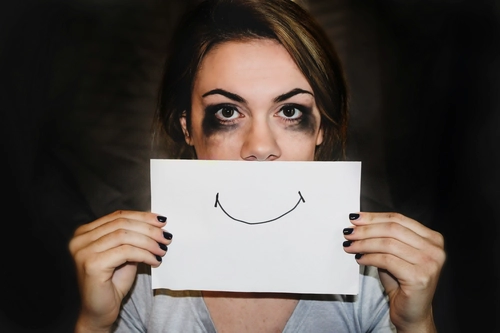
I learned the hard way that you don’t need to analyze someone like a detective. You just need to turn your attention outward for three seconds before you speak. The eyes tell you a lot. Are they looking at you, or just in your direction? Are the corners crinkled, or is the area around them tight? When someone is truly upset, even if they’re smiling, the eyes often don’t join in. The smile stops at the cheekbones.
Then look at the shoulders. We hold tension there. If someone’s shoulders are up near their ears or curled forward, they’re protecting themselves. It might be sadness or anxiety. I started paying attention to hands, too. Fidgeting, picking at skin, gripping a phone too hard. These are whispers the body sends before the person decides whether to speak up.
One thing that helped me was watching TV shows on mute. I know it sounds ridiculous. But I’d sit there and try to guess what a character was feeling just from their body language. Then I’d rewind with sound to check. Shows with realistic acting work best. I caught emotions I would have missed if I’d been listening to the words. Slowly, I started seeing them in real life.
The key is to pause before you react. When I’m about to crack a joke now, I glance at the person’s face. If something seems off, I hold the joke. I might say, “You seem a little quiet. Everything okay?” Not confrontational. Just a door left open. The beauty is, if they say “I’m fine,” I now know to trust the shoulders more than the words.
The 3-Second Check-In: A Tiny Ritual to Avoid Social Missteps
I needed something simple enough to do at a noisy party. So I made up a little mental routine I call the 3-Second Check-In. It goes like this. Before you make a comment that might land wrong, take three seconds to scan the person. First second: their eyes. Do they look present or distant? Second second: their mouth. Is there a slight tremor or unusual tightness? Third second: their overall posture. Are they leaning toward you or pulling away?
I tried it last month at a barbecue. My coworker was standing near the grill. He wasn’t talking much. I was about to make a joke about his burnt burger. I did the check-in. His jaw was clenched. His arms were crossed. I stopped. Instead I said, “Hey, rough week?” He nodded and eventually told me his dad was in the hospital. I didn’t fix anything. I just didn’t make it worse. That was a win.
You don’t have to be perfect. Half the time I still miss the cue. But the ritual slows me down. It forces me to actually look at the person in front of me. That alone has saved me from dozens of situations where humor would have been a disaster. I also realized that people appreciate the pause. It makes them feel seen.
Is it okay to ask someone directly if they’re upset?
I used to think asking was intrusive. I was afraid of being that person who overanalyzes everyone. But the alternative is guessing and often guessing wrong. A gentle question, asked quietly, is almost never offensive. I’ll say, “I might be totally off here, but you seem a little down. Want to talk or just want a distraction?” The choice is theirs. That last part matters. It gives them an escape route.
How can I practice reading emotions without being creepy?
Start with people you already know well. Notice when their mood shifts. You can also practice in coffee shops. Just observe interactions at a distance. Look at body language clusters. A person leaning in, open palms, relaxed eyebrows probably feels comfortable. Arms folded, head down, lips pursed probably signals something else. Don’t stare. Just notice patterns. I started doing this during commutes. It became a low-stakes training ground.
What if I still get the signals wrong?
Oh, you will. I once apologized to a friend because I thought she was angry at me. Her face looked tense and she wouldn’t meet my eyes. Turned out she had a migraine and the light was hurting her. I felt dumb. She laughed and said it was sweet that I cared. Most people won’t punish you for a kind misread. They’ll correct you. And you’ll learn that a headache sometimes looks just like resentment.
FAQ: How to Read People’s Emotions and Body Language
Q: What’s the most reliable body language cue for someone being upset?
A: The eyes and shoulders together are a strong cluster. If someone’s smile doesn’t reach their eyes and their shoulders are rolled forward or tense, that’s a good sign something is off. One cue alone can be misleading; clusters are more reliable.
Q: Can body language be misinterpreted?
A: Yes, all the time. A crossed arm could mean defensiveness—or it could mean they’re cold. Lack of eye contact could mean dishonesty—or shyness. Context matters. That’s why it’s better to look for clusters and check in gently rather than assume.
Q: How do I get better at reading emotions without staring at people?
A: Practice in low-stakes settings. Watch muted TV shows. Observe people in coffee shops from a distance. Notice patterns over time. The goal isn’t to be a human lie detector—it’s to be more present and less likely to miss what’s right in front of you.
Q: What if I ask someone if they’re okay and they say “fine” but clearly aren’t?
A: You can say, “Okay. I’m here if you want to talk.” Then drop it. You’ve opened the door. Pushing further can make them feel cornered. Trust that they’ll come to you when they’re ready.
Q: Is it ever too late to ask someone if they’re upset?
A: No. Even hours later, you can say, “Earlier you seemed a little off. I just wanted to check in.” Most people appreciate being seen, even after the moment has passed.
One Last Thing
I still think about that moment with Sarah. I can’t get it back. But I haven’t made a mistake like that in a long time. Last week a friend lost her job. I could see it in the way she was holding her coffee cup—two hands, huddled over it like it was a small fire in winter. I didn’t joke. I just sat down beside her. She told me later that was exactly what she needed. I’m not an expert. I’m just someone who finally learned to see the quiet mess before I step in it.
References
- Navarro, J. (2008). What Every Body Is Saying: An Ex-FBI Agent’s Guide to Speed-Reading People. William Morrow Paperbacks.
- Ekman, P. (2003). Emotions Revealed: Recognizing Faces and Feelings to Improve Communication and Emotional Life (2nd ed.). Times Books.
- Patterson, M. L. (2011). More Than Words: The Power of Nonverbal Communication. Editorial Aresta.
