You bought this book—or you are considering it—because the title caught your attention. Who wouldn’t want to understand what people are really thinking?
But here is the first thing you should know: How to Read Someone’s Mind is not about literally reading thoughts. It is about learning to notice the small signals people reveal through their words, behavior, and reactions.
It is not magic. It is observation.
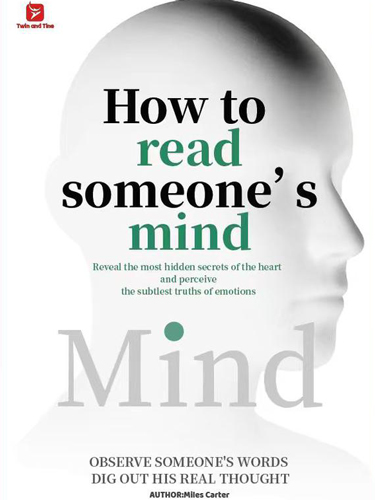
How to Read Someone’s Mind
Miles CarterPractical tools for reading body language, tone, and hidden intentions in real time. Spot what people aren’t saying — before you trust the wrong person.
What Is This Book Really About?
The book focuses on a simple idea: people constantly communicate beyond their words. You might hear what someone says, but you are likely missing everything else they are telling you.
The book is organized around a four-layer framework: face, body, voice, and context. Rather than teaching you to memorize a list of gestures (touch nose = lying, cross arms = defensive), it trains you to read emotional signals in real time.
How to Read Someone’s Mind covers:
- Facial signals — what micro-expressions, eye contact, and lip tension reveal
- Body language — how posture, gestures, and touch communicate comfort, control, and distance
- Voice and speech patterns — why changes in tone, speed, and hesitation matter more than the words themselves
- Context — why the same behavior means something completely different in a meeting versus a dinner table
The book is built around a simple premise: most people have consistent patterns in how they communicate. When those patterns break, something has shifted underneath.
Instead of asking “is this person lying?” you learn to ask “what is different about today compared to how they usually act?” That one question changes everything.
What I Liked About This Book
1. It Makes You Pay Attention to Patterns, Not Single Moments
Most people read others by looking for isolated signals. They see one gesture and jump to a conclusion. A friend cancels plans once and you assume they are pulling away. A colleague snaps at you and you assume they are angry at you personally.
The problem is that a single moment rarely tells the whole story. Someone who cancels plans once might just be exhausted. Someone who snaps at you might be dealing with something completely unrelated.
This book trains you to look for patterns instead. Someone repeatedly canceling plans tells you something different from someone canceling once. Someone who consistently dismisses your ideas tells you something different from someone who disagreed once.
That shift in focus—from single events to repeated patterns—changes how you see people. You stop overreacting to isolated moments. You start noticing what people repeatedly do, not just what they occasionally do.
2. It Helps You Stop Taking Everything at Face Value
Many people read others poorly not because they cannot observe, but because they focus on the wrong thing. They hear what people say and ignore what they repeatedly do.
A friend says “I’m happy for you,” but every time you share good news, they change the subject or downplay your achievement. A colleague says “I support you,” but never follows through when you actually need help. A partner says “nothing is wrong,” but their tone, body language, and behavior tell a different story.
This book trains you to notice the gap between words and actions. Once you start paying attention to that gap, you stop being surprised by people who say one thing and do another. You stop making excuses for people whose words sound good but whose behavior never matches.
3. It Is More About Awareness Than Manipulation
When people see a title like How to Read Someone’s Mind, they often wonder: “Is this a manipulation book?”
It is not.
The value of this book is not learning how to control people. It is learning how to understand interactions more clearly. It helps you see what is already there—the signals people are sending whether they realize it or not.
The goal is not to become suspicious of everyone. It is to become more observant. To stop walking away from conversations wondering what you missed. To start trusting the signals you already notice but never knew how to interpret.
If you have ever walked away from a conversation feeling unsettled and could not explain why, this book gives you a way to name what you already sensed.
What I Did Not Like About This Book
1. The Title Creates Unrealistic Expectations
This is the biggest weakness of the book—and it is not really the author’s fault.
The title How to Read Someone’s Mind sets an expectation that the book cannot possibly meet. No one can actually read another person’s mind. If you pick up this book expecting a magical formula to know exactly what someone is thinking, you will be disappointed.
What the book actually offers is something more practical and more valuable: a framework for noticing what people are already communicating without realizing it. But the title does not communicate that. It promises something the book does not deliver, which will frustrate some readers.
2. Some Concepts Will Feel Familiar
If you have already read books about body language, emotional intelligence, or behavioral psychology, you may find some ideas here familiar. The book does not claim to reinvent the wheel. It synthesizes existing insights into a practical framework.
That is not necessarily a bad thing. The value is in the framework and the application, not in groundbreaking new research. But if you are looking for something completely novel, parts of this book may feel like a review of concepts you have encountered before.
Who Should Read This Book?
This book is a good fit if:
- You often walk away from conversations feeling like you missed something
- You keep trusting people who later prove untrustworthy
- You want to become more observant in social situations
- You are interested in psychology, human behavior, or communication
- You want to stop second-guessing yourself
This book is probably not for you if:
- You are expecting a “mind reading trick”
- You are looking for manipulation techniques
- You want a quick, step-by-step system you can memorize in an afternoon
- You are not willing to practice observation over time
My Final Verdict
If you are looking for a magical formula to know exactly what someone is thinking, this book will disappoint you.
But if you want to become more observant, understand behavior patterns, and communicate better, it offers genuinely useful insights.
The framework is practical. The emphasis on patterns over isolated moments is valuable. And the shift from “what are they saying?” to “what is different about today?” is one that actually changes how you show up in conversations.
It is not a perfect book. The title is misleading. Some concepts will feel familiar if you have read other books in this space. But for what it actually delivers—a practical framework for noticing what people are already communicating—it is worth the read.
If you are tired of being confused by the people around you, this book will give you a way to start seeing more clearly.