You want to be honest, but you do not want to hurt someone’s feelings. You want to say no, but you worry that it will sound selfish. You need to disagree, but you are afraid that being direct will turn the conversation into an argument.
So you soften everything.
You add apologies, unnecessary explanations, and phrases that make your actual point harder to hear. By the end, the other person may still not understand what you wanted in the first place.
This is a common communication problem. Being clear does not require being harsh, and being considerate does not require hiding what you actually mean.
Being Direct Is Not the Same as Being Rude
A direct statement can feel uncomfortable without being disrespectful.
There is a difference between attacking a person and clearly stating your own position. Saying, “I cannot take this on this week” communicates a limit. Saying, “You always expect me to do everything” shifts the conversation toward blame.
The first may still disappoint someone, but disappointment is not the same thing as disrespect.
Learning that distinction can make it easier to speak honestly without spending so much time worrying about whether every direct statement will sound aggressive.
The Problem With Over-Apologizing
When people are afraid of sounding rude, they often apologize before they have even said anything.
“Sorry to bother you, but…”
“Sorry, I know this is probably annoying…”
“I’m sorry, but I was just wondering…”
A little politeness is perfectly normal, but too much can weaken the message. The other person may start focusing on how uncomfortable you seem rather than what you actually need.
In many situations, a simple and respectful statement works better than wrapping the request in several layers of apology.
Say What You Need Instead of Expecting People to Guess
Indirect communication often feels safer because it leaves room to retreat.
Instead of saying that you need more help, you mention how busy you have been. Instead of saying that something upset you, you become noticeably quieter and hope the other person asks what is wrong. Instead of declining an invitation, you say that you will “see how things go.”
The problem is that the other person may interpret all of these signals differently.
If you want something understood, it is usually better to communicate the actual message instead of waiting for someone to decode it.
Say It Right Every Time by Miles Carter
Say It Right Every Time by Miles Carter is especially relevant to this problem because it focuses on communicating clearly without losing sight of how a message is received.
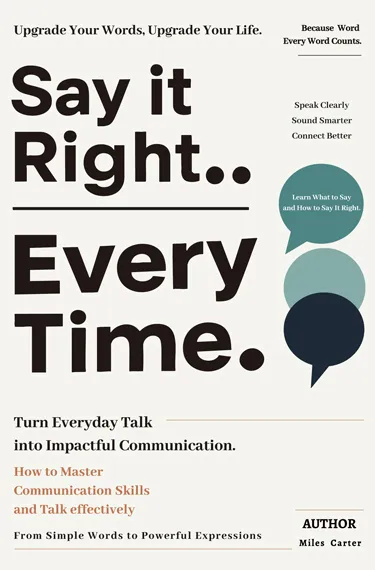
Say it Right..Every Time.
Miles CarterPractical communication tools for the moments that matter — say what you mean, calmly and confidently.
The book encourages readers to think about the difference between intention and impact. You may intend to be kind, but if your message is too vague, the other person may not understand you. You may intend to be direct, but if your wording is unnecessarily harsh, the other person may focus on the tone instead of the point.
Good communication requires paying attention to both sides.
Clear Language Can Reduce Conflict
Being vague does not always prevent arguments. Sometimes it creates more room for them.
If your partner does not know that you need some space, they may keep asking questions. If a coworker does not know what you actually need from them, the same task may have to be discussed repeatedly. If a friend does not know that something bothered you, they may continue doing it without realizing there is a problem.
Clarity gives the other person something concrete to respond to.
They may disagree. They may say no. They may need more information. But at least the conversation begins with an actual message rather than a guess.

Replace Accusations With Your Actual Point
When emotions are high, people often communicate through accusations because they want the other person to understand how frustrated they are.
“You never listen.”
“You always make everything difficult.”
“You don’t care what I think.”
These statements may express a genuine feeling, but they also invite the other person to defend themselves.
A clearer approach is to communicate the specific situation and what you need from it. This gives the conversation something concrete to work with and reduces the chance that the entire discussion becomes a fight over who is the problem.
You Are Allowed to Disappoint Someone
One of the biggest obstacles to clear communication is the belief that the other person must be happy with what you say.
They do not.
You can communicate respectfully and still disappoint someone. You can say no without being cruel. You can disagree without insulting anyone. You can ask for a change without attacking the person who has not made that change yet.
Accepting this can make communication much less stressful because you no longer have to make every message perfectly comfortable for everyone involved.
How to Practice This in Everyday Conversations
Start with low-stakes situations. When you normally give a vague answer, try being slightly more specific. When you would usually apologize repeatedly before making a request, try stating the request directly and politely.
Pay attention to what happens.
Often, the conversation goes much more normally than you expected. The fear of sounding rude can be much stronger than the actual reaction you receive.
With practice, clarity begins to feel less confrontational.
Why Say It Right Every Time Can Help
Say It Right Every Time is useful for readers who want to become clearer without becoming harsher.
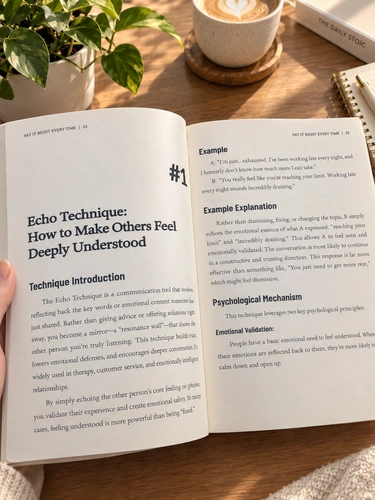
The book approaches communication as something that can be practiced and improved. It encourages readers to think about the relationship between their intention, their wording, and the way another person is likely to interpret the message.
That makes it especially relevant when your biggest communication problem is not knowing what you think, but feeling afraid to say it plainly.
Final Thoughts
You do not have to choose between honesty and kindness. The two can exist in the same conversation when your message is specific, respectful, and free from unnecessary blame.
For anyone searching for how to say what you mean without sounding rude, Say It Right Every Time by Miles Carter provides a practical starting point for becoming more direct without turning every conversation into a confrontation.