You’ve narrowed it down to two options, and both seem perfectly reasonable. You compare the pros and cons, read another review, ask a friend what they would choose, and then reopen the question because their answer made you think of something you had not considered. An hour later, you still have not decided, even though the decision itself was supposed to take five minutes.
This kind of overthinking can happen with almost anything: buying something, sending an email, choosing between two jobs, making plans, or deciding how to handle a conversation. The difficulty is that careful thinking and unproductive thinking can look almost identical from the inside.
The key is learning to recognize when analysis has already given you enough information and when you are continuing simply because you want a level of certainty that the decision cannot provide.

First, Ask Whether the Decision Is Actually High Stakes
Not every decision deserves the same amount of mental energy.
Choosing between two restaurants for Friday night does not require the same process as choosing a new career. But an overthinking habit can flatten those differences. Suddenly, every small choice feels as though it needs to be researched, compared, and reviewed from every possible angle.
Before going deeper, ask yourself what would actually happen if you chose incorrectly.
If the consequences are minor or reversible, the decision probably does not need another thirty minutes of analysis. Knowing that can make it easier to stop treating a small choice like a permanent life decision.
Decide What Matters Before You Compare the Options
Overthinking often begins because there are too many criteria.
One option is cheaper. Another is more convenient. One seems better long term. Another feels safer. Then you add five more factors and start changing the importance of each one depending on which option happens to be winning.
A better approach is to decide your top priorities before comparing the choices. Maybe you care most about time, cost, and reliability. Once those are clear, evaluate the options against them and resist the temptation to introduce a brand-new standard every time you feel uncertain.
You are not trying to prove that one option is objectively perfect. You are trying to find an option that fits what matters most to you.
Set a Point Where Thinking Ends
This is one of the most practical changes you can make.
Give yourself a clear stopping point. It could be a time limit, a number of comparisons, or a simple rule such as “Once I have enough information to answer the main questions, I decide.”
Without a stopping point, analysis can expand indefinitely because there is always one more review, one more opinion, or one more possibility to consider.
A decision does not become safer simply because you spent longer thinking about it.
Watch for Reassurance Seeking
Sometimes the real reason behind overthinking is not a lack of information. It is a desire to feel completely certain before committing.
You ask someone what they would do. Then you ask another person. You search for opinions online. You revisit the decision after everyone has gone to bed because suddenly a new concern has appeared.
The problem is that reassurance often works only temporarily. You feel better for a few minutes, and then another “what if” appears.
Instead of asking, “Who can tell me that this is definitely the right choice?” try asking, “What information am I actually missing?”
That question separates a genuine information gap from the uncomfortable feeling of uncertainty.
Make the Decision, Then Stop Reopening It
Some decisions become exhausting because they are never really finished.
You choose an option, but keep checking the alternative. You order something but continue reading reviews afterward. You decide how to respond to someone, then spend the rest of the night wondering whether another response would have been better.
Once the decision has been made, give yourself a reason to leave it alone unless new information genuinely changes the situation.
The ability to move forward is part of decision-making. Otherwise, every choice remains mentally open even after the real-world problem has already been handled.
What to Do When You Made the Wrong Choice
One reason people overthink decisions is that they have quietly turned mistakes into something much larger than they are.
If you choose badly, you do not just think, “That was the wrong choice.” Your mind says, “I should have known,” “Why did I do that?” or “I always make terrible decisions.”
That reaction makes future decisions harder because the brain starts associating choice with self-judgment.
A better response is more practical: What did I know at the time? What did I miss? What will I do differently next time?
That gives you something useful to carry forward without turning one decision into a reason to distrust yourself.
Where Break the Anxiety Circle Fits In
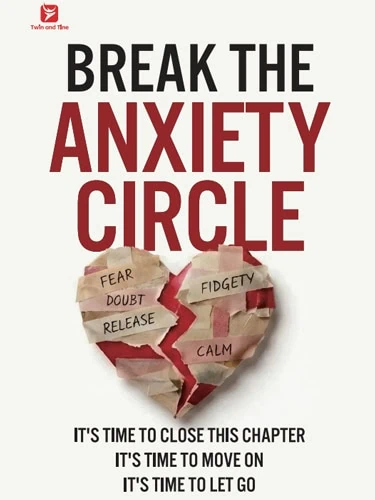
Break the Anxiety Circle by Miles Carter looks directly at the repetitive thinking patterns that can turn ordinary decisions into exhausting mental loops. The book addresses analysis paralysis, self-doubt, overthinking, anxiety, and the tendency to keep searching for certainty long after you already have enough information to act.
One of the useful ideas behind this approach is recognizing the difference between solving a problem and circling it. You may still be thinking, comparing, and researching, but that does not necessarily mean you are getting closer to a better answer.
The book also connects decision-making with broader patterns such as fear of judgment and the need for reassurance. That can be important when the real difficulty is not choosing between two options, but worrying about what your choice will say about you or how other people will react.

Break the Anxiety Circle
Miles CarterA mental reset for people trapped in the overthinking loop. Understand why your mind won’t stop racing — and how to break free from anxiety, people-pleasing, and emotional exhaustion.
What You Can Gain From Reading the Book
Reading Break the Anxiety Circle can be helpful when your decision-making problems are part of a larger pattern of mental overactivity. Instead of treating each choice as an isolated problem, you begin to notice what happens before, during, and after the decision.
You can become more aware of:
- when useful analysis turns into repetitive thinking
- why uncertainty makes some decisions feel much harder than they are
- how reassurance can temporarily calm you without solving the underlying pattern
- how self-doubt can make you reopen decisions you’ve already made
- how to step out of a mental loop before it consumes more time
The aim is not to make every decision quickly. It is to make decisions with a reasonable amount of thought and then allow yourself to move on.
A Decision Does Not Need to Feel Perfect
You may never reach the point where a decision feels completely certain. There will usually be another possibility, another opinion, or another hypothetical problem you could examine.
At some point, confidence means accepting that you have enough information to choose.
The next time you notice yourself reopening the same decision, pause and ask whether there is genuinely something new to learn. If there is, gather the information. If there is not, you may not need another answer. You may simply need to trust yourself enough to move forward.
If you found this helpful, these books go deeper into the same themes.



Break the Anxiety Circle
$19.90

From Debt to Wealth
$19.90

