You are brushing your teeth before bed when you suddenly remember an argument from last week. You think about the moment you raised your voice, the expression on the other person’s face, and the response you wish you had given instead. You tell yourself that the conversation is over, but your mind keeps returning to it. By the time you get into bed, you are no longer thinking about what happened alone; you are questioning what it says about you.
Many people revisit past experiences because they want to understand them. The difficulty begins when reflection stops producing anything useful. You keep examining the same details, imagining different outcomes, and criticizing yourself, yet the situation remains unchanged.
Learning how to stop ruminating on the past does not require you to forget what happened or pretend that every decision was right. It means learning to take something useful from an experience without making yourself relive it over and over again.

Why Does Your Mind Keep Returning to Old Experiences?
One reason rumination persists is that the mind keeps searching for a better ending. You may believe that if you can identify exactly where things went wrong, you will finally feel at peace. But many past situations contain unanswered questions, decisions that cannot be reversed, or other people’s reactions that you cannot fully understand.
The same pattern can show up in different areas of life:
- Regretting what you said: You replay a conversation because you are embarrassed by your words or afraid that someone now sees you differently.
- Questioning an old decision: You compare your current situation with an imagined version of your life in which you made another choice.
- Blaming yourself for a relationship problem: You focus on what you should have done differently, sometimes overlooking the other person’s role in what happened.
- Revisiting missed opportunities: You keep thinking about a chance you did not take, wondering whether everything would be better if you had acted differently.
- Struggling to forgive yourself: Even after recognizing your mistake, you feel that moving on would mean excusing what you did.
These thoughts can feel like problem-solving because you are actively examining the past. Yet there is an important difference between reflecting on an experience and repeating the same mental argument. Reflection helps you identify what happened and what you can learn. Rumination keeps returning to the question without helping you make a new decision.

How to Stop Ruminating on the Past
You do not have to win an argument with every memory that comes back. Instead, try to change what you do when the memory appears.
1. Separate what happened from what you think it means.
Suppose you gave an awkward answer during a meeting. The event is that you struggled to explain your point. The interpretation might be that your colleagues think you are incompetent or that you will never be good at your job. Those conclusions may feel convincing when you are embarrassed, but they are not the same as the facts.
When you notice yourself spiraling, write down what you know happened and what you are assuming. This will not erase the discomfort, but it can prevent one difficult moment from becoming a sweeping judgment about your abilities or character.
2. Look for a lesson, not a perfect explanation.
You might never know exactly what another person thought during a conversation, and you cannot go back and test every alternative response. Ask yourself what the experience has taught you instead. Perhaps you want to pause before responding when you are angry, communicate your needs more clearly, or ask a question rather than assume you understand someone’s intentions.
Once you have identified a realistic lesson, you do not need to keep reviewing every detail to prove that you have learned it.
3. Take responsibility where it is needed.
If you hurt someone, acknowledge it and apologize where appropriate. If you made a poor decision, consider what you can do differently next time. Taking responsibility gives you a way to respond to the past in the present.
But if you have already made amends and there is nothing left to correct, continued self-punishment does not necessarily help the person you hurt or improve your future behavior. It may simply keep you stuck in guilt.
4. Be fair to the person you were at the time.
Looking back, you have information that you did not have when you made the original decision. You may now recognize warning signs, understand your own needs better, or see consequences that were difficult to predict. Use that knowledge to make better choices today, rather than assuming your past self should have known everything you know now.
5. Bring your attention back to the present.
When an old memory returns, you can acknowledge it without following every thought it produces. Notice what you are doing, return to the task in front of you, or choose an activity that requires your attention. If the same thought comes back later, repeat the process. The aim is not to force the memory away but to stop giving it unlimited time whenever it appears.
What If You Cannot Forgive Yourself?
Sometimes the hardest part of letting go is the belief that you do not deserve to feel better about what happened. You may think that continuing to feel guilty proves that you care, that you understand the seriousness of your mistake, or that you will never repeat it.
But guilt and self-punishment are not the same as accountability. You can recognize that your actions hurt someone, take steps to repair the damage, and make a serious effort to behave differently without deciding that you must remain unhappy indefinitely.
It may help to ask yourself what you would expect from someone else in the same situation. Would you expect them to acknowledge the mistake and learn from it, or would you tell them that one bad decision defines them permanently? Applying a fairer standard to yourself does not excuse harmful behavior. It allows you to recognize your responsibility without reducing your entire identity to a moment you regret.
This can be particularly difficult if you are used to pleasing others or measuring your worth by whether people approve of you. In that case, moving forward may also involve learning to set boundaries, tolerate disappointment, and accept that not every uncomfortable interaction can be repaired by doing more for someone else.
A Book to Help You Understand Regret and Overthinking
When the same memories keep returning, it can be helpful to look beyond the individual event and examine the habits that make it difficult to move on.
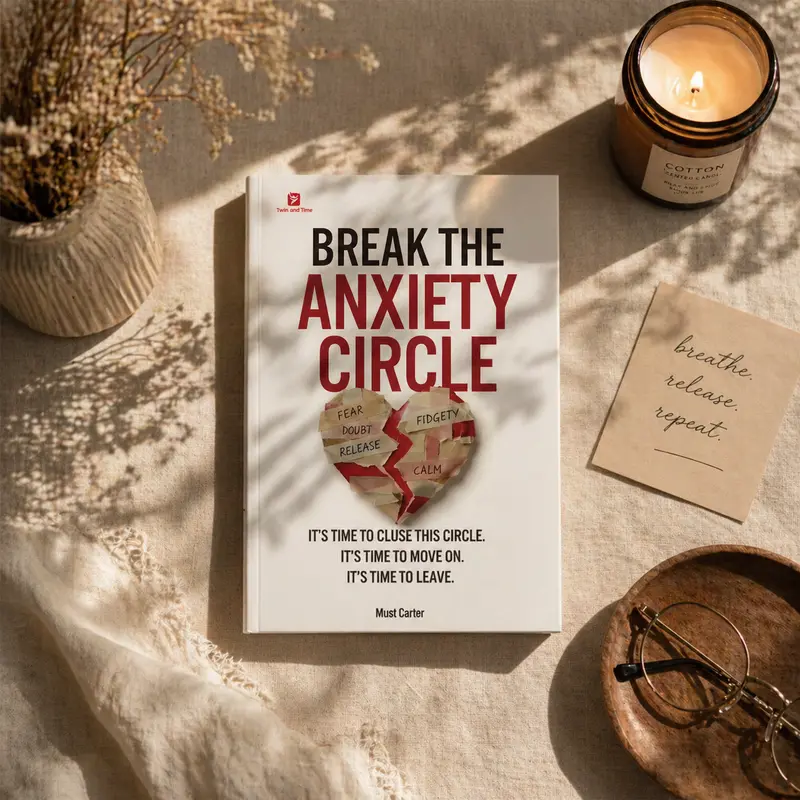
Break the Anxiety Circle by Miles Carter explores self-forgiveness, self-worth, rumination, letting go of the past, emotional reactions, and boundaries. These topics connect with the experience of knowing that something is over while still feeling mentally caught up in it.

Break the Anxiety Circle
Miles CarterA mental reset for people trapped in the overthinking loop. Understand why your mind won’t stop racing — and how to break free from anxiety, people-pleasing, and emotional exhaustion.
The book is particularly relevant if your regrets often lead to further self-criticism. You might replay an argument, blame yourself for not handling it better, and then worry that your mistake reveals something fundamentally wrong with you. Its focus on self-worth and self-forgiveness offers a way to examine that pattern instead of treating each memory as an isolated problem.
It also addresses the difficulty of letting go of old experiences and the tendency to become trapped in overthinking. For readers who struggle with both past regrets and present worries, these themes provide a broader starting point for understanding why the mind keeps returning to uncomfortable situations.
Reading a book will not change what happened, and it cannot guarantee that difficult memories will stop appearing. But it can give you a structured way to reflect on your habits, understand your emotional responses, and consider what it would mean to move forward without continually blaming yourself.
Moving Forward Does Not Mean Forgetting
Some memories will remain uncomfortable, particularly when they involve people you care about or choices that had real consequences. You do not have to turn every regret into a positive lesson, and you do not have to feel grateful for every difficult experience. Sometimes, accepting that something happened and cannot be changed is already a meaningful step.
When you notice yourself revisiting the same event, ask whether you are learning something new or simply repeating the same criticism. If there is something to repair, take a practical step. If there is a lesson to carry forward, identify it. Then give yourself permission to return to the life you are living now.
If you want to explore the relationship between regret, rumination, self-forgiveness, and self-worth, Break the Anxiety Circle is a relevant book to consider. You can learn from your past without continuing to punish yourself for it, and you can take responsibility for what happened while still allowing yourself to grow beyond it.
If you found this helpful, these books go deeper into the same themes.



Break the Anxiety Circle
$19.90

From Debt to Wealth
$19.90

