I was standing in the checkout line, my kids behind me, when my 5-year-old bit my 8-year-old on the back. Hard. The scream still echoes in my ears. Then the hitting started, right there between the candy rack and the magazine stand. I got them to the car, heart pounding, mind racing to the worst possible solutions. I even caught myself wondering if a police officer could scare them straight. That’s when I knew something had to change, not just for them, but for me. I needed a way to stop siblings from hitting each other that actually worked, not another timeout that dissolved the next day.
Quick Stop-Sibling-Hitting Today
If you’re dealing with physical fights right now, try these:
- Separate them immediately, no words, just calm physical separation.
- Check the hurt child first, give them all your attention for 30 seconds.
- Say, “I see you’re angry. Hitting is not okay. I’ll help you when you’re ready.”
- Walk away for two minutes if you need to regulate your own temper.
- Return and ask each child, “What were you feeling right before the hit?”
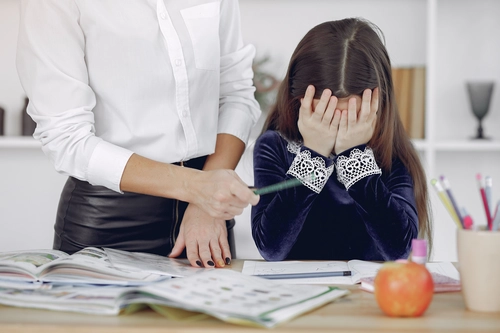
Why Do Siblings Hit Each Other When They Seem to Love Each Other?
I used to think hitting meant my kids were turning into monsters. Then a friend, a mom of four, told me something that stuck: “Their brains can’t park the big feelings yet. Hitting is just the overflow valve.” My younger one bites because she doesn’t have the words to compete with an older sibling who always gets to be first. My older one hits back because she feels invaded and her impulse control is still under construction. Neither is evil. They’re just tiny people with giant emotions and zero tools. When I started seeing the chaos as a signal, not a character flaw, I could finally start building those tools.
Research backs this up. The parts of the brain that manage self-control and empathy aren’t fully wired until the mid-20s. So expecting a kindergartner to “just use her words” when she’s overtired, hungry, or feeling small is like expecting a car to run on fumes. The hitting is the check-engine light. I had to learn to read it.
What Can I Do to Stop My Kids from Hitting Each Other Without Losing My Mind?
After the clothing store meltdown, I tried something I’d read in a parenting discussion. A parent described a two-tier approach: if a kid didn’t have the skill yet, she got extra practice; if she had the skill but chose not to use it, she got a meaningful consequence. I adapted it for our home, and it changed everything.
Here’s how it plays out now. Last week, my younger one snatched a marker from her sibling. My older one shoved her. I stepped in fast. “Is hitting something you know not to do?” I asked my older one. She nodded. “Okay, you’ve got this skill. So tonight, you’ll miss your 20 minutes of tablet time.” There was no yelling, just a quiet consequence that mattered to her. Then I turned to my younger one. “When you want something your sibling has, we don’t grab. Let’s practice.” I spent five long, boring minutes role-playing how to ask, how to wait, how to offer a trade. She squirmed. I stayed calm. The “extra instruction” bored her to tears, and she never wants to do it again.
Both kids got what they needed. One learned that ignoring a known rule costs something she values. The other learned a new skill she didn’t have yet. I wasn’t just punishing. I was reading the situation and responding. Some days the lines blur, and I ask them: “Do you think you knew better or do we need to teach this again?” They actually think about it. That tiny bit of ownership makes a difference.
Practical Tools That Quiet the Chaos
A parent shared something brilliant: a code word. Their child says a word when the younger sibling is pushing them to the edge and they can’t handle it alone. It means “I need help now.” We stole the idea shamelessly. Ours is “Umbrella.” My older one says it, I drop whatever I’m doing, no questions asked. It gives them a way out that isn’t yelling or hitting. For my younger one, we use a different tool: a small glitter jar. When she feels like lashing out, she shakes it and watches the glitter fall. It gives her hands something to do and her brain a mini reset. It’s not magic. It works maybe half the time. But half the time is way better than never.
We also took a cue from another parent who tied screen time to a violence-free day. I was skeptical. But we told the kids: “If you get through today without hitting, you earn 30 minutes of TV after dinner. No warnings.” The first few days, they didn’t earn anything. Then something clicked. I saw my older one take a deep breath instead of swinging. I heard my younger one stomp her foot and say, “I’m so mad!” instead of charging with her teeth. The screen time wasn’t a bribe. It was a clear, predictable consequence that gave them a reason to pause. And pause is all they sometimes need.
When the Younger Child Bites and the Older Child Hits Back
The exact scene from the clothing store happens more than I’d like. A bite, a scream, a series of hits. Here’s what I do now. First, I separate. I don’t talk except to say, “I’m keeping you both safe.” Then I kneel by the one who was bitten. I give her my full focus. “That must have hurt so much. Let me see.” The hitter has to stand back and watch. She sees the pain she caused, and she sees my attention land fully on her sibling. Only after the crying stops do I go to her. “You bit because you felt crowded. I get it. But biting is never okay. How can we make this right?” She’ll sniffle and suggest a hug or a sorry drawing. Then I bring them together. I don’t force an apology. I just ask, “What can we do next time instead of biting?” Sometimes the older one says, “They could say ‘move please.'” And my little one nods. They’re practicing the skill together. That small collaboration is everything.
How to Handle the Aftermath Without Just Relying on Punishment
The first few months after the big change, I noticed something. The more I reacted with a calm, boring routine, the less dramatic the hitting became. Hitting lost its power because it didn’t bring a big show. It brought a quiet separation, a conversation, and often a loss of something fun. I also started asking better questions after everyone calmed down. Not “Why did you do that?” which just triggers shame. I ask, “What were you hoping would happen right before you hit?” My older one said once, “I wanted them to stop singing. It was so loud.” That gave me information. We could then solve the real problem, not just the symptom. Over time, I learned to see each incident as a tiny window into what they really needed. Sometimes it was space. Sometimes it was my attention. Sometimes it was food. I stopped being a referee and started being a detective.
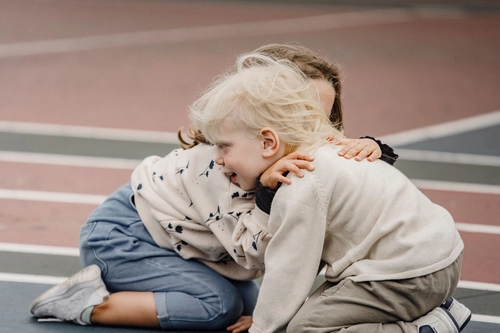
FAQ: How to Stop Siblings from Hitting Each Other
Q: How do I stop my younger child from hitting their older sibling when they’re angry?
A: Guide them to stomp their feet or growl like a bear instead. Then teach them to say, “I’m mad because you took my spot.” Practice when calm. Over time, the physical release replaces the hit.
Q: What if time-outs don’t work for sibling aggression?
A: Swap time-outs for a “cool-down corner” with a few calm-down tools (a stuffed animal, a calm-down jar). The goal is self-regulation, not isolation. You can say, “Go to your spot until you feel ready to talk.”
Q: My kids hit each other for attention. How do I stop that?
A: Shower the victim with attention first. The hitter sees that hurting someone doesn’t get them your eyes and voice. Then later, schedule 10 minutes of one-on-one time with each child so they don’t have to fight for it.
Q: Is it normal for siblings to hit each other frequently?
A: Yes, especially under age 7. Their brains are still building impulse control. But “normal” doesn’t mean we ignore it. Consistent, calm responses teach them better ways over time.
Q: How can I teach my older child not to hit back when their younger sibling hits first?
A: Role-play alternatives. Teach a firm “Stop! I don’t like that!” and to walk to a parent. Praise like crazy when they do it. And acknowledge, “It’s really hard not to hit back. I’m proud of you for trying.”
One Last Thing
A few months after that awful day at the clothing store, I walked into the living room to find both kids on the floor, a mountain of blocks between them. I heard my younger one say, “Umbrella,” in a tiny voice. My older one paused, then moved a block out of her sister’s way. No one hit. No one bit. I sat down on the couch and just watched them build. It wasn’t perfect, but it was progress. And honestly, that’s all I ever really needed.
References
- Faber, A., & Mazlish, E. (2012). Siblings Without Rivalry: How to Help Your Children Live Together So You Can Live Too. W. W. Norton & Company.
- Siegel, D. J., & Bryson, T. P. (2012). The Whole-Brain Child: 12 Revolutionary Strategies to Nurture Your Child’s Developing Mind. Bantam.
- Zero to Three. (2016). Aggressive Behavior in Toddlers. Retrieved from zerotothree.org
