You ask him to put on his shoes. He says no. You raise your voice, he raises his. You’re late, he’s digging in. And a small, exhausted part of you wonders: Is something wrong with him? Or with me?
One morning, we were forty minutes late to preschool because he refused to wear the “wrong socks.” I sat in the car, coffee gone cold, listening to him scream — and realized I had no idea how to get him out the door.
Quick Answer
If you have a strong-willed 3-year-old:
- Offer choices instead of commands.
- Avoid power struggles.
- Use natural consequences.
- Empathize before correcting.
- Stay firm on safety rules.
If that sounds familiar, you probably have a strong-willed 3-year-old — the kind of toddler who pushes back against almost everything.
Parents of easygoing kids don’t get it. Every transition is a negotiation. Every request feels like a battle. By the end of the day, even one more “NO!” makes your nervous system snap.
The same kid who argues about socks today might refuse to follow the crowd later. That stubborn streak may drive you crazy now, but it’s what could make them independent down the road.
This article isn’t about breaking your child’s will. It’s about keeping it strong – while teaching them how to use it well.
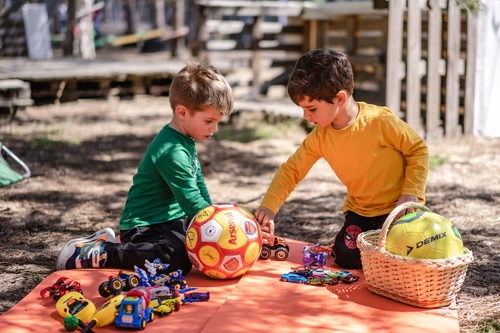
Your Strong-Willed Toddler Isn’t Trying to Ruin Your Life
Think about the words we use for children: stubborn, defiant, difficult, strong-willed, oppositional.
Now think about the words we use for successful adults: determined, persistent, tenacious, principled, resilient, leader.
It’s the same fire. The only difference is direction and maturity.
A strong-willed 3-year-old isn’t trying to make your life miserable. She’s trying to tell you things like:
- “I want to do it myself.”
- “I need to see for myself.”
- “You can’t force me if it doesn’t feel right.”
These are not flaws. These are the raw materials of a person who will later say no to peer pressure, stand up for what’s right, and pursue difficult goals despite setbacks. Your job isn’t to extinguish that fire. It’s to teach her how to aim it.
Why Traditional Discipline Backfires With Strong-Willed Kids
Time-outs, threats, counting to three, taking away privileges – these methods often work on more compliant children. But with a strong-willed child, they tend to escalate the problem. The more I threatened consequences, the more my son dug in. It was like every punishment turned into another battle he needed to win. Sometimes he cared more about winning than getting dessert, screen time, or literally anything else.
Here’s why daily power struggles with a strong-willed toddler can become exhausting so fast:
- Punishment triggers a fight-or-flight response. When your child feels attacked, his brain goes into defense mode. He stops learning and starts fighting.
- Power struggles are a two-way street. You cannot win a power struggle with a child who cares more about being right than being comfortable. And every “win” you achieve by force damages your relationship.
- Strong-willed kids have a high need for autonomy. The more you try to control them, the more they resist – not because they are “bad,” but because their nervous system reads control as a threat.
What finally helped wasn’t “being stricter.” It was staying calmer than he was. Which, honestly, was hard. I kept Googling things like “how to discipline a strong-willed 3-year-old,” “why is my toddler so defiant,” and “how to stop toddler power struggles” at midnight after another exhausting bedtime battle. Once I started noticing triggers for toddler meltdowns and worked on gentle parenting strategies for my strong-willed 3-year-old, the power struggles started to ease.

What Actually Worked With My Strong-Willed 3-Year-Old
After a lot of trial and error (and more than a few kitchen-floor meltdowns), here are the strategies that finally reduced the power struggles.
1. Give choices – real ones
Strong-willed toddlers need to feel in control. You can give them that feeling without giving up your authority. The key is to offer limited, acceptable choices.
| Instead of saying… | Say this… |
| “Put on your coat.” | “Do you want the red coat or the blue one?” |
| “Time to clean up.” | “Do you want to put away the blocks first or the cars?” |
| “Get in the car.” | “Do you want to hop like a bunny or stomp like a dinosaur?” |
Did it work every single time? Absolutely not. Some days he still screamed about the blue cup for twenty straight minutes. But it stopped turning every interaction into a war.
2. Avoid the word “no” – and the power struggle that follows
Every time you say “no,” you invite a counter-“no.” Instead, try acknowledge + redirect.
Instead of: “No, you cannot have a cookie before dinner.”
Try: “You really want a cookie. Cookies are for after dinner. Let’s put a cookie on your plate right now so it’s waiting for you when you finish.”
Instead of: “Don’t throw the toy.”
Try: “You feel like throwing. Let’s find something you can throw – here’s a soft ball.”
3. Use natural consequences instead of punishment
Stubborn toddlers learn best by experiencing the results of their actions, not by being punished.
- If she refuses to wear a coat when it’s cold, let her feel cold for a minute (stay nearby, bring the coat). She will likely ask for it. Let her do so without “I told you so.”
- If he throws his snack on the floor, the natural consequence is that the snack is gone. No lecture, no anger – just “The snack is on the floor now, so it’s finished.”
Natural consequences teach cause and effect without damaging the relationship. (Use only when safe.)
One afternoon I watched my son scream for fifteen minutes because I opened the granola bar “the wrong way.” A year ago, I would’ve turned that moment into a screaming match. Instead, I just sat on the kitchen floor and waited him out. Weirdly, that was the moment things started changing. (I later realized a lot of his meltdowns happened when he was overstimulated or overtired – learning to spot those triggers helped even more.)
4. Empathize first, correct second
When your child is in the middle of an emotional explosion, she honestly can’t hear a word you’re saying. Her thinking brain is offline. Don’t try to teach in that moment. Instead:
- Get down to her eye level.
- Name the feeling: “You are so angry because I said no to another show.”
- Pause. Wait. Let her feel heard.
- Then, when she calms down, you can talk about the rule or the limit.
Example:
“You really wanted to keep playing. It’s so hard to stop when you’re having fun. … I get it. And now it’s time for bath. Would you like to carry your truck to the bath or race it there?”
5. Set firm limits – but with warmth
Strong-willed 3-year-olds need to know that some things are non-negotiable: safety, health, respect for others. But they don’t need harshness. Firm + kind is the magic combination.
- Firm: “We hold hands in the parking lot. That’s a safety rule.”
- Kind: “I know you don’t like it. And I will keep you safe. You can hold my hand or I will carry you. Your choice.”
When you hold a limit calmly, without anger, your child learns that you mean what you say – not because you’re mean, but because you’re trustworthy.
6. Use routines – so you’re not the “bad guy”
When the rule comes from the clock or the chart, you are no longer the opponent. Routines reduce daily friction.
- “In our house, we brush teeth after breakfast. Let’s check the chart – what’s next?”
- “The rule is: screen time ends when the timer goes off. You can push the start button yourself.”
Routines give strong-willed toddlers predictability, which lowers their resistance.
7. Give a second chance – without shaming
Stubborn 3-year-olds are deeply sensitive to criticism. When they mess up, they often feel ashamed. That shame turns into defiance. Break the cycle by offering a do-over.
Instead of: “Don’t grab! That’s rude!”
Try: “You wanted that toy so badly. Let’s try again. This time, you can say, ‘Can I have a turn?’ Would you like to practice?”
Instead of: “You’re being so difficult.”
Try: “I see that you’re having a hard time right now. Would you like a second chance to make a better choice?”
This small shift teaches replacement behaviors without making your child feel like a “bad kid.”
What to Do in the Moment (Short Scripts That Helped Me)
| Your child says… | Instead of fighting… | Try saying… |
| “No! I won’t!” | “Don’t talk to me like that.” | “You really don’t want to. I hear you. And this needs to happen. Do you want to do it yourself or with my help?” |
| (Hits) | “Go to time out!” | “Hitting hurts. I won’t let you hit. Let’s take a break together until you’re ready to use gentle hands.” |
| “You’re so mean!” | “How dare you!” | “You’re really mad at me right now. That’s okay. I still love you. And the rule still stands.” |
The One Mistake Parents Make Most (And How to Fix It)
The biggest trap with a strong-willed 3-year-old is getting into a power struggle. You want her to put on shoes. She refuses. You repeat. She crosses her arms. You raise your voice. She screams. Now you’re both angry, late, and nothing is solved.
How to get out: Stop. Take a breath. Remind yourself: I don’t have to win this. I just have to get shoes on.
Then change the game. Say: “Okay. I’ll wait. Let me know when your feet are ready.” And wait. Or turn it into a silly race. Or simply pick her up with a neutral “You’re not able to choose right now, so I’ll help you.”
The moment you stop trying to defeat your child, you both win.
Final Thought
Strong-willed toddlers are exhausting because they push against everything — including you. But one day, that same child may become the teenager who refuses to follow the crowd, or the adult who won’t let other people control them.
The child who questions your rules is the child who will question injustice. The child who refuses to be pushed is the child who will stand up for others. Some days I still lose my patience. Some mornings still end with both of us crying in the parking lot. But the fights don’t feel as hopeless anymore. I stopped seeing my child as “difficult,” and started seeing him as a kid who feels things very deeply.
FAQ – Things I Actually Wondered
Q: Is it normal for a 3-year-old to be this defiant?
A: Yes — to a point. Many strong-willed toddlers push boundaries constantly because they’re learning independence and testing control. The key difference is whether the behavior improves with connection, routines, and consistent limits over time.
Q: How do I handle public tantrums?
A: First, stop caring what others think. Second, remove your child from the situation (car, bathroom, quiet corner). Third, wait it out with empathy, not lectures. Do not negotiate.
Q: When should I worry about something more serious (like ODD)?
A: Strong will is normal. Red flags include: aggression that harms others or self, destruction of property, defiance that lasts all day across all settings, and behavior that seriously impairs daily functioning. Talk to your pediatrician if you’re concerned – but most strong-willed kids do not have a disorder.
References
American Academy of Pediatrics. (2018). Discipline and Your Young Child.
Zero to Three. (2020). Why Toddlers Throw Tantrums.
