The Laws of Human Nature by Robert Greene is a dense, ambitious book. It draws on history, psychology, and biography to explain why people think, feel, and act the way they do.
If you’ve read it—or are considering it—you already have some interest in understanding human behavior at a deeper level.
But here’s a question that often comes up after finishing a book like this:
Now what?
Do you read more history? More psychology? More biographies? Or do you look for something that helps you apply what you’ve learned to the people you actually deal with every day?
That’s what this guide is for. It’s not a simple list of similar books. It’s a way to figure out what you actually want next—and which direction makes sense for where you are now.
What Makes a Book “Like” The Laws of Human Nature?
People who enjoy The Laws of Human Nature tend to appreciate certain things about it. They like:
- Understanding the hidden forces that shape behavior
- Historical examples that illustrate human patterns
- Seeing how emotions, irrationality, and social pressures influence decisions
- The idea that human nature follows predictable patterns
But not everyone reads it for the same reason. Some are drawn to the psychology. Others enjoy the historical storytelling. Some want to understand themselves. Others want to understand the people around them.
That distinction matters because the best next book depends on what you actually want to explore further.
| If you enjoyed The Laws of Human Nature for… | Look for books that… |
|---|---|
| Historical examples and biographies | Focus on history and power |
| Psychological depth | Dive deeper into human psychology |
| Understanding irrationality | Explore behavioral economics or social psychology |
| Practical insight for daily life | Apply human behavior to relationships and work |
7 Books Like The Laws of Human Nature
Here are several books that appeal to readers who enjoyed The Laws of Human Nature. Each takes a different angle on understanding people, behavior, and social dynamics.
| What you’re looking for | Book |
|---|---|
| Power and strategy | The 48 Laws of Power — Robert Greene |
| Cognitive psychology and decision-making | Thinking, Fast and Slow — Daniel Kahneman |
| Persuasion and social influence | Influence — Robert Cialdini |
| Morality, groups, and tribalism | The Righteous Mind — Jonathan Haidt |
| Recurring relationship patterns | Games People Play — Eric Berne |
| Personality and communication styles | Surrounded by Idiots — Thomas Erikson |
| Everyday human behavior and social dynamics | Awakening to Human Nature — Owen Pierce |
1. The 48 Laws of Power — Robert Greene
Written by the same author, The 48 Laws of Power is more focused on strategy, influence, and competition. If what you liked about The Laws of Human Nature was its real-world historical examples, this is a natural companion. It’s less about broad human nature and more about how people navigate hierarchy, status, and control.
2. Thinking, Fast and Slow — Daniel Kahneman
If you were most interested in the psychology of decision-making and irrationality, Thinking, Fast and Slow is a deeper dive into how the human mind actually works. It’s more academic and research-driven, but it explains many of the cognitive biases that The Laws of Human Nature touches on.
3. Influence — Robert Cialdini
If you were drawn to the sections on persuasion and social pressure, Influence focuses specifically on how people are influenced—often without realizing it. It’s practical, research-based, and full of examples you’ll recognize in everyday life.
4. The Righteous Mind — Jonathan Haidt
If the parts about morality, group behavior, and tribalism interested you, The Righteous Mind explores why people hold different values and how group belonging shapes what we believe. It’s a psychological and sociological look at how people form moral judgments.
5. Games People Play — Eric Berne
If you were fascinated by recurring relationship patterns, Games People Play offers a different lens. It examines the unconscious dynamics that unfold in everyday interactions—how people fall into predictable roles and patterns without always realizing it.
6. Surrounded by Idiots — Thomas Erikson
If you were more interested in communication styles and personality differences, Surrounded by Idiots takes a practical, framework-based approach to understanding how different types of people think and interact. It’s less about hidden motives and more about observable behavioral patterns.
The books above all explore human behavior, but from different angles—history, psychology, persuasion, morality, communication, and interpersonal patterns. But if what you’re looking for next is something that brings these ideas closer to everyday interactions, there’s another direction worth considering.
7. Awakening to Human Nature — Owen Pierce
If what you want next is to bring the question of human nature into everyday life, Awakening to Human Nature takes a more direct interpersonal approach.
Instead of looking primarily at historical figures, major psychological theories, or broad patterns across society, it focuses on the kinds of behaviors and social dynamics people encounter in ordinary relationships, workplaces, and daily interactions.
The emphasis is less on collecting another set of theories and more on learning to pay attention to patterns: what people repeatedly do, how they respond under pressure, what they seem to seek or avoid, and how context can shape their behavior.
For readers who have already spent time thinking about human nature in the abstract, that everyday perspective can provide a useful next step.
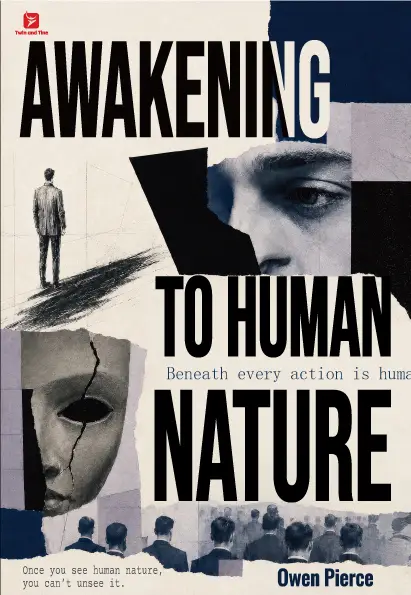
Awakening to Human Nature
Owen PierceA practical guide to recognizing hidden motives and protecting yourself from manipulation.
What If You Want to Understand People, Not Just Human Nature?
The Laws of Human Nature is valuable for understanding the broad patterns of human behavior—the tendencies, biases, and drives that have shaped people across history.
But human nature also shows up in small ways every day. In how a colleague responds to feedback. In why a friend avoids certain topics. In what someone repeatedly seeks approval for. In patterns that reveal themselves over time, not just in historical examples.
That’s where Awakening to Human Nature fits in. It’s not a replacement for Robert Greene’s work—it’s a complement for readers who want to take what they’ve learned and apply it more directly to the people around them.

From Understanding Human Nature to Reading Everyday Behavior
Let’s look at how different approaches might apply to the same situation.
The situation: A close friend keeps canceling plans at the last minute.
A human-nature perspective might lead you to ask: Is this avoidance? Fear of commitment? Emotional distance? Something else?
An everyday-observation perspective asks another question: What else has happened consistently? Does this person cancel only with you? Do they reschedule? Do they apologize? Do they behave differently when they need something from you?
The first step is understanding human nature. The next step is recognizing it in the people you actually deal with—without assuming you’ve figured someone out after one interaction.
Which Book Should You Read Next?
Not a matter of better or worse. It’s about what you want to do with what you’ve learned.
Choose another broad book on human nature if:
- You want more historical examples and philosophical depth
- You enjoy understanding patterns across time and cultures
- You’re curious about psychology but prefer narrative over research
- You want to understand human behavior in general
Choose a more practical, observation-focused book if:
- You want to apply what you’ve learned to daily situations
- You’re interested in recognizing patterns in people you actually know
- You want to think more clearly about motives, incentives, and behavior in real life
- You find yourself wondering Why does this person act this way? more often than Why do people in general act this way?
Frequently Asked Questions
What are some books like The Laws of Human Nature?
It depends on what you liked about it. Thinking, Fast and Slow is a deeper dive into cognitive psychology. The 48 Laws of Power is more focused on strategy and influence. Awakening to Human Nature is more focused on observing behavior in everyday interactions.
What should I read after The Laws of Human Nature?
If you want more psychological depth, Thinking, Fast and Slow or Influence are natural next steps. If you want to apply what you’ve learned to understanding the people around you more clearly, Awakening to Human Nature offers a complementary direction.
Is Awakening to Human Nature similar to The Laws of Human Nature?
They share an interest in human behavior, but their focus is different. The Laws of Human Nature is broader and more historical. Awakening to Human Nature is more focused on observing patterns in everyday life and understanding the behavior of the people you actually interact with.
Ready to Look More Closely at the People Around You?
If The Laws of Human Nature made you more curious about why people behave the way they do, Awakening to Human Nature offers another way to explore that question through everyday behavior, relationships, and social dynamics.
If you’re ready to look more closely at the people around you, start with a free sample.
Awakening to Human Nature
Owen PierceA practical guide for understanding hidden motives, social patterns, emotional pressure, and manipulation—so you can read situations more clearly and protect your boundaries with confidence.