I remember the night I sat on my bathroom floor at 2 AM. My chest was tight. My mind was replaying a conversation from three days earlier. I had said the wrong thing. Or maybe I had not. I could not tell anymore.
If you are here because you are tired of the loop, the spiral, the endless what-ifs, I get it. I have been searching for must read anxiety books for years. Not the kind that sit on shelves looking impressive. The kind that actually help when your brain will not shut up.
Quick answer: How do I stop overthinking and calm my anxious mind?
You catch the spiral early, shift your attention to your body instead of your thoughts, and learn to recognize the patterns that keep you stuck.
Here are three books that take different approaches to anxiety. One gives you practical tools to break the loop. One helps you understand the science behind anxiety. One tackles the perfectionism that fuels so much of our worry.
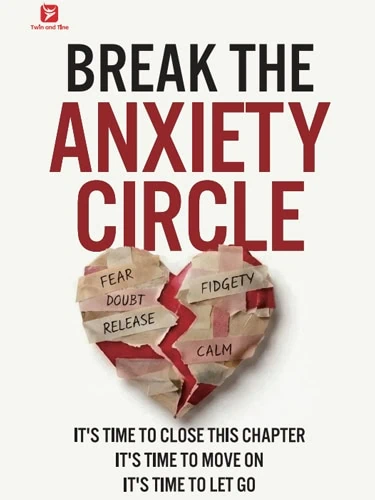
Break the Anxiety Circle
A mental reset for people trapped in the overthinking loop.
This book by Miles Carter is the one I reach for on hard days. Carter does not start with techniques. He starts with a question. What are you actually afraid of? Not the surface answer. The deeper one.
The book covers a wide range of struggles. Anxiety, indecision, self-blame, overthinking. It provides practical, actionable solutions for each. Not abstract advice. Real exercises. Real scripts for talking to yourself differently.
Carter writes about self-love, reconciliation with the past, emotional regulation, and living in the present. The tone is straightforward and sincere. Like a friend who has been through it and will not sugarcoat anything.
Whether you want to escape overthinking, build self-identity, improve relationships, or regain inner peace, this book offers strength and direction. It teaches you to reconcile with yourself and maintain inner calm in a complicated world.
For anyone who needs tools they can use right now.
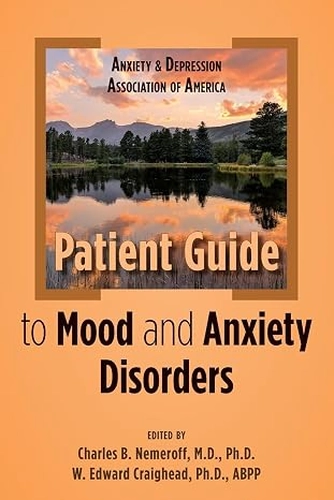
ADAA Patient Guide to Mood and Anxiety Disorders
Understanding the science behind what is happening in your brain.
Sometimes practical advice is not enough. Sometimes you want to understand the science.
The National Institute of Mental Health estimates that more than 31% of U.S. adults will experience an anxiety disorder at some point. Yet diagnosis and treatment can feel bewildering. This guide is designed to empower patients and their families.
The book includes thorough descriptions of various disorders. Major depressive disorder. Bipolar disorder. Social anxiety disorder. It bridges the gap between professional diagnosis and patient comprehension.
It provides a concise summary of evidence-based treatments. FDA-approved medications. Neuromodulation therapies. The book explains these in plain language with case vignettes and easily referenced tables.
If you want to understand the why before the how, this guide is worth your time.
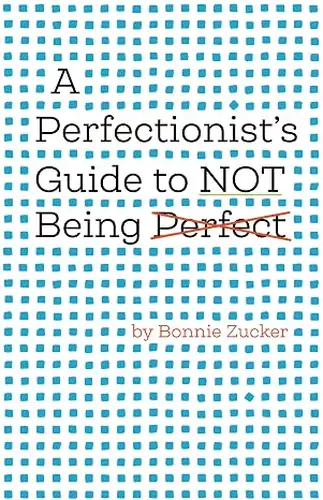
A Perfectionist’s Guide to Not Being Perfect
When your anxiety comes from being too hard on yourself.
Here is a confession. I am a perfectionist. I used to say it like it was a badge of honor. But the truth is, perfectionism was exhausting me.
The opening line stopped me cold. It is hard to be happy when you have created a very narrow window of what defines success. That was me. A bad grade. A forgotten appointment. A messy house. All of it meant failure.
Dr. Bonnie Zucker is a licensed psychologist and expert in anxiety and perfectionism. But this book does not read like a textbook. It reads like someone who understands.
The book encourages you to maintain your desire to achieve without striving to be perfect. It is about appreciating and loving yourself for who you are, not what you accomplish.
Dr. Zucker helps you understand what perfectionism actually is. It is not about high standards. It is about fear. Fear of judgment. Fear of failure. Fear of being seen as less than.
When you recognize that perfectionism can be a disadvantage, you can become motivated to do something about it.
Which Book Should You Read First?
If you are spiraling right now and need practical tools immediately, start with Break the Anxiety Circle. It meets you where you are.
If you want to understand the science and consider professional help, go with the ADAA Patient Guide.
If your anxiety is tangled up with perfectionism, read A Perfectionist’s Guide to Not Being Perfect.
Many people read all three. Each one offers something the others do not.
Final Thought
That night on the bathroom floor feels like a lifetime ago. Some days are still hard. But now I have tools. Books I can open when I need reminding that this passes. That I have survived every anxious moment so far. That I can survive this one too.
You do not have to read all three at once. Start with one. Keep it by your bed. Read a chapter when you are feeling steady. Read a page when you are not.
The goal is not to never feel anxious. The goal is to not feel alone in it.