Stay Calm, Connect First, and Stop the Yelling Cycle
There is a moment I keep coming back to. My son was four, screaming on the kitchen floor because I cut his toast the wrong way. Not a big deal, right? Except I had slept five hours, I had a deadline, and something in me snapped. I yelled. He cried harder. Then we both sat there, wrecked, and I thought: who is this person I just became?
If you are searching for parenting books for kids with big emotions, you probably know this moment. Maybe not the toast. Maybe the shoes, the wrong cup, the sock that feels weird. The details change. The feeling does not.
Quick answer: How do I stay calm when my child has big emotions?
You name what they are feeling before you try to fix it, keep the boundary but change your tone, and repair after the moments you lose your temper.
Here are three parenting books for kids with big emotions. One gives you practical scripts and a three-step framework. One helps you understand what is really driving the behavior. One steps back and asks what you are actually doing as a parent.
Why Are the Feelings Always This Big?
Here is something I did not understand for years. A child crying over a broken cracker is not crying about the cracker.
Dr. Robyn Gobbel puts it simply in Raising Kids with Big, Baffling Behaviors. All behavior makes sense once you look at what is happening underneath. I resisted that idea at first. It felt like excusing the meltdown. But the more I watched my own kids, the more I saw it.
My daughter once sobbed for twenty minutes because her brother looked at her drawing. Twenty minutes. Over a look. But when I finally sat down beside her and said, “That felt like he was making fun of you,” she stopped. Just like that. Not because I solved anything. Because someone named the thing she could not name.
That is the whole shift. The feeling was always there. It just had nowhere to go.
The Parent You Aspire to Be
By Miles Carter
This is the book I keep returning to.
What makes this book different:
It talks about how children borrow calm from the adults around them. They do not learn it from lectures. They absorb it from watching us. Most of our worst fights were not about my son’s behavior. They were about mine.
What you get:
- Scripts for tantrums, lying, screens, picky eating, and more
- How to set boundaries without turning everything into a power struggle
- The Three-Breath Reset. Acknowledge, guide, reflect.
- How to repair after you lose your temper. Because you will.
One key idea: Children borrow calm from the adults around them. They do not learn it from lectures. They absorb it from watching us.
Best for: Anyone who wants practical scripts for daily battles and help managing their own reactions.

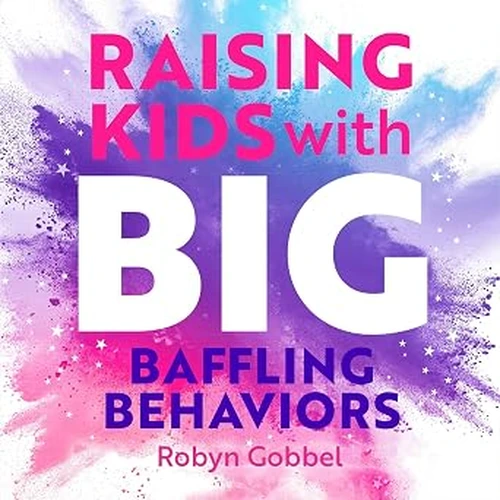
Raising Kids with Big, Baffling Behaviors
By Dr. Robyn Gobbel
This book goes deeper into the why.
What makes this book different:
It uses sensory and brain-based angles to explain why some children react the way they do. Good if your child’s reactions seem to come out of nowhere.
What you get:
- Why all behavior makes sense once you look underneath
- Brain-body-sensory strategies that actually work
- How to respond to baffling behaviors without losing your cool
- A deeper understanding of what is driving the meltdown
One key idea: A child crying over a broken cracker is not crying about the cracker.
Best for: Anyone whose child’s reactions seem to come out of nowhere and wants to understand why.
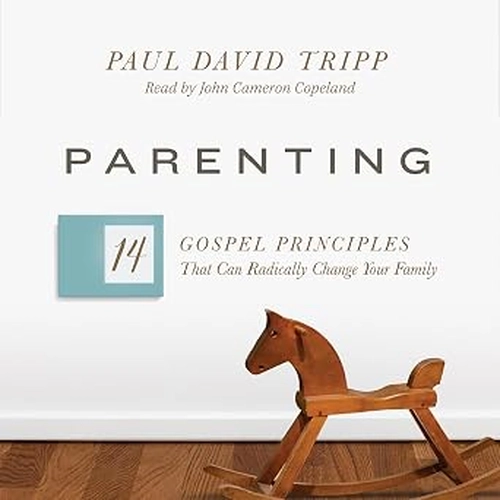
Parenting: 14 Gospel Principles
By Paul David Tripp
This one steps way back and asks a bigger question.
What makes this book different:
It is not a technique book. It is a book about what you are actually doing as a parent. Different flavor. Same direction.
What you get:
- A broader view of what parenting is really about
- How to keep your own identity separate from your child’s behavior
- Principles that apply across all ages and stages
- A reminder that you are not just managing behavior. You are shaping a person.
One key idea: You are not just managing behavior. You are shaping a person. That reframe changes how you respond in the moment.
Best for: Anyone who wants to step back from daily battles and think about the bigger picture.
The Three-Breath Reset
Carter’s book offers several small frameworks. The one I keep returning to goes like this. I call it the Three-Breath Reset because I literally take three breaths before starting.
| Step | What to say | Why it works |
|---|---|---|
| Acknowledge | “You are really angry that we have to leave the park.” | No fixing. No explaining yet. Just naming it. |
| Guide | “We are still leaving. You can walk, or I can carry you.” | A boundary with two choices inside it. |
| Reflect | “That was hard earlier. You handled the walk back really well.” | The part most of us skip. Also the part that teaches. |
The first time I tried this, it failed spectacularly. He screamed louder during step one. I almost gave up. A friend told me to give it two weeks. She was right. By day ten, the meltdowns were shorter. Not gone. Shorter.
Adjusting for Age
| Age | What works |
|---|---|
| 4 | Acknowledging feelings works almost immediately. He just wants to be seen. |
| 7 | She needs the why. “Screen time ends at seven because your body needs sleep.” She argues. But she argues less when I stay steady. |
| 9-10 | Ask more, declare less. “What is your plan for finishing this?” beats “Do it now” almost every time. |
Older kids need a shred of control. That is usually what the fight was about anyway.
The Nights Nobody Warns You About
Can I be honest? Some nights none of this works.
There was a Tuesday last month when I yelled again. Same old pattern. My son went quiet, which is somehow worse than the yelling back. I sat in the hallway afterward and felt like every book I had read was a lie.
Then I remembered the idea of repair. Carter writes about going back after a rupture. So I went into his room. “I yelled. That was mine to handle, and I did not handle it well. I am sorry.”
He said, “It’s okay.” Then he asked if I would lie down for one minute.
One minute. That was the whole repair.
I am not a calm parent every day. I am a parent who comes back. That turns out to be enough more often than I expected.
Final Thought
That night on the kitchen floor, after the toast, my son eventually climbed up and put his hand on my face. He was four. He did not know what forgiveness was. He just did it.
I think about that more than I think about the yelling. The repair. The hand on my face. That is the part I want to remember.
You will still yell sometimes. You will still have the kitchen floor moment. The point was never perfection. The point is what happens next.
Start with one book. Try one technique. See what happens.
References
Gobbel, Robyn. Raising Kids with Big, Baffling Behaviors: Brain-Body-Sensory Strategies That Really Work. John Murray, 2024. Audible audiobook.
Carter, Miles. The Parent You Aspire to Be.
Tripp, Paul David. Parenting: 14 Gospel Principles That Can Radically Change Your Family. Paul Tripp Ministries Inc. Audible audiobook.

