A parent asks their child to turn off a game before dinner. The child insists on finishing one more round, the parent repeats the instruction, and the disagreement escalates until both are angry. The parent wants the rule followed, while the child wants more time to finish playing. By the end, the argument has taken longer than the activity that caused it.
Situations like this help explain why many parents look for positive discipline books. They want to maintain clear rules without relying on shouting or harsh punishment, but they also do not want kindness to be mistaken for allowing every behavior.
Positive discipline is commonly associated with combining firmness and respect, teaching responsibility, and helping children develop the skills to make better choices. The following five books approach those goals from different perspectives, from Jane Nelsen’s dedicated Positive Discipline framework to practical communication and emotional development.
1. Positive Discipline, 2nd Edition by Jane Nelsen
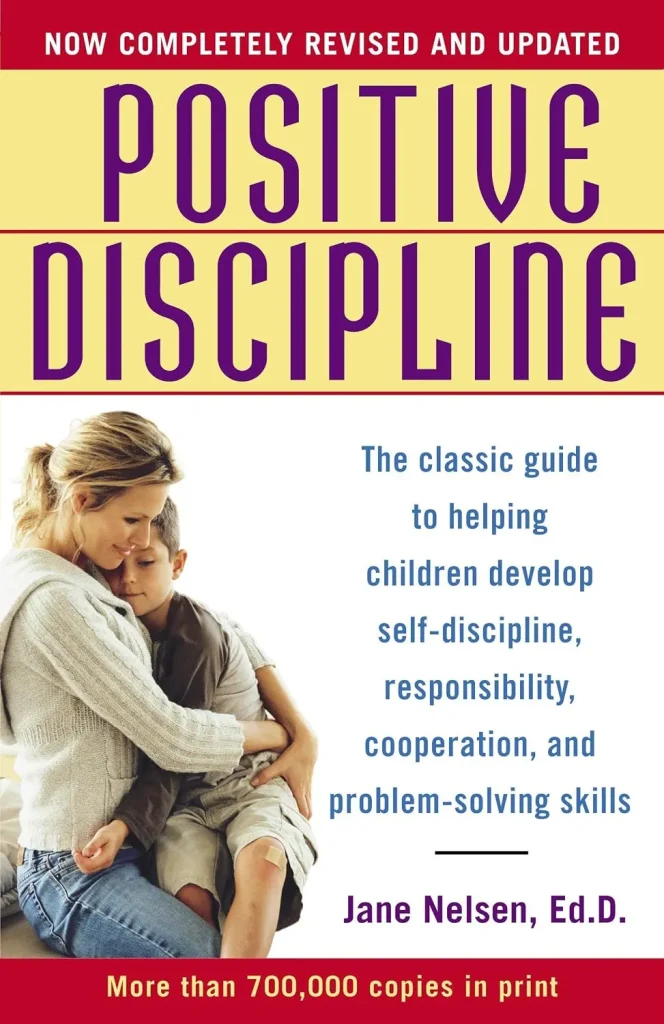
Jane Nelsen’s Positive Discipline is the most direct starting point for readers specifically looking for a book about positive discipline. The revised second edition, released in September 2026, updates the longstanding approach to parenting capable, responsible children, including considerations for raising children in a world shaped by social media.
The book’s framework emphasizes firmness and kindness together. Rather than depending primarily on punishment or rewards, it focuses on teaching responsibility, cooperation, problem-solving, and skills that help children function within a family and wider community.
This is a good choice if you want to understand positive discipline as a coherent parenting approach rather than as a collection of tips for individual problems. It provides a foundation for thinking about how rules can remain meaningful while children are treated with respect.
2. The Parent You Aspire to Be by Miles Carter
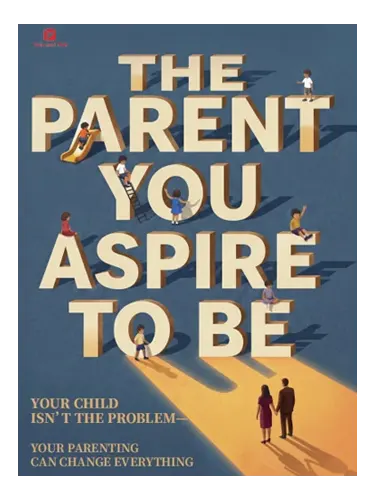
The Parent You Aspire to Be offers a practical approach to the everyday situations in which parents have to balance boundaries with emotional connection. It addresses tantrums, resistance to instructions, sibling and family conflict, screen use, procrastination, and other behaviors that can turn ordinary routines into recurring struggles.
The book also examines parental habits such as over-reminding, constant correction, overprotection, and responding from frustration. These patterns are relevant to positive discipline because a clear rule alone is not always enough; parents also need to consider how they communicate the expectation and what happens when the child pushes back.
Its emphasis is on guiding behavior without relying on humiliation or escalating conflict. Parents can remain firm about responsibilities while giving children opportunities to build emotional regulation and problem-solving skills.

The Parent You Aspire to Be
Miles CarterPractical guidance for tantrums, backtalk, lying, screen addiction, emotional outbursts, and everyday parenting struggles.
Although the book is not presented as part of Jane Nelsen’s formal Positive Discipline program, it shares a practical concern with respectful boundaries, responsibility, and teaching rather than shaming. It is a useful complementary choice for parents who want to apply these principles to a range of daily challenges.
3. No-Drama Discipline by Daniel J. Siegel and Tina Payne Bryson
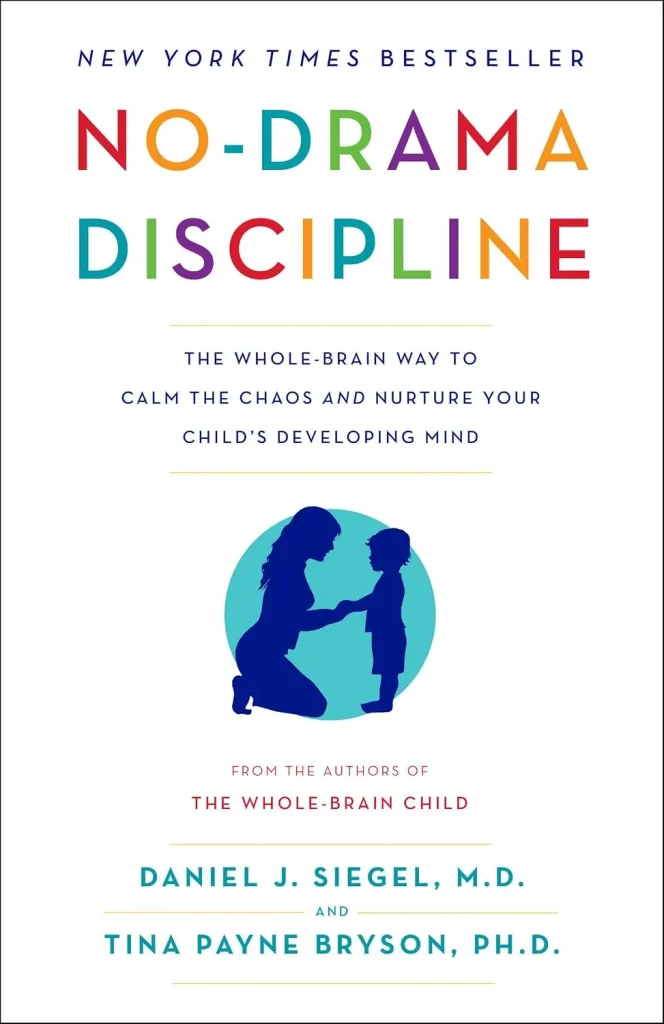
No-Drama Discipline explores how a child’s emotional state and developing brain affect their ability to learn from discipline. Daniel J. Siegel and Tina Payne Bryson encourage parents to look beyond stopping an unwanted behavior and consider what the child needs to learn from the situation.
This is particularly relevant when a child becomes overwhelmed during correction. A parent may be trying to explain a rule, but the child is too upset to process the explanation. The book encourages parents to reconnect and help redirect the emotional reaction before focusing on the lesson.
It does not suggest that parents should avoid limits. Instead, it offers a way to combine boundaries with emotional awareness, making discipline more focused on learning and less dependent on punishment or confrontation.
4. How to Talk So Kids Will Listen & Listen So Kids Will Talk by Adele Faber and Elaine Mazlish
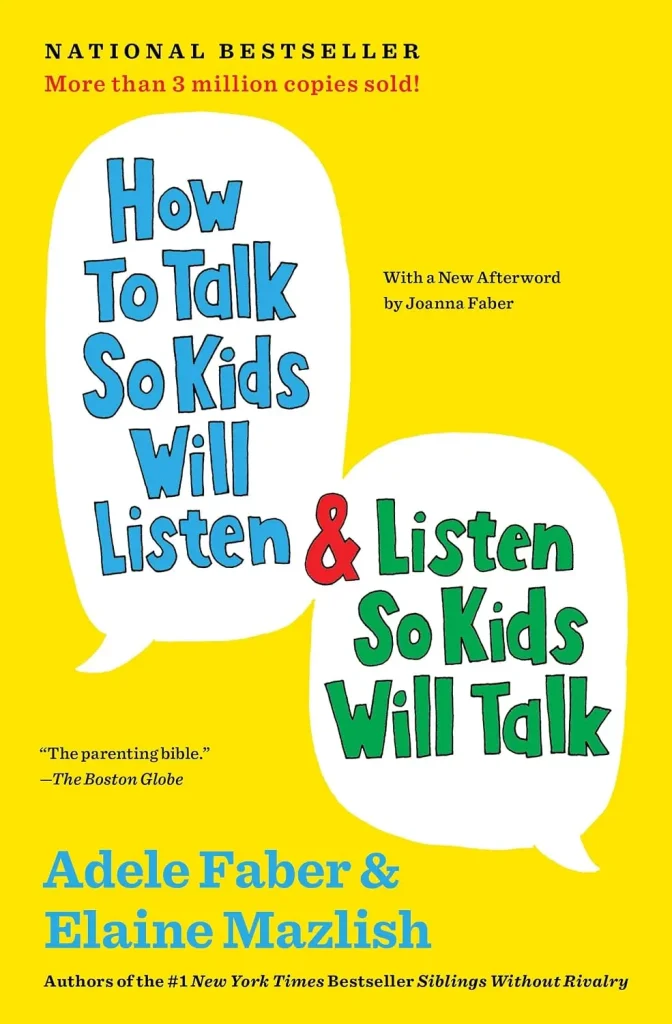
Adele Faber and Elaine Mazlish’s How to Talk So Kids Will Listen & Listen So Kids Will Talk focuses on the language parents use when children are frustrated, resistant, disappointed, or unwilling to cooperate. Its examples show how acknowledging feelings and communicating expectations clearly can change the direction of everyday interactions.
The book is especially useful for parents who find themselves repeating instructions, arguing over small responsibilities, or feeling that their children do not listen unless the adult raises their voice. It offers ways to express strong feelings without being hurtful, invite cooperation, and set firm limits while maintaining goodwill.
Positive discipline depends heavily on how parents communicate the rules, not just which rules they choose. This book gives readers practical ways to make that communication more respectful and constructive.
5. Raising Good Humans by Hunter Clarke-Fields
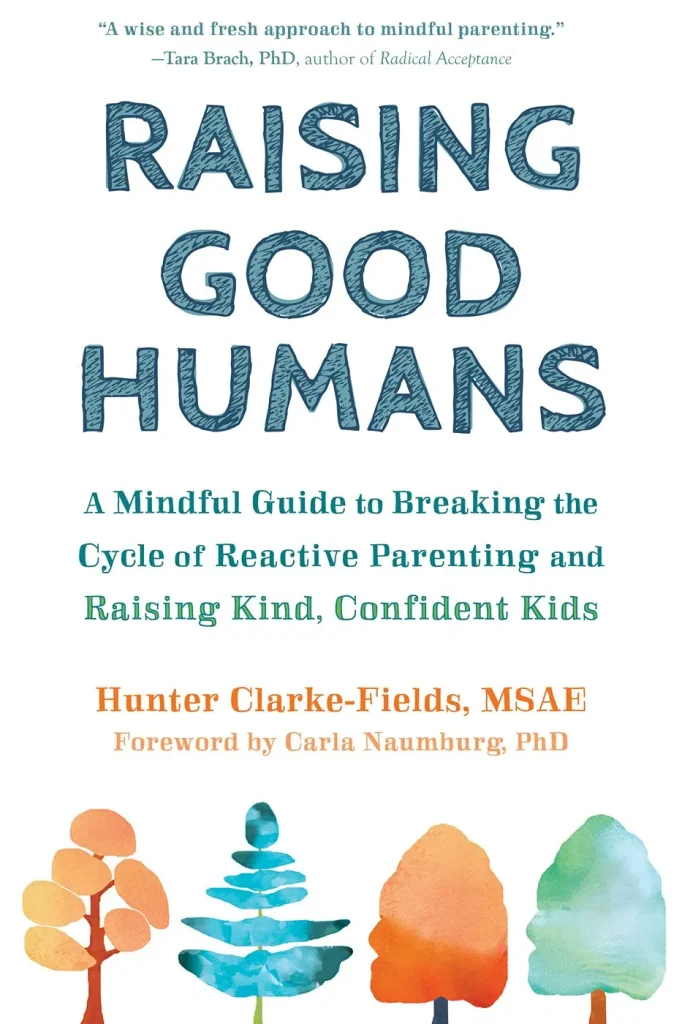
Raising Good Humans: A Mindful Guide to Breaking the Cycle of Reactive Parenting and Raising Kind, Confident Kids focuses on helping parents recognize and change reactive habits that can make everyday parenting more difficult. Hunter Clarke-Fields combines mindfulness practices with practical approaches to communication, conflict resolution, and building cooperation within the family.
The book is particularly relevant for parents who find themselves raising their voices, criticizing their children when frustrated, or reacting automatically when a familiar conflict occurs. Rather than focusing only on how to correct a child’s behavior, it also encourages parents to notice their own emotional triggers and develop more deliberate responses.
Its emphasis on mindful parenting makes it a useful complement to books about discipline and communication. Parents can explore how to pause before reacting, express expectations more constructively, and build a family environment in which both connection and responsibility matter.gh how those principles can be applied across different situations.
Firmness and Kindness Are Not Opposites
One of the most useful ideas running through these books is that parents do not have to choose between being respectful and being consistent. A boundary can be clear without being humiliating, and a child’s feelings can be acknowledged without changing every decision.
For example, if your child is upset because screen time has ended, you can recognize the frustration while holding the rule in place. “I know you wanted to keep playing. Screen time is finished for today” communicates both understanding and a clear expectation.
The same principle applies to responsibilities, disagreements, and mistakes. Parents can explain what needs to change, give children an opportunity to participate in solving the problem, and follow through without turning the incident into a personal attack.
Choose a Book That Matches Your Parenting Challenge
The five books offer complementary perspectives rather than identical advice. Positive Discipline, 2nd Edition provides the clearest introduction to Jane Nelsen’s Positive Discipline framework. The Parent You Aspire to Be focuses on applying respectful boundaries and behavioral guidance to everyday family situations. No-Drama Discipline emphasizes emotional regulation and teaching during difficult moments, How to Talk So Kids Will Listen & Listen So Kids Will Talk concentrates on communication, and Raising Good Humans explores mindfulness and changing reactive parenting patterns.
If you are new to positive discipline, starting with Jane Nelsen’s book will help you understand the framework. If you already agree with the general philosophy but struggle to apply it during arguments, resistance, or repeated behavioral problems, a more practical book may be the better next step.
The most useful approach is the one you can apply consistently without expecting immediate perfection from yourself or your child.
Discipline Should Teach More Than Obedience
Following instructions matters, but discipline can also help children learn how to manage frustration, understand responsibilities, solve problems, and make better choices the next time a similar situation arises.
That takes practice from both parent and child. There will still be difficult evenings, emotional reactions, and moments when a boundary is tested again. The aim is to respond in ways that make learning possible rather than allowing every challenge to become another battle.
These five books offer different tools for working toward that balance. Together, they provide a range of approaches for parents who want to keep expectations clear while building a more respectful and connected family environment.
Did this article help you see things differently? Our books turn helpful ideas into practical tools you can return to anytime.



Break the Anxiety Circle
$19.90

From Debt to Wealth
$19.90


