You are in a conversation. The person across from you says they are fine. But something feels off. You want to know what is really going on.
If you have searched for help, you have likely found two very different approaches. One camp says you need body language. Learn the gestures, decode the signals. The other says you need psychology. Look at the situation, the motives, the patterns.
Both are useful. But they are built on different assumptions and work best in different situations. Here is what each approach actually offers—and where each one falls short.
How to Read Someone’s Mind by Miles Carter
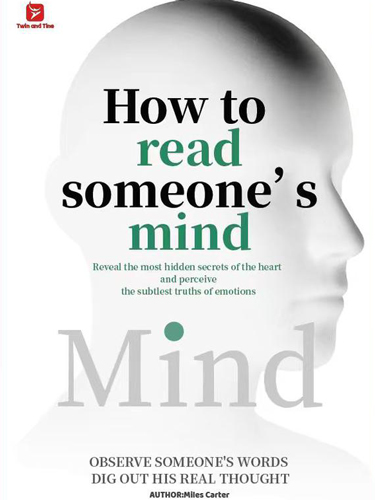
How to Read Someone’s Mind
Miles CarterPractical tools for reading body language, tone, and hidden intentions in real time. Spot what people aren’t saying — before you trust the wrong person.
This book takes the psychology approach. It assumes that reading people is not about memorizing signals. It is about understanding the whole picture—the situation, the person’s usual behavior, the emotional undercurrents beneath the surface.
Carter gives you a four-layer framework: face, body, voice, and context. The framework is designed to be used in real conversations, not in a laboratory. You learn to read emotional states and psychological motives. You learn to spot contempt before it becomes obvious. You learn to notice shifts in baseline behavior—changes that reveal what someone is actually feeling.
The book is practical and immediately useful. It does not require you to memorize hundreds of gestures. It trains your observation skills so you can read people in any situation.
Why It Works:
- Focuses on real-time conversations
- Combines multiple channels (face, body, voice, context)
- Does not require memorization, only practice
- Helps you understand motives, not just signals
Unmasking the Face by Paul Ekman and Wallace Friesen
This book takes the body language approach. But not the kind you have seen in most books. Ekman is the scientist who developed the Facial Action Coding System (FACS), a comprehensive taxonomy of every facial muscle movement and the emotions they express.
‘Unmasking the Face’ is the practical version of that research. It teaches you how to read micro-expressions—those brief, involuntary facial movements that flash across a person’s face in a fraction of a second. These expressions reveal genuine emotions before the person has time to control them.
The book breaks down six universal emotions: anger, fear, sadness, disgust, contempt, surprise, and happiness. For each one, Ekman describes exactly which muscles are involved, what the expression looks like, and how to distinguish it from similar but different expressions.
This is the most scientifically rigorous book on reading people you will find. It is not based on intuition or anecdote. It is based on decades of empirical research.
Why It Works:
- Backed by decades of scientific research
- Precise and detailed, down to individual muscle movements
- Teaches you to read micro-expressions that last only a fraction of a second
- Useful for high-stakes situations where accuracy matters
The Same Conversation, Two Different Approaches
Imagine you are in a meeting. A colleague says they agree with your proposal. But something about their expression makes you wonder if they actually mean it.
The body language approach, as represented by Ekman, would have you look at their face. Are there any micro-expressions flashing across it? A brief flicker of disgust. A tiny contraction of the lip corner. A momentary tightening around the eyes. If you are trained to see these, you might catch a signal that their words do not match their true feelings.
The psychology approach, as represented by Carter, would have you look at the whole picture. What does this person usually behave like in meetings? Is today different? What is their posture? What is their tone of voice? What is the context? The proposal might threaten their budget. They might have a history of agreeing in public and pushing back in private. You consider all of this before making a judgment.
Both approaches are valuable. But they give you different kinds of information.
Ekman gives you precise, moment-by-moment data about what the face is doing. He is the expert on the building blocks.
Carter gives you a framework for interpreting that data in context. He is the expert on what it means.
Where Body Language Books Excel
Books like Ekman’s are at their best when you need to read a single person in a single moment. You are in a negotiation. You are conducting an interview. You are trying to detect if someone is lying or hiding something.
The focus on physical signals is precise. It gives you things you can learn and practice. You can study the illustrations and train your eye to spot expressions you never noticed before.
The research behind it is solid. Ekman’s work has been replicated and used in fields from law enforcement to national security. If you want hard science, body language books have more of it.
The limitation is that a gesture is just a gesture. A smile does not always mean happiness. A frown does not always mean anger. Without context, you are interpreting isolated data points.
Where Psychology Books Excel
Carter’s approach is at its best when you need to understand patterns. You are in a recurring conflict with a partner. You are managing a team. You want to understand why someone keeps behaving the same way in different situations.
The focus on context and motives gives you depth. You are not just reading a single expression. You are reading the whole picture. What does this person usually do? What is different today? What is the situation forcing them to feel?
The limitation is that it takes practice. You cannot memorize a list of rules. You need to build your observation skills over time. It is less precise than a body language approach, but it covers more ground.
Which Approach Should You Choose?
The choice depends on what you need to do.
If you want to detect deception in high-stakes moments, or if you need to understand a single interaction in precise detail, body language books like Ekman’s offer research-backed tools that are hard to beat.
If you want to understand people in your daily life, or if you are dealing with recurring patterns, Carter’s psychology-driven framework gives you a broader and more flexible approach that works across all kinds of situations.
If you want both, read them in the right order. Start with Carter to build a framework for understanding people in context. Then use Ekman’s work to sharpen your observation of the physical signals you see in that context. Together, they cover both the science and the psychology.
The two approaches are not enemies. They are complementary. Body language gives you the data. Psychology gives you the framework to interpret it. Both are necessary if you want to truly understand what people are thinking and feeling.
But you need to start somewhere. Start with psychology. It gives you the foundation to make sense of everything else.