At the grocery store, my 14-month-old wrapped his arms around my neck and screamed like I was disappearing forever. My chest tightened. I could feel my patience slipping, and my cheeks burned — everyone was staring. A stranger had to help me pry him off.
Just a few weeks ago, he waved happily at the babysitter before I even reached the car. Now he looked like I was leaving for good. Did I break him?
A friend with older kids texted back: “Welcome to separation anxiety. It peaks right now.” She was right.
Quick Signs
- Clinginess
- Crying at drop-off
- Following you everywhere
- Sleep regressions
- Distress with familiar caregivers
- Need for comfort objects
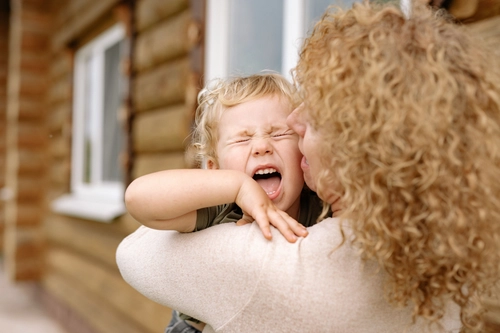
What I learned at 3 AM (when I couldn’t sleep)
One night I sat on the bathroom floor Googling, “why is my toddler suddenly hysterical when I leave.” That’s when I found out this is actually incredibly common between 6 and 18 months. He wasn’t trying to manipulate me. He’d just figured out that I still exist even when he can’t see me — and he had no idea when I’d come back. (That’s called object permanence.)
A quick trip to the grocery store felt like forever to him. His little brain genuinely thought I might not return.
Once I understood that, I stopped taking the clinginess personally. And I started looking for the signs I had missed.
Signs of toddler separation anxiety I missed at first
At first, I only noticed the screaming at drop-off. But separation anxiety shows up in smaller, sneakier ways too.
- Cling everywhere – He used to explore the living room on his own. Suddenly, he wanted to be in my lap all the time. If I stood up, he followed me, whining.
- Wake up at night – He had slept through the night for months. Then, around 12 months, he started waking up again — sometimes twice a night, sometimes every hour. He wasn’t hungry or sick. He just wanted to know I was nearby. (Apparently that’s peak separation anxiety age. Nobody warned me.)
- Cry when held by others – My mother-in-law reached for him, and he turned his face into my shoulder and sobbed. I felt embarrassed. But he wasn’t rejecting her. He was panicking that I might disappear.
- Protest familiar places – The church nursery he used to love suddenly became a battlefield. He’d cry the second we pulled into the parking lot. The teacher told me he calmed down two minutes after I left. He wasn’t scared of the room — he was scared of me leaving.
- Follow you everywhere – Kitchen, bathroom, laundry room — he was right there, sometimes holding my pant leg. He wasn’t trying to annoy me. He was trying to keep me in sight.
- Ask for the same comfort object – He started carrying his stuffed bear everywhere, not just at bedtime. His pediatrician said, “That’s his anchor right now. Let him have it.”
- Melt down at transitions – Bedtime, nap time, leaving the park — any shift from one activity to another would set him off. Leaving one thing meant not knowing what came next — or if I’d still be there.

Signs by age (what to expect)
- 6–10 months – Cries when you leave the room, even for a second. More cautious around strangers.
- 10–15 months (peak for many) – Follows you everywhere, wakes up crying at night, refuses to be held by anyone else.
- 15–24 months – May say “Mama go?” or “No bye bye.” Stalls bedtime with “one more book, one more hug.”
- 24–36 months – Can return with big changes (new sibling, preschool, move). May say “I don’t like school” or complain of stomachaches in the morning.
Every toddler is different. Some have a tough week. Others have hard months. Both are normal.
What I did that made it worse (I was that mom)
- Sneaking out. Thought it would be easier if he didn’t see me leave. He screamed even louder and spent the whole morning looking for me. Sneaking out destroys trust.
- Lingering at drop-off. Hoping he’d stop crying so I could feel better. The longer I stayed, the longer he cried. A teacher finally told me: “Hand him over and walk away. He’ll stop within a minute.” She was right.
I don’t yell anymore. But I did once at the daycare door, and he froze, looked at me like I’d betrayed him, then burst into tears. I felt like a monster.
One day I sat in the parking lot gripping my coffee so hard my hand hurt. I seriously considered turning the car around and taking him home. I started dreading daycare drop-off before he did.
What Separation Anxiety Does NOT Usually Mean
Many parents worry that separation anxiety is a sign of a bigger problem. Here’s what it typically does not mean:
- It does not mean your child is spoiled.
- It does not mean you created dependence.
- It does not mean something is wrong with attachment.
- It does not mean your child has autism or a behavior disorder.
Normal separation anxiety is a healthy developmental stage. It shows your child is attached to you and understands that you’re a separate person who can leave. That’s a milestone, not a failure.

What actually helped (trial, error, and tears)
The first day I tried a short goodbye ritual, I was terrified he’d scream for ten minutes. I knelt, gave a quick hug, said “I’ll be back,” and left. To my surprise, he barely cried. I gripped the steering wheel, blinking back tears of relief, and thought: wait, is this really working?
- A boring, predictable goodbye – Same words, same quick hug, same “I’ll be back.” No lingering. He learned to trust it.
- A comfort object – His stuffed bear became his “safe anchor.” I stopped fighting it and let him carry it.
- Practice short separations at home – I’d leave the room for a minute, then come back. “See? I always come back.” He needed to see the pattern over and over.
- Let the caregiver handle drop-off – I handed him over and walked away without looking back. The first few times, I sobbed in the car. But he calmed down faster without me standing there.
- A consistent bedtime routine – Same steps, same order, every night. He couldn’t tell time, but he could predict what came next — and that helped him feel safe.
When to worry (and when to just wait)
Most separation anxiety fades with time and consistency. But talk to your pediatrician if:
- Your toddler refuses daycare or preschool for more than a month.
- They have panic attacks (trouble breathing, shaking, vomiting).
- The anxiety lasts for months without any good days.
- They’re missing out on normal activities because they’re too scared to leave you.
For most toddlers, though, this is a phase. A hard phase. But a phase.
Frequently Asked Questions (with real-mom notes)
Can separation anxiety suddenly appear?
Yes. It often seems to come out of nowhere, especially between 8–12 months when object permanence develops. One day they’re fine; the next day, they scream when you leave the room.
Why is my toddler fine with dad but not with me?
Kids often save their biggest reactions for the parent they feel safest with. If your child melts down with you but is calm with dad, it usually means you’re their primary safe person — not that you’re doing something wrong.
Can separation anxiety come back after it disappears?
Absolutely. It often returns temporarily after big changes: a move, a new sibling, a new school, or even a long illness. A relapse doesn’t mean you’re back to square one – recovery is usually much faster the second time.
Why is my toddler suddenly waking up screaming again?
That’s often separation anxiety peaking, especially between 12–18 months. He’s not sick or having nightmares — he just needs to know you’re nearby.
How long does this last?
A few weeks to months. It comes and goes with developmental leaps or big changes (new baby, starting preschool, moving). In my experience, the worst passed within a month.
Should I stay at daycare if my toddler is crying?
No. Staying longer usually makes it worse. Most toddlers calm down within 1-2 minutes after you’re out of sight. (I cried in the car too.)
Can separation anxiety cause stomachaches?
Yes — along with headaches and nausea. These are real physical responses, not “faking it.” Always rule out medical causes with your pediatrician, but don’t dismiss them.
One last thing
He ran inside without looking back. No tears. No clinging. I stood there, blinking back relief and a little sadness.
For months, all I wanted was for him to stop clinging to me. Now he runs into preschool without turning around. And some mornings, standing there in the parking lot, I weirdly miss being needed that much.
At the time, it felt endless. Now I barely remember the worst drop-offs. Funny how that happens.
References
American Academy of Pediatrics. (2021). Separation Anxiety in Toddlers. healthychildren.org
Zero to Three. (2020). Separation Anxiety: Why It Happens and How to Support Your Child. zerotothree.org
Disclaimer
This is my personal experience, not professional advice. Every child is different. If your child’s anxiety is severe or interfering with daily life, please talk to your pediatrician.
