SEO Description: Not sure if it’s anxiety or stress? Learn the hidden physical and emotional symptoms of anxiety and what to do first.
I remember sitting in my car in the parking lot of a grocery store. I was fine. Nothing was wrong. But my chest was tight, my palms were sweaty, and I felt like I needed to run. I had no idea why. That was the first time I wondered if something was off. Not sick, exactly. More like my body was speaking a language I did not understand yet.
That is what anxiety feels like. It sneaks up on you. And if you are here because you suspect you or someone you love is dealing with anxiety symptoms, I want you to know one thing right now. You are not broken. Your body is trying to protect you. It just does not know when to stop.
Quick Answer: What are the most common symptoms of anxiety?
The most common symptoms include racing heart, tight chest, stomach issues, jaw clenching, fatigue, irritability, trouble sleeping, and constant worry. Anxiety shows up in the body first, often before you even notice the mental signs.

Why Anxiety Symptoms Show Up in So Many Weird Ways
Here is what surprised me the most. Anxiety is not just in your head. It is in your shoulders. It is in your stomach. It is in your jaw. It is in the way you wake up at 3 AM with your heart pounding for no reason at all.
Your nervous system has one job. Keep you safe. When it senses danger, real or imagined, it floods your body with stress hormones. That is helpful if you are running from a bear. It is not helpful when you are just trying to answer an email or fall asleep.
I used to think anxiety was a sign of weakness. I was wrong. It is actually a sign that your nervous system is working overtime. It is like an alarm system that is too sensitive. It goes off when a leaf falls. Not when there is an actual fire.
The most common symptoms of anxiety are physical. Not mental. You might go to five different doctors before someone says the word anxiety. I did.
Common Symptoms of Anxiety
Physical signs you might miss
Your stomach hurts every morning before work. Doctors find nothing wrong. That was me for six months.
Your jaw is sore when you wake up. You are clenching your teeth in your sleep. You did not know that, did you? I did not either. My dentist figured it out before I did.
Your shoulders are up by your ears. Like you are bracing for something. Check your posture right now. Are your shoulders relaxed or tense?
You feel dizzy or lightheaded in crowded places. Supermarkets. Concerts. Even busy restaurants. Your vision feels strange, almost tunnel-like.
Your hands are cold or sweaty for no reason. Your heart races when you are lying still in bed. You are exhausted but your body will not shut down.
Emotional and mental signs
You cannot stop your mind from replaying conversations. You keep thinking about what you should have said. What if they misunderstood you? What if they are mad at you?
You feel restless. Like you need to move. You cannot sit still. You check your phone forty times in an hour.
You avoid things you used to enjoy. Not because you do not like them anymore. Because they feel like too much. Too many people. Too much noise. Too many decisions.
You feel like something bad is coming. You cannot explain it. You just feel it. Like a dark cloud following you around.
Is This Anxiety or Just Regular Stress?
Stress is about what is happening right now. A deadline. A fight. Money problems. When the situation resolves, the stress goes away.
Anxiety is different. It lingers. It stays even when nothing is wrong. You are on vacation. The sun is out. You have no deadlines. And yet, your chest is still tight. Your mind is still spinning.
I remember lying on a beach in Mexico. It was beautiful. Perfect, even. And I was planning my escape route. From what? I could not tell you. That was the moment I realized this was not regular stress. This was something else.
Stress is a response to a real threat. Anxiety is a response to a perceived threat. Your brain cannot tell the difference. So your body reacts the same way.
The 3-3-3 Grounding Check
When anxiety hits, your brain thinks you are in danger. It does not care that you are just sitting in a meeting. Your only job is to convince your brain that you are safe. How do you do that? You use your senses.
Here is how it works. Look around and name three things you can see. A blue pen. A crack in the ceiling. The way the light hits your desk. Say them out loud or in your head. Then, name three things you can hear. The hum of the air conditioner. Your own breathing. A car passing by outside. Finally, move three parts of your body. Roll your shoulders. Wiggle your toes. Rotate your ankles.
It pulls your brain out of the future and drops it into the present moment. Anxiety lives in the future. All those what-ifs. Grounding lives in the now.

Nighttime Anxiety
Nighttime is when anxiety loves to strike. You are lying in bed. The lights are off. The world is quiet. And suddenly, every worry you pushed aside during the day comes rushing back.
During the day, you have distractions. Work. Conversations. Errands. At night, there is nothing to distract you. So your brain fills the silence with worry.
Write down your worries before bed. Get them out of your head and onto paper. I keep a notebook on my nightstand for this exact reason.
When Anxiety Symptoms Change Over Time
Your anxiety is not random. It is trying to tell you something. The question is, are you ready to listen?
When I started learning about how anxiety loops work, I found a book that helped me understand the patterns I was stuck in. Miles Carter’s Break the Anxiety Circle explains why we get caught in the same anxious thoughts and gives practical exercises to interrupt the cycle. It helped me see that the symptoms weren’t random. They were patterns I could learn to break.
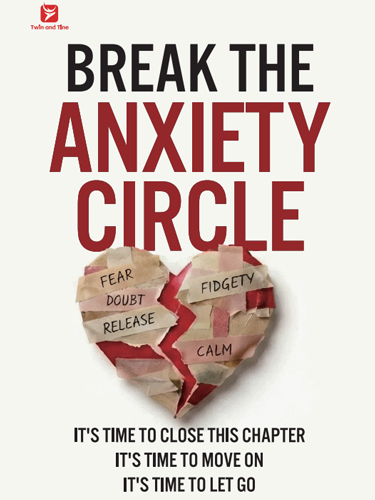
Break the Anxiety Circle
Miles CarterA mental reset for people trapped in the overthinking loop. Understand why your mind won’t stop racing — and how to break free from anxiety, people-pleasing, and emotional exhaustion.
One Last Thing
I still have moments where my chest tightens for no reason. I still catch myself planning escape routes from grocery stores. But now I understand what is happening. I know my body is trying to protect me. I thank it, and I tell it we are safe. Some days that works. Some days it does not. But I am no longer afraid of my own body. And that, more than anything, is what has set me free.