When Something Sounds Polite but Still Feels Hostile
Some conversations leave you uncomfortable even though nobody technically said anything rude. A coworker says, “No worries, I’ll just do it myself.” Someone agrees with you and then makes a pointed comment five minutes later. A person says everything is fine, yet their tone makes it obvious that it is not.
These interactions can be difficult because the real message is often hidden underneath the words. You may know that something is wrong, but calling it out can make you sound overly sensitive or turn the conversation into another argument.
This is one of the reasons passive-aggressive communication causes so much confusion. Instead of dealing with disagreement openly, people communicate frustration through hints, sarcasm, silence, exaggerated politeness, or comments that are easy to deny later.

The Hard Part Is Knowing How to Respond
When someone communicates indirectly, it is tempting to respond in the same style. You might become sarcastic yourself, withdraw completely, or make a comment that you hope they will understand. The conversation then becomes a series of signals instead of an honest exchange.
There is another problem: sometimes you cannot tell whether a comment was intentional. That uncertainty makes people replay conversations in their heads and wonder what they should have said.
A better response starts with resisting the urge to decode every hidden meaning. Pay attention to what was actually said, what needs to be addressed, and whether the issue is important enough to discuss. You do not need to expose someone’s motive before you can respond to their behavior.
Say What You Need Without Starting a Bigger Fight
Clear communication does not require a confrontation. It can be as simple as bringing the conversation back to the actual issue instead of responding to the emotional subtext.
Suppose a coworker says, “I guess I’ll handle it since you seem busy.” You do not need to argue about whether the comment was passive-aggressive. You can bring the conversation back to the task by asking what needs to be completed and agreeing on who will handle it.
This approach changes the direction of the exchange. Instead of defending yourself against an implied accusation, you are creating an opportunity for the other person to speak more directly.

Sarcasm Often Creates More Problems Than It Solves
Sarcasm can feel satisfying when someone has irritated you, especially when you think they started it. The problem is that sarcastic replies rarely make the original issue clearer. They usually add another layer of emotion that the other person can react to.
The same thing happens with deliberately vague answers. Saying “Whatever you want” may sound like agreement, but it often leaves resentment sitting underneath the conversation. Over time, both people begin to communicate through hints rather than saying what they actually need.
Direct language can feel less dramatic, but it is often much more useful. You can disagree, question something, or express irritation without making the other person guess what you are trying to communicate.
Sometimes the Most Powerful Response Is a Pause
Not every indirect comment deserves an immediate answer. When you feel annoyed, responding too quickly can pull you into a tone you will later regret.

A short pause gives you time to decide whether you are dealing with a real communication problem or simply an irritating remark. It also makes it easier to answer the actual message instead of reacting to the emotion behind it.
The ability to pause is especially valuable at work, where a sarcastic response can affect a relationship long after the original conversation is forgotten.
You Can Be Direct Without Becoming Harsh
Many people avoid direct communication because they associate it with confrontation. They worry that saying exactly what they think will make them seem cold, demanding, or difficult.
But clarity and hostility are not the same thing. Saying, “I disagree with that approach, and I’d like to explain why,” is very different from attacking someone’s competence. A calm statement gives the other person something concrete to respond to.
This is an important distinction in Say It Right Every Time by Miles Carter. The book explores how to express honest opinions without alienating others, how to use language that protects your boundaries, and how to disagree without creating unnecessary distance.

When Someone Keeps Communicating Indirectly
If passive-aggressive behavior becomes a pattern, the conversation may need a more explicit boundary. Rather than repeatedly responding to hints, you can make it clear that direct communication works better for you.

This does not require diagnosing the other person’s behavior or proving that they are being manipulative. It simply establishes the kind of conversation you are willing to participate in.
Over time, people often adjust when they realize indirect comments no longer produce the reaction they expected. Some will become more direct. Others may not, but you can still control the clarity and tone of your own responses.
A Book That Helps You Communicate More Clearly
Say It Right Every Time by Miles Carter is built around situations where wording, timing, tone, and emotional control can change the outcome of a conversation. Its section on passive-aggressive communication sits alongside practical lessons on calm responses, boundaries, disagreement, and speaking with confidence.
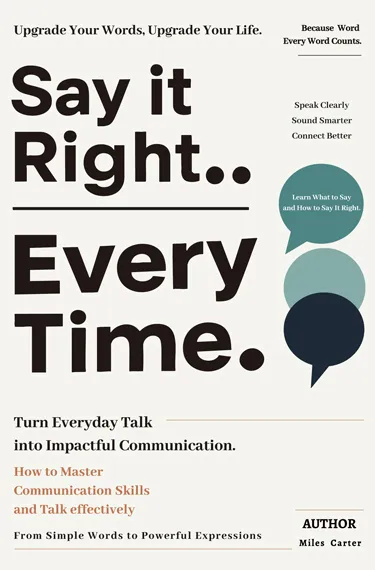
Say it Right..Every Time.
Miles CarterPractical communication tools for the moments that matter — say what you mean, calmly and confidently.
That combination matters because knowing what passive-aggressive communication looks like is only part of the problem. You also need to know what to say when you encounter it without becoming sarcastic, defensive, or overly emotional yourself.
With practice, difficult conversations become less about winning the exchange and more about keeping your message clear. That shift can make everyday communication feel much less exhausting.
Communication Gets Easier When You Stop Playing the Subtext Game
Passive-aggressive communication survives when people feel they have to communicate through hints and reactions. The more comfortable you become with clear language, calm boundaries, and thoughtful pauses, the less power those exchanges have over you.
You will not be able to control how other people communicate. You can, however, become much better at deciding what you will respond to, what you will let pass, and how clearly you will express yourself when something genuinely needs to be addressed.