You Want to Be Honest, But You Do Not Want to Hurt Anyone
There are plenty of moments when you have a real opinion but hesitate to share it. Someone asks what you think about an idea and you give a vague answer because you do not want to offend them. You disagree with a decision but keep quiet. Or you finally say what you think, only to realize afterward that your words sounded much harsher than you intended.
That can leave you stuck between two uncomfortable choices. Stay quiet and feel like you were not being honest, or speak openly and risk making the other person defensive.
Good communication does not require choosing one extreme.

Honesty and Harshness Are Not the Same Thing
Being honest does not mean saying every thought exactly as it enters your head. There is usually a difference between expressing a genuine opinion and using that opinion as an excuse to criticize someone.
Compare the difference between talking about an idea and judging the person behind it. One gives the other person something they can actually discuss. The other makes them feel as though they need to defend themselves.
That distinction becomes even more important when you disagree with someone you need to keep communicating with.

Start With What You Actually Think
Some people spend so much time trying to make their opinion sound acceptable that the opinion almost disappears.
They say, “Whatever you think is fine,” even when they strongly disagree. They use so many softening phrases that the other person cannot tell whether they are making a suggestion or apologizing for having one.
You do not need to remove all softness from your communication. You just need to make sure the main point is still there.
Say It Right Every Time
Say It Right Every Time by Miles Carter directly addresses this problem in its section on expressing your honest opinion without alienating others. That idea is central to the book’s broader approach: communicate what you really mean while paying attention to how the message is being received.

The book also looks at speaking with credibility and kindness, which is an important combination. Credibility gives your opinion weight, while kindness makes it easier for other people to hear what you are saying without immediately feeling attacked.
This is especially useful for people who have experienced both sides of the problem. Maybe you stay silent because you hate conflict, or maybe you become too blunt when you finally decide to speak. The book offers a more balanced approach.
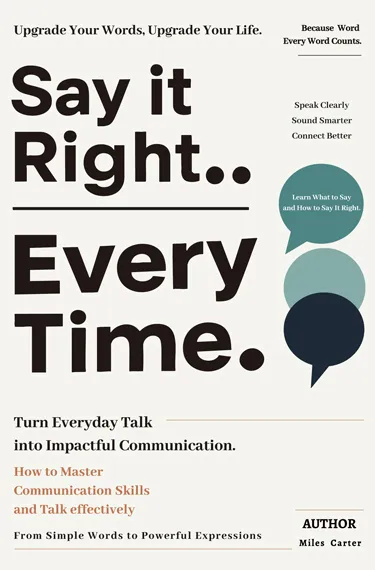
Say it Right..Every Time.
Miles CarterPractical communication tools for the moments that matter — say what you mean, calmly and confidently.
Say What You See Instead of Judging the Person
A useful way to express an honest opinion is to stay close to the actual issue.
Instead of telling someone that they are careless, you can explain what you noticed and why it concerns you. Instead of saying that an idea is ridiculous, you can point out the part you think is unlikely to work.
This may sound like a small difference, but it changes the conversation. The other person can respond to your point without first having to defend their personality.
That is the kind of practical distinction that makes communication easier.
Use “I” When the Situation Is Personal
The book also includes a section on saying “I” instead of “You.”
This is useful because statements that begin with “you” can quickly sound like accusations, especially when emotions are involved. “You never listen” tells the other person what they supposedly are. “I feel like my point is getting lost” gives them information about your experience.
The point is not to turn every sentence into a carefully engineered communication formula. It is to take responsibility for your own experience instead of presenting your interpretation of the other person as objective fact.

People Are More Willing to Listen When They Do Not Feel Cornered
You cannot control whether someone will agree with you, but you can make disagreement easier to hear.
Give the other person a little room. Explain your reasoning without turning it into a speech. Let them ask questions. Be willing to acknowledge a part of their point if they have one.
This does not make your opinion weaker. In many cases, it makes you sound more confident because you are not afraid that hearing another perspective will somehow erase your own.
What If They Still React Badly?
Sometimes another person will dislike an honest opinion no matter how carefully you express it.That does not automatically mean you communicated badly.
Your responsibility is to be clear and respectful. You cannot guarantee that everyone will be comfortable with what you say. Learning that distinction can make honest communication much less stressful because you stop trying to control the other person’s emotional response.
You Can Be Honest Without Becoming Blunt
There is a common misconception that people who speak directly are simply “brutally honest.”
The “brutal” part is not a requirement.
You can be straightforward without humiliating someone. You can disagree without mocking them. You can make a request without making it sound like a demand. Those are communication choices, and they can be practiced.
Say It Right Every Time is useful because the book deals with these choices in concrete situations rather than treating confidence or honesty as abstract personality traits.

What You Can Gain From the Book
Over time, you may become more comfortable sharing opinions before frustration builds up. You may find that you no longer need to rehearse every sentence because you have a better sense of how to make your point clear without sounding unnecessarily harsh.
You may also discover that honesty and good relationships are not opposites. When people know where you actually stand, conversations can become more straightforward because there is less guessing and less silent resentment.
Your Opinion Deserves to Be Heard
You do not have to agree with everyone to communicate well, and you do not have to hide your real opinion to be considerate.
For readers looking for a book for expressing honest opinions, Say It Right Every Time offers practical guidance on finding that balance. It helps you speak more openly while keeping your tone, wording, and intention clear enough that honesty does not have to come at the expense of respect.