Why do people sometimes act against their own interests? Why can emotions take over even when we know better? And why do the same patterns of conflict, jealousy, insecurity, and misunderstanding appear again and again in human relationships?
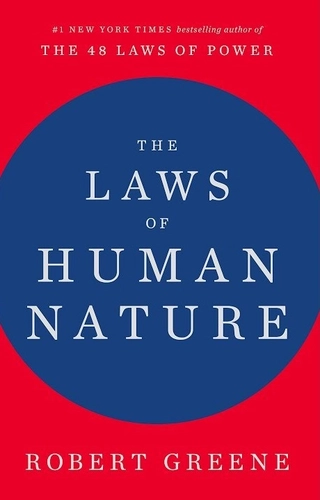
Robert Greene’s The Laws of Human Nature takes a deep look at these questions. Rather than presenting human behavior as random or unpredictable, Greene examines the emotional forces and psychological patterns that influence the way people think, make decisions, and interact with others.
The result is a book that can feel both fascinating and uncomfortable. It asks readers not only to understand other people better, but also to become more honest about their own emotional reactions and weaknesses.
About The Laws of Human Nature
Published in 2018, The Laws of Human Nature brings together ideas from psychology, history, philosophy, and biographies to examine recurring patterns in human behavior.
Greene’s central argument is that people are often influenced by emotions without fully realizing it. Pride, insecurity, envy, fear, impulsiveness, and the desire for recognition can quietly shape decisions that appear rational on the surface.
Instead of simply labeling these behaviors as good or bad, the book encourages readers to observe them more carefully. Understanding why people behave in certain ways can make social situations easier to navigate and may help readers respond more thoughtfully instead of reacting automatically.
What You Can Learn From The Book
Emotions Often Come Before Logic
One of the book’s most interesting ideas is that people are not always as rational as they believe themselves to be. We may create logical explanations for decisions that were actually influenced by emotion.
Recognizing this tendency can change the way we interpret both our own behavior and the behavior of others. A disagreement, for example, may have less to do with the subject being discussed and more to do with pride, insecurity, or the desire to feel respected.
This awareness can help readers pause before reacting and look beyond the obvious explanation.
People Are Influenced by Their Need for Recognition
Greene pays considerable attention to people’s desire to be appreciated, respected, and acknowledged. Even seemingly confident individuals can be sensitive to criticism or comparison.
Understanding this psychological tendency can make everyday communication more effective. When people feel seen and respected, they are often more receptive to ideas and feedback.
At the same time, recognizing the need for approval in ourselves can help us become less dependent on external validation.
Self-Awareness Is Just as Important as Understanding Others
Although the book is often associated with learning how to read people, one of its more valuable lessons is directed inward.
It is easy to analyze someone else’s jealousy, defensiveness, or insecurity while overlooking our own. The Laws of Human Nature challenges readers to examine their personal patterns with the same level of attention.
That makes the book more than a guide to social observation. It becomes an exercise in self-awareness.
Why The Laws of Human Nature Stands Out
Greene has a distinctive way of presenting psychological ideas. Instead of relying only on abstract explanations, he uses historical figures and real-world stories to illustrate recurring patterns.
These examples make the book engaging and give readers concrete situations through which to understand its ideas. At the same time, the book is considerably more detailed than a typical quick-read self-help title.
Another strength is its willingness to explore the less flattering side of human behavior. The book does not assume that people are always rational, generous, or emotionally consistent. It acknowledges that ambition, insecurity, envy, and self-interest are part of human nature.
That perspective may not always be comfortable, but it can make the book particularly useful for readers who want a more realistic understanding of relationships and social behavior.
A Book That Encourages You to Observe Before You React
Perhaps the most practical lesson is the value of observation.
When someone behaves unexpectedly, our first instinct may be to judge their actions or immediately defend ourselves. Greene’s approach suggests taking a step back and asking what might be happening beneath the surface.
What does this person want? What emotion might be influencing them? Is there a pattern in their behavior? And just as importantly, what emotions are influencing my own response?
These questions can create a little distance between an event and our reaction. That distance can make it easier to communicate clearly, recognize unhealthy dynamics, and make better decisions.
Who Should Read The Laws of Human Nature?
This book will appeal to readers who are curious about psychology and the hidden forces behind everyday behavior.
It may be particularly interesting for people who:
- Want to understand human behavior more deeply
- Are curious about social psychology and emotional patterns
- Want to become better at reading social situations
- Struggle with difficult personalities or recurring conflicts
- Want to develop greater self-awareness
- Enjoy psychology books with historical stories and examples
It is also a good choice for readers who prefer books that raise questions rather than provide simple formulas. Some of Greene’s ideas require reflection, especially when they turn the focus back toward the reader.
Final Thoughts
The Laws of Human Nature offers an absorbing look at the psychological forces that influence everyday life. Its greatest value may be the perspective it creates: people become easier to understand when we look beyond their words and consider the emotions, motivations, and patterns underneath them.
The book is not about becoming suspicious of everyone around you. Instead, it encourages a more observant approach to human behavior while reminding readers that they are subject to many of the same emotional forces themselves.
For anyone fascinated by psychology, relationships, and the complicated nature of human behavior, The Laws of Human Nature is a thought-provoking read that can change the way you look at both other people and yourself.