I used to think the problem was my kid. I know how that sounds. But after the fifth meltdown of the week, after the same argument about the same thing for the hundredth time, that is where your brain goes. Why won’t he just listen? Why does she keep doing this? What is wrong with him?
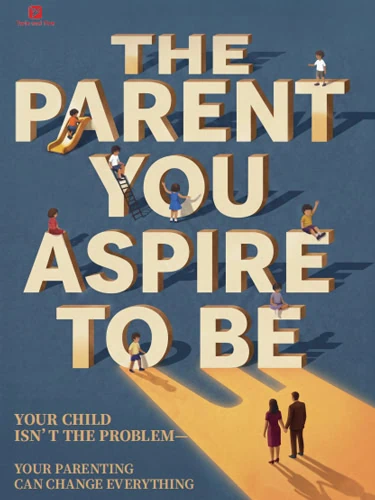
Then I read something that stopped me cold. The problem is not that your child won’t listen. It is that the same fight keeps repeating. That one line, from a book called The Parent You Aspire to Be by Miles Carter, changed how I saw everything. The fight was not random. It was a pattern. And patterns have reasons.
I have read a lot of parenting books. Most of them tell you what to do. This one told me why.
Quick Answer: What makes The Parent You Aspire to Be different from other parenting books?
Most parenting books focus on correcting behavior. This one focuses on understanding the need behind the behavior, and it turns the camera on the parent too, not just the child.

Most Parenting Books Tell You What to Do
Let me be fair. There are good parenting books out there. But a lot of them follow the same shape. Here is a problem. Here is a script. Here is what to say when your kid does X. And that can work, for a while.
The trouble is, kids are not scripts. They are people. And the same approach that works on Tuesday might blow up on Wednesday. You end up memorizing lines that do not fit the scene.
I remember trying one of those scripts on my son during a homework meltdown. I said the calm, rehearsed sentence. He looked at me like I was speaking another language. The script did not land because I did not understand what was actually happening. I was treating the symptom, not the cause.
What This Book Does Differently
Here is what sets The Parent You Aspire to Be apart.
It looks at the need behind the behavior. Tantrums are not just tantrums. Lying is not just lying. Screen battles are not just about screens. There is something the child is trying to say but cannot. The book helps you hear it.
It gives side-by-side comparisons. This is the part that stuck with me most. Instead of just saying “be gentle,” it shows you two versions of the same sentence. The ineffective one. The effective one. You see the difference in black and white. That is rare in parenting books.
It turns the camera on the parent. Most books focus entirely on the child. This one asks you to look at your own emotions too. Why did that tiny thing make you so angry? What is your reaction really about? That question changed more for me than any discipline technique.
It is built for real life. The structure is simple. Wrong approaches. Correct demonstrations. Practical steps. No long theory. No judgment. Just what to do and why it works.
Why the Parent’s Psychology Matters
I did not expect a parenting book to make me look at myself. But that was the part that helped most.
There is a section on parental emotions, on control, on the anxiety that makes us grip too tightly. I had to sit with that one. Why did my son’s refusal to do homework make me so angry, so fast? Part of it was the clock. Part of it was the fear that I was failing as a parent. His behavior was poking a wound that had nothing to do with him.
Once I saw that, I could respond instead of react. That shift did more for our evenings than any sticker chart ever did.
What I Actually Took From It
A few things have stuck.
Ask what the behavior is saying. Not just what it is doing. A meltdown at bedtime is rarely about bedtime. It is usually about something that happened earlier that the child could not name.
Use the side-by-side scripts. I keep a few in my head now. When I feel the old reaction coming, I swap in the better sentence. It sounds mechanical at first. After a few weeks, it becomes natural.
Check your own tank first. If I am hungry, tired, or stressed, I am a worse parent. That is not an excuse. It is information. I eat before the homework battle now. It sounds small. It changes everything.
Look for the pattern, not the incident. One bad night is a bad night. The same bad night every Tuesday is a message. The book taught me to look for the pattern and respond to that instead.
FAQ
Is this book only for parents of young kids?
No. It covers a wide range, from tantrums and picky eating to school refusal and screen battles. The principles apply across ages, though the examples skew younger.
How is it different from other discipline books?
Most discipline books focus on what to do when behavior happens. This one focuses on why it keeps happening, and it asks you to examine your own reactions too.
Does it offer quick fixes?
It offers practical steps, but it is not a magic pill. The real change comes from understanding the pattern, not just applying a technique.
Is it religious or secular?
It is practical and grounded in psychology. It does not push a religious framework.
Who would benefit most from this book?
Parents who feel stuck in the same loop, and who are willing to look at their own role in it, not just their child’s behavior.
A Closing Thought
I still lose my temper sometimes. I still have nights where I get it wrong. But the fights do not repeat the way they used to. I understand more now. I react less. And when I do react, I repair faster.
That is what this book gave me. Not a perfect child. Not a perfect me. Just a better understanding of what is actually happening in the room. And that has been enough to change the weather in our house.
References
- Carter, Miles. The Parent You Aspire to Be.
- Siegel, Daniel J., and Tina Payne Bryson. The Whole-Brain Child. Bantam, 2011.
- Faber, Adele, and Elaine Mazlish. How to Talk So Kids Will Listen and Listen So Kids Will Talk. Scribner, 1980.

The Parent You Aspire to Be
Miles CarterPractical guidance for tantrums, backtalk, lying, screen addiction, emotional outbursts, and everyday parenting struggles.

