It is easy to spend much of life thinking about what has already happened or worrying about what might happen next. Even when everything seems fine, the mind can keep replaying old conversations, imagining future problems, or searching for something to fix.
The Power of Now by Eckhart Tolle explores how this constant mental activity can affect the way we experience everyday life. Rather than allowing the past and future to dominate our attention, Tolle encourages readers to develop a deeper awareness of the present moment.
For readers interested in mindfulness, emotional well-being, anxiety management, and personal growth, The Power of Now offers a different way to think about inner peace and the relationship between thoughts and emotions.
About The Power of Now
Published by Eckhart Tolle, The Power of Now is a spiritual self-help book centered on present-moment awareness. Its central idea is that people can experience greater peace when they learn to observe their thoughts instead of automatically becoming caught up in them.
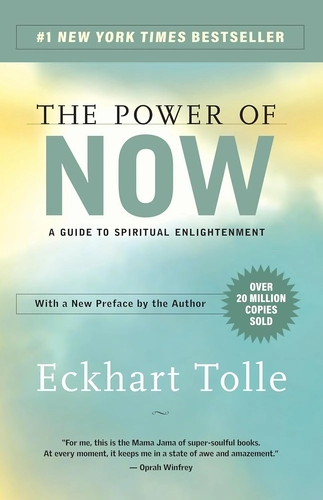
The book explores the difference between simply having thoughts and identifying with those thoughts. According to Tolle’s approach, much of our emotional suffering can come from constantly living in memories or imagined futures rather than experiencing what is happening right now.
Rather than presenting mindfulness as a complicated practice, the book encourages readers to notice their thoughts, emotions, and surroundings with greater awareness. This can gradually create more space between a person and the mental patterns that influence their reactions.
Key Ideas From The Book
Learning to Observe Your Thoughts
One of the most important ideas in The Power of Now is that thoughts do not always need to control our attention. People often accept every thought as meaningful or true, which can lead to unnecessary worry, regret, and emotional stress.
Tolle encourages readers to step back and observe their thoughts. This simple shift can help people recognize recurring mental patterns without immediately reacting to them.
For someone who frequently overthinks, this perspective can be particularly useful. Instead of trying to eliminate every uncomfortable thought, readers can learn to notice those thoughts without allowing them to take over.
Breaking the Habit of Living in the Past or Future
The mind naturally moves between memories and possibilities. Thinking about the past can help us learn from experience, while thinking about the future can help us prepare. However, constantly living in either one can make it difficult to fully experience the present.
The Power of Now encourages readers to recognize when their attention has moved away from the current moment. Bringing awareness back to what is happening now can make ordinary experiences feel calmer and more manageable.
Finding Greater Emotional Awareness
The book also explores the relationship between thoughts and emotions. Instead of immediately resisting uncomfortable feelings, readers are encouraged to become more aware of what they are experiencing.
This does not mean ignoring difficult emotions. Rather, it involves noticing them without automatically judging or fighting them. Over time, this approach can help readers develop a more balanced relationship with their emotional experiences.
What Makes The Power of Now Worth Reading?
One of the strongest aspects of The Power of Now is its simplicity. The book addresses questions that many people experience in everyday life—why the mind feels restless, why worries are difficult to stop, and why it can be challenging to simply enjoy the present.
Its ideas can also be applied to ordinary situations. Whether someone is dealing with stress at work, worrying about the future, or struggling to let go of something that happened in the past, the book offers a framework for becoming more aware of the present experience.
Another reason the book continues to appeal to readers is that it does not treat inner peace as something that can only be achieved after reaching a particular goal. Instead, it asks readers to consider whether peace can begin with the way they relate to their thoughts right now.
The book can be somewhat reflective and philosophical, so it may not appeal to readers looking for a highly structured step-by-step program. However, for those willing to slow down and consider its ideas, it can provide plenty of material for personal reflection.
Who Should Read The Power of Now?
This book is a good choice for readers who want to become more present and develop a calmer relationship with their thoughts.
It may be especially helpful for people who:
- Frequently overthink past events or future possibilities
- Want to learn more about mindfulness
- Struggle with stress or anxious thoughts
- Are interested in emotional awareness
- Want to develop greater inner peace
- Enjoy reflective books about personal growth and self-understanding
It can also be a worthwhile read for people who feel that they are constantly busy thinking about the next thing and rarely have the opportunity to simply experience the moment they are in.
Final Thoughts
The Power of Now is ultimately a book about attention, awareness, and the experience of being present. Its central message is simple but challenging: a more peaceful life may begin with learning to stop letting thoughts about the past and future completely occupy the present.
For readers interested in mindfulness, emotional regulation, and personal growth, the book provides an invitation to slow down and observe their inner world more carefully. Its ideas may not change everything overnight, but they can encourage a different way of responding to thoughts, emotions, and everyday experiences.