A child can be laughing one minute and completely overwhelmed the next. A small disappointment can turn into a major meltdown, and a simple request can suddenly feel like an impossible battle. For parents, these moments can be confusing, exhausting, and difficult to handle calmly.
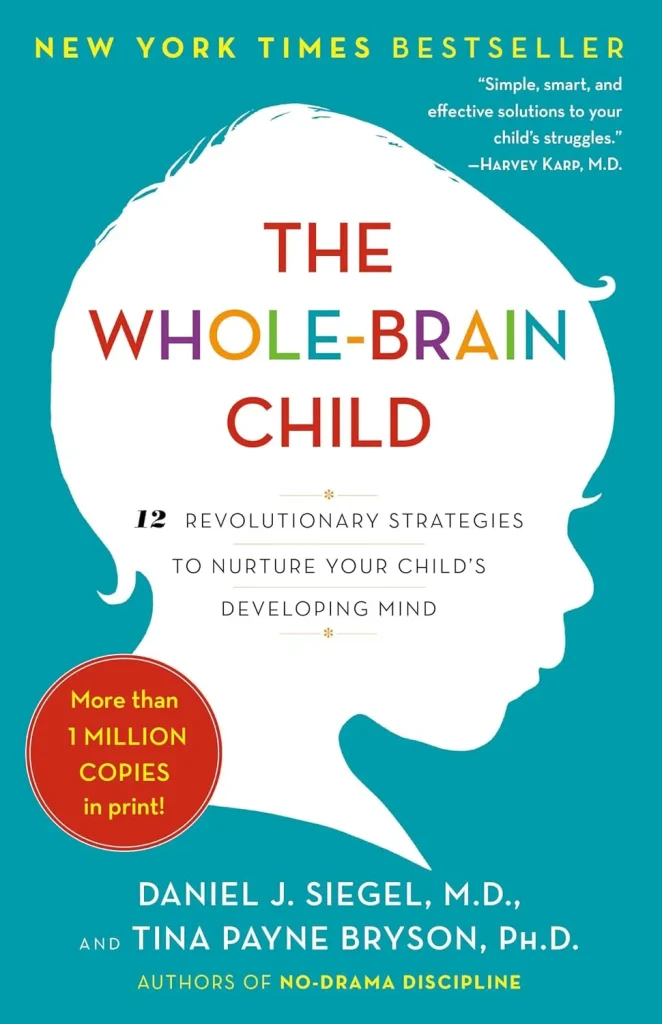
The Whole-Brain Child by Daniel J. Siegel and Tina Payne Bryson offers a different way of looking at these everyday challenges. Instead of asking only how parents can stop difficult behavior, the book explores what may be happening inside a child’s developing brain.
That perspective makes the book particularly interesting for parents who want to respond to challenging behavior with greater understanding while still helping their children develop emotional skills.
About The Whole-Brain Child
The Whole-Brain Child combines insights from neuroscience, psychology, and parenting to explain how children’s brains develop and how this development affects their emotions and behavior.
The authors explain that different parts of the brain become integrated gradually. Because children are still developing the ability to coordinate emotions, reasoning, memories, and impulses, their reactions can sometimes seem much bigger than the situation itself.
Rather than treating these moments simply as bad behavior, the book encourages parents to consider what the child may need developmentally. This does not mean allowing every behavior. Instead, it provides a framework for responding to difficult moments while also teaching children how to handle emotions more effectively.
Key Ideas From The Book
Look Beneath the Behavior
A child’s behavior is often the most visible part of a difficult situation, but it may not tell the whole story.
A tantrum, refusal, or sudden outburst can be connected to frustration, fear, exhaustion, disappointment, or an inability to express a complicated feeling. The book encourages parents to look beyond the behavior and consider the emotional experience underneath it.
This small change in perspective can make challenging moments feel less like battles between parent and child.
Help Children Connect Emotion and Reason
One of the central ideas in the book is that children need help connecting different parts of their developing brains. Strong emotions can make it difficult for a child to think logically or consider consequences.
Instead of immediately trying to reason with a highly upset child, parents can first acknowledge the emotion and help the child feel understood. Once the emotional intensity decreases, it becomes easier to discuss what happened and think about what could be done differently next time.
This approach can be especially useful during tantrums and other emotionally intense moments.
Turn Difficult Moments Into Learning Opportunities
Parenting does not happen only during calm conversations. Some of the most important lessons can happen in the middle of everyday conflicts.
The Whole-Brain Child encourages parents to see difficult experiences as opportunities to help children develop emotional awareness, problem-solving abilities, and self-control.
A frustrating moment does not have to end with a lecture or punishment. It can eventually become a conversation about feelings, choices, and better ways to respond.
What Makes The Whole-Brain Child Worth Reading?
The book’s biggest strength is that it connects an explanation of child development with situations parents actually encounter. Concepts about the brain can sound complicated, but the authors consistently relate them to tantrums, fears, sibling conflicts, discipline, and other familiar parenting challenges.
Another appealing feature is its emphasis on connection without abandoning boundaries. Understanding a child’s emotions does not mean that parents have to say yes to everything. Instead, the book presents emotional connection as part of helping children gradually learn how to manage themselves.
The practical strategies also make the book approachable. Parents can take individual ideas and apply them to everyday situations rather than feeling that they need to completely change their parenting style overnight.
Perhaps most importantly, the book can change the way parents interpret difficult behavior. When a child’s reaction is viewed partly through the lens of development, it becomes easier to replace immediate frustration with curiosity and guidance.
The Book’s Approach to Everyday Parenting
One particularly useful aspect of The Whole-Brain Child is its focus on what happens after a difficult moment.
Parents cannot prevent every tantrum, argument, or emotional outburst. Children will still become frustrated, disappointed, angry, and afraid. The goal is not to create a childhood without difficult emotions.
Instead, parents can use these experiences to help children understand what they felt, why they reacted, and what they might do differently in the future.
Over time, these repeated conversations can give children a vocabulary for their inner experiences. They may gradually become better at recognizing emotions before those emotions completely take over.
Who Should Read The Whole-Brain Child?
This book is particularly suited to parents who want to better understand children’s emotional and behavioral development.
It may be especially helpful for parents who:
- Want to understand the reasons behind challenging child behavior
- Struggle with tantrums or emotional outbursts
- Want to communicate more effectively with their children
- Are looking for alternatives to purely punitive discipline
- Want to help children develop emotional regulation
- Are interested in the connection between neuroscience and parenting
It can also be useful for parents who already have a strong relationship with their children but want more tools for handling particularly difficult moments.
Final Thoughts
The Whole-Brain Child offers parents a useful reminder that children are still learning how to understand and manage their inner worlds. What looks like defiance or overreaction may sometimes reflect a child who simply does not yet have the emotional and cognitive tools to handle a situation independently.
The book does not promise a parenting method that will eliminate difficult moments. Instead, it offers a way to approach those moments with more understanding and purpose.
For parents who want to build stronger communication, respond more thoughtfully to challenging behavior, and help their children develop emotional skills that will serve them as they grow, The Whole-Brain Child is a practical and worthwhile read.