You love your kids. But some days, you have no idea what you are doing.
They throw tantrums. They talk back. They refuse to eat dinner. You try everything you can think of. Nothing works. You end up yelling, feeling guilty, and wondering if you are the only parent who cannot figure this out.
You are not alone. Every parent struggles. But here is the thing. There is no one right way to parent. Different kids need different approaches. Different parents have different styles. The key is finding what works for your family.
That is why reading multiple parenting books can help. Each one offers a different lens. A different set of tools. A different way of understanding what is going on inside your child’s head.
Quick answer: How do I choose the right parenting approach for my family?
Start with the book that matches your biggest struggle right now, try one strategy at a time, and remember that what works for other families might not work for yours.
Here is a parenting books comparison of three approaches. One gives you practical scripts for everyday battles. One focuses on building resilience in your child. One explains the neuroscience behind your child’s behavior.
The Parent You Aspire to Be
Practical guidance for tantrums, backtalk, lying, and everyday struggles.
This book by Miles Carter is built for the moments that make you want to pull your hair out. The tantrum in aisle three. The backtalk at dinner. The homework battle that drags on for an hour.
What makes this book different is the structure. For every problem, Carter shows you the wrong way and then the right way. Side by side. You see exactly what to say and what not to say. No guessing. No vague advice.
The book covers seven big areas. Behavior correction, emotional management, parent-child communication, and even your own emotions as a parent. It tackles internet addiction, school refusal, lying, picky eating, and tantrums. It also looks at parental struggles like over-control and emotional outbursts.
Here is what you learn. How to set gentle but firm boundaries. How to understand what your child is really asking for. How to let go of control in ways that actually help your kid grow. And how to stop reacting and start responding.
This book is for parents who want practical tools they can use tonight. No theory. Just real solutions.

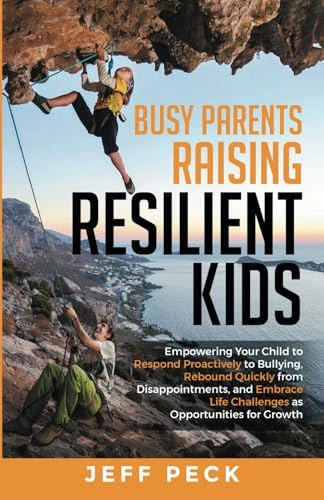
Busy Parents Raising Resilient Kids
Empowering your child to respond proactively to bullying, disappointment, and setbacks.
Jeff Peck wrote this book for parents who want to raise kids who can handle hard things. Life throws punches. Kids who cannot take a hit will struggle. Kids who know how to bounce back will thrive.
The book gives you actionable strategies to help your child recover from setbacks, face adversity with confidence, and turn obstacles into opportunities. It covers bullying, disappointment, and the impact of screen time. It teaches you how to discuss failures, foster self-belief, and help your child view challenges as stepping stones.
What stands out is the practical focus. Real-world examples show how these tools work in different family dynamics. Whether your child is starting school or entering adulthood, the strategies adjust.
This book is for parents who want to raise kids who are emotionally strong. Kids who can handle rejection, disappointment, and failure without falling apart.
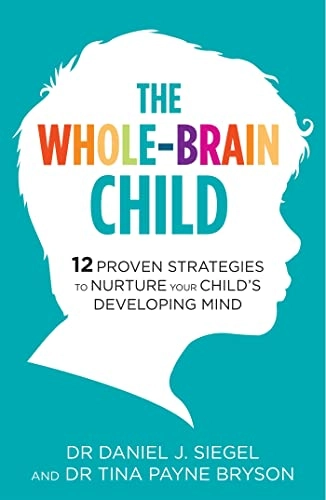
The Whole-Brain Child
12 revolutionary strategies to nurture your child’s developing mind.
Daniel J. Siegel and Tina Payne Bryson wrote this book to explain what is actually happening in your child’s brain. Why do they melt down over small things? Why can they not calm down when you tell them to? The answer lies in brain development.
The book introduces 12 key strategies based on neuroscience. “Name It to Tame It” uses storytelling to calm emotional storms. “Engage, Don’t Enrage” helps you get your child thinking instead of reacting. “Move It or Lose It” uses physical activity to shift emotional states.
You learn why your child’s brain works differently at different ages. You learn how to guide them through negative emotions. You learn to help them become more self-aware and flexible.
The book is full of clear explanations and age-appropriate strategies. It empowers parents to raise emotionally balanced, connected kids. Not by controlling them, but by understanding them.
Parenting Books Comparison: Which One Is Right for You?
| If your problem is… | Start with this book |
|---|---|
| Daily battles and not knowing what to say | The Parent You Aspire to Be |
| Building emotional strength and resilience | Busy Parents Raising Resilient Kids |
| Understanding the science behind behavior | The Whole-Brain Child |
Many parents read all three. Each one offers something the others do not. The practical scripts. The resilience tools. The brain science. Together, they give you a complete picture.
Final Thought
There is no perfect parenting book. There is no perfect parent. There is just you, trying your best, learning as you go.
The goal is not to get it right every time. The goal is to keep showing up. Keep learning. Keep trying. Your kids do not need a perfect parent. They need a parent who is willing to grow.
Start with one book. Try one technique. See what happens. Then try another. That is how you figure out what works for your family.
Frequently Asked Questions
How do I know which parenting book is best for me?
Think about your biggest struggle. Is it everyday battles and not knowing what to say? Start with The Parent You Aspire to Be. Is it helping your child handle hard things? Go with Busy Parents Raising Resilient Kids. Is it understanding what is going on in their brain? Pick The Whole-Brain Child.
Can I read all three?
Yes. Many parents do. Each book covers different aspects of parenting. Together, they give you a more complete understanding.
What if I have tried parenting books before and they did not help?
That probably means they were too vague. This list gives you specific, practical tools. Not just theories.
How long does it take to see results?
It depends. Some parents see changes right away. Others take weeks. The key is to actually use the strategies, not just read about them.