I still remember the night I sat in the hallway outside my daughter’s room. My newborn was finally asleep in the bassinet. My almost-3-year-old was not. She was singing “Let It Go” at the top of her lungs, banging her heels against the wall, and occasionally bursting out the door to see if I was still there. It was 10 p.m. I had tried everything. White noise, back rubs, sticker charts, cutting naps, yelling into a pillow. The whole thing had been going on since she turned two. I was starting to feel like I’d never get an evening again. And I’m an introvert. I need those quiet hours like I need air.
Then one night, out of sheer exhaustion, I stopped trying to make her sleep. I changed the goal entirely. That shift saved my sanity.
Quick Wins for a Toddler Who Won’t Stay Asleep
If you’re exhausted and your toddler keeps escaping bed, try these:
- Drop the pressure to “go to sleep” and aim for “quiet rest time” instead.
- Create a bedtime-only basket of calm toys she can use if she’s awake.
- Childproof the room completely and install a doorknob cover for safety.
- Use a two-ticket system: one free “ask” per night, then no more.
- Sit silently in the doorway for a week to break the escape habit.
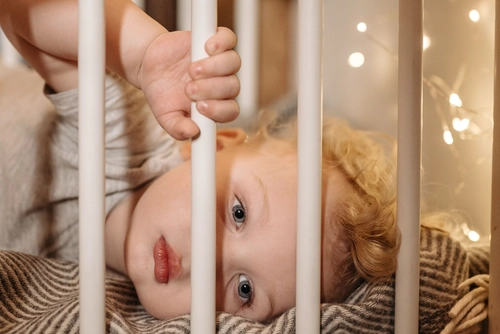
Why Won’t My Toddler Stay Asleep? It’s Not Always About Being Tired
I used to think she just wasn’t tired enough. So I ran her around the yard, did dance parties before bath, cut nap time, moved bedtime later. Nothing worked. Some kids, I’ve learned, get wired from exhaustion. They’re so overtired that their little bodies pump out cortisol and they cannot settle. Other kids, like mine, genuinely aren’t sleepy yet. Their brains are processing new words, new skills, new fears.
The real problem for us was separation. The moment I left the room, her brain screamed, “Mom is gone!” She’d hop out of bed to check. She’d call out. She’d cry. Then the crying would wake the baby. The more I went back in, the more she learned that calling out works. The cycle was brutal.
One mom in a support group said to me, “What if you stopped fighting over sleep and just asked her to stay in her room quietly?” I’d never thought of it that way. I was so fixated on sleep that I missed a simpler path: teaching her that nighttime is for restful alone time, whether she’s asleep or not.
How to Help Your Toddler Stay Asleep: Start with the Room, Not the Bed
I heard about the “stay in bed” technique from parenting shows. The core idea is that you don’t reward attention-seeking with conversation. You put them back in bed with a calm, boring goodnight. No eye contact, no negotiation. The first night, I put her back 47 times. I counted. She thought it was a game. I wanted to cry.
Then I tweaked it. Instead of focusing on staying in bed, I focused on staying in the room. I made her bedroom a safe, boring-to-escape space. I removed every toy except a special “bedtime basket” of quiet things: a few board books, a wooden puzzle, a flashlight for shadow play. I told her, “You don’t have to sleep. You just need to rest your body and stay in here until the light turns green.” (I got an okay-to-wake clock.) Then I sat in the hallway with a book and put her back in every time she opened the door. No talking, just a gentle hand on her shoulder to guide her back.
Within three nights, the escapes dropped to two. Within a week, she’d just play for a while and then fall asleep on her floor once or twice. I didn’t care where she slept. She was safe, quiet, and the baby stayed asleep. My evenings came back.
A Simple Plan for Quiet Room Time
Night 1: Tell your toddler the new rule. “After story time, it’s quiet time. You don’t have to sleep, but you have to stay in your room. You can read or play with your special basket. I’ll be right outside.” Childproof the room. Lock up anything messy. Sit by the door. Every time she tries to leave, return her without a reaction. She will scream. She will test you. Stay boring.
Night 2: Same thing. She’ll push harder at first. She might refuse to play and just stand at the door crying. Hold firm. I hummed to myself so she’d hear I was still there. I didn’t engage. Within 30 minutes, she dragged her blanket to the floor near the door and fell asleep.
Night 3: She’ll start to accept the boundary. You might be able to sit further away, like in the living room with a monitor. The key is that you’re teaching her to be alone and calm, not forcing unconsciousness.
Some parents I know used a reward system. Two tickets a night. One free call-out, like for a real need. The second ticket lost means no sticker in the morning. After ten stickers, a small prize. Others used an audiobook or a Yoto player with sleepy stories. For my kid, the spoken word distracted her mind long enough for her body to surrender.
Why a Bedtime-Only Toy Basket Can Help a Toddler Stay Asleep
Kids at this age have busy brains. Lying in the dark waiting for sleep can feel scary. The toy basket gives them something to do that’s low-stimulation. I rotated items: a magnetic dress-up doll, a small flashlight, a sensory bottle with glitter. The only rule: she had to stay in the room. If she did, I’d refill the basket with one new surprise each morning.
This approach worked because it removed the power struggle. Sleep wasn’t a demand. She had control over her body. Over a few weeks, she started sleeping through because she learned to self-soothe. Some nights she’d be up for an hour, but she was quiet, and I could breathe.
What If My Toddler Still Won’t Stay Asleep After All That?
One thing I see parents do, myself included, is switch strategies too quickly. They try a new method for two nights and declare failure. But kids need weeks of consistency. Pick one plan and stick to it for at least 14 days. No changes, no adding melatonin unless you talk to your pediatrician.
Speaking of melatonin, in some families it was a game-changer for a short time. But it’s not without questions. One friend tried a tiny dose for her son after his doctor okayed it. He slept better for six months, then they weaned off. Another kid got nauseous. Every child is different. If you consider it, treat it like a serious conversation, not a shortcut.
FAQ: Toddler Won’t Stay Asleep Questions from Exhausted Parents
Q: My toddler won’t stay asleep and keeps crying at the door. What do I do?
A: First, check if they’re genuinely scared. A nightlight with a red bulb (less disruptive to sleep) can help. Then return them to their room calmly, without extra hugs. You’re not being cold; you’re being predictable. Predictability feels safe. Do this for at least a week.
Q: Is it okay if my toddler sleeps on the floor of their room?
A: If the room is childproof and warm, many parents let this go. My daughter slept on a pile of blankets for two months. Her pediatrician said, “She’s sleeping. That’s a win.” Sometimes the battle isn’t worth winning perfectly.
Q: How do I get my toddler to stay asleep when a new baby wakes them up?
A: Use white noise in both rooms. Consider keeping the baby’s sound machine on a deeper tone. When my newborn cried, I’d wait a few minutes before going in. My toddler learned to sleep through it because she knew I wouldn’t come running. Also, praise her when she stays asleep: “You slept through the baby’s crying! You’re growing so big.”
Q: Could my toddler’s inability to stay asleep be something else?
A: Rarely, there are physical reasons like sleep apnea, large tonsils, or restless legs. If your child snores heavily, breathes through their mouth, or moves constantly, mention it at your next checkup. Most often, though, it’s behavioral and will pass.
Q: At what age can I expect my toddler to finally stay asleep through the night?
A: Many 3-year-olds still wake once briefly. By 4, most are sleeping through, but some high-energy kids take until 5. You’re not failing. You’re parenting a normal, awake little human.
One Last Thing
I remember a terrible night when I locked myself in the bathroom, sat on the floor, and sobbed while she banged on the door. I felt like I was ruining everything. Then, one random Tuesday, I put her in her room at 7:30 and went to the couch to work. At 8:10, I realized I hadn’t heard a peep. She was asleep. She stayed asleep all night. It happened. It wasn’t magic. It was a thousand tiny repetitions of “I love you, it’s rest time now,” said until she believed it—and until I did, too.
References
- American Academy of Pediatrics. (2022). Healthy Children: Sleep and Your 1- to 2-Year-Old. Retrieved from healthychildren.org.
- Mindell, J. A., & Owens, J. A. (2015). A Clinical Guide to Pediatric Sleep: Diagnosis and Management of Sleep Problems (3rd ed.). Wolters Kluwer.
- Frost, J. (n.d.). Stay-in-Bed Technique. [Parenting guidance].
