You have probably had this experience. Someone says they are fine, but you know they are not. You cannot point to a single thing they said wrong. You just feel it. Or the opposite: you trust someone immediately, and later find out you were completely wrong about them.
Most of us walk through life reading people badly. We rely on charm, intuition, and vague feelings. No framework. No system. Just guessing.
The three books below changed that for me. Each one approaches the same question from a different angle. One teaches you to read individuals in real time. One shows you how situations shape behavior. One reveals what emotions are actually telling you.
1. How to Read Someone’s Mind by Miles Carter

I used to walk away from conversations replaying them in my head, trying to figure out what actually happened. Someone would say they were fine, but I knew they were not. I could not explain why.
Carter gave me a framework for naming what I was already sensing. Not a list of gestures to memorize, but a way to read emotional signals in real time. He breaks it down into four layers: face, body, voice, and context.
The section on contempt changed how I see relationships. It shows up as a flicker in the eyes, a slight pull at the corner of the mouth, a moment when the other person looks through you instead of at you. I started noticing this in conversations I had been having for years. Suddenly I understood why certain relationships felt off in ways I could never explain.
The book also teaches you to observe baseline behavior. People have patterns. When those patterns shift, something has shifted underneath. Instead of asking “is he lying?” I started asking “what is different about today compared to how he usually is?” That one question changed everything.
What you will learn from ‘How to Read Someone’s Mind’:
- A four-layer framework for reading people in real time
- How to spot contempt and other subtle emotional signals
- How to read baseline behavior and detect meaningful shifts
- How to combine facial expressions, body language, voice, and context into a complete picture
2. The Lucifer Effect by Philip Zimbardo
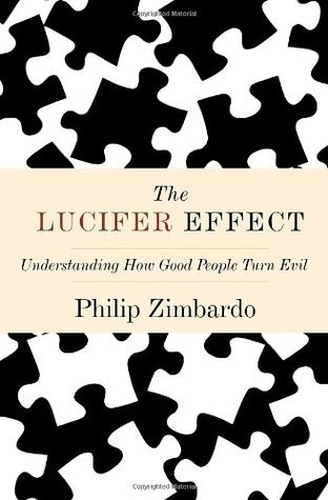
Most of us believe we are good people who would never do bad things. Zimbardo disagrees. He argues that situations, not personalities, are the biggest drivers of behavior.
This book is Zimbardo’s full account of the Stanford Prison Experiment—the famous study where college students were randomly assigned to be guards or prisoners, and within days the situation turned them into people they did not recognize. But it goes beyond that. Zimbardo shows how similar dynamics play out in Abu Ghraib, in corporate scandals, in everyday life.
The book is uncomfortable. Zimbardo does not let you off the hook. He forces you to ask: what would I have done? The honest answer is often unsettling.
What I found most valuable is the shift in perspective. Instead of asking “why are some people bad?” you start asking “what conditions make good people do bad things?” That question is more useful for understanding real human behavior.
What you will learn from ‘The Lucifer Effect’:
- How situations shape behavior more than personality
- The dynamics behind the Stanford Prison Experiment
- Why good people sometimes do terrible things
- How to recognize when a situation is influencing you
- How to resist destructive social pressures
3. The Language of Emotions by Karla McLaren
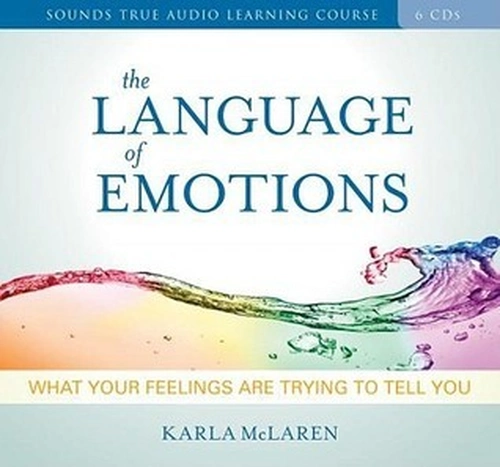
Most psychology books treat emotions as obstacles to be overcome. McLaren treats them as information to be read.
She argues that every emotion has a function. Anger tells you a boundary has been crossed. Jealousy signals that something important to you is threatened. Shame tells you you have strayed from your values. Even the so-called negative emotions have something useful to say.
What I found useful is the practical framework. McLaren gives you specific steps for working with each emotion instead of fighting it. How to recognize what anger is really telling you. How to listen to anxiety instead of trying to eliminate it. How to let sadness move through you without getting stuck.
This is not a book about controlling emotions. It is about understanding them so they stop controlling you.
What you will learn from ‘The Language of Emotions’:
- What each emotion is actually trying to tell you
- How to work with emotions instead of fighting them
- Why “negative” emotions have important functions
- Practical techniques for processing difficult feelings
- How to stop being ruled by your emotional reactions
Each of these books offers a different lens on human behavior. Carter teaches you to read the individual in front of you. Zimbardo shows you how situations shape people. McLaren reveals what emotions are really telling you. Read them in any order. Together, they will change how you see everyone—including yourself.
