I caught myself doing it again last week. Standing in the kitchen, I reached for the sugar bowl and added a spoonful to my coffee. I don’t take sugar. I never have. But my grandmother did, and every morning of my childhood I watched her do the exact same motion. My hand knew the script before my brain could object.
That is the unconscious behavior meaning in its most everyday form. It is the vast machinery of the mind running below the surface, handling most of what we do while we focus on something else entirely.
Quick Answer: What does unconscious behavior mean?
Unconscious behavior refers to actions, habits, and reactions that happen without conscious awareness. They are driven by stored memories, learned patterns, and automatic processes that shape daily life.
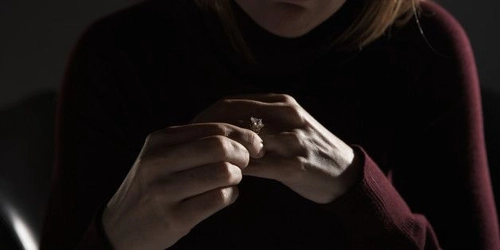
What Does Unconscious Behavior Really Tell Us?
The unconscious is not some dark basement where secrets hide. It is the sum of every mental operation that happens beneath conscious awareness. The conscious mind holds what we notice and choose. The unconscious handles everything else—and that turns out to be a lot.
Think about the last time you drove home and could not remember the trip. You made turns, stopped at lights, maybe even changed lanes. All done correctly. None of it consciously remembered. Your unconscious did the driving while your conscious mind planned dinner.
The unconscious runs the body, takes in sensory information, and makes decisions all at once. Most human functioning happens there. Patterns register without directed attention. They leave lasting imprints anyway.
Freud was the first to draw attention to the unconscious, but modern understanding has moved past his framing. We now know the unconscious holds automatic skills, stored memories, fantasies, and dreams. It processes complex patterns faster than conscious thought ever could.
Why do we even have an unconscious? Because the brain would collapse under the weight of full awareness. The unconscious runs the body and processes the world so the conscious mind can focus on what matters in the moment.
How Unconscious Behavior Shows Up in Everyday Life
The most visible form of unconscious behavior is imitation. People automatically mimic the physical behavior of others—their posture, gestures, and emotional displays. This imitation is generated unconsciously and helps us bond and coordinate without words.
Emotions also take shape in the unconscious. Feelings arise as everyday events stimulate networks of association. We feel something but often have no idea how it got there.
I remember a friend who could not stand the smell of a certain perfume. She had no conscious memory attached to it. Years later, her mother mentioned that her father wore that exact scent during the period her parents were divorcing. She was five at the time. The association had been stored below awareness the entire time.
Information is stored associatively in the brain. A trigger fires, a pathway lights up, and behavior follows. Intuition is the classic example—swift knowing without knowing how you know. Faster is not the same as smarter. The unconscious is neither more nor less intelligent. It is simply essential.
How to Spot Unconscious Patterns
I used to organize my desk drawers every time I felt stressed at work. Pens by color. Paperclips in a specific tray. It looked productive. It felt productive. It was avoidance. The stress triggered an association that gave me the illusion of control.
Ask yourself: What do I do when I feel uncomfortable? Where do my eyes go when I am nervous? What do I reach for when I am sad?
These patterns were learned somewhere, stored somewhere, and operate below conscious awareness. Patterns you cannot see are patterns you cannot change. The goal is not to eliminate the unconscious. The goal is to bring certain hidden beliefs into awareness so they can be examined.
When I finally noticed the desk-organizing pattern, I asked myself: “What am I actually avoiding right now?” The answer was usually the same—a difficult email, an uncomfortable conversation, a decision I didn’t want to make. Once I named the avoidance, the organizing lost its pull.
How to Work With the Unconscious
You don’t need years on a couch to work with the unconscious. Small habits of self-inquiry help.
One practice I use is the pause and trace method. When I react strongly to something small, I pause and trace the reaction backward. What did the trigger remind me of? When have I felt this exact feeling before? The answer is rarely about the present moment. It is usually about an older pattern.
My daughter had a phase where she would scream if anyone touched her hair. It seemed irrational. Then she told me about a nightmare where a shadow creature pulled her hair. The behavior was protective. Her conscious mind knew I was not a shadow creature. Her unconscious was still on alert.
We talked about the dream during the day. We let her brush her own hair. The screaming faded. Not because we forced it away. Because we brought the hidden fear into the light.
That is what working with the unconscious looks like. Not excavation. Illumination.

What Freud Got Right
Freud got the big picture right. The unconscious exists and influences daily life. What he got wrong was the content. He saw it as a repository of sexual drives and repressed memories. Modern understanding is more practical.
The unconscious is a processing system. It handles automatic skills, stores memories, generates dreams, recognizes patterns, and builds intuitions. It does the lion’s share of the brain’s work without needing applause.
One Last Thing
We carry our histories in our bodies and our habits. Every pattern we repeat was once a solution to a problem we no longer have. The unconscious behavior meaning is not a mystery to be solved. It is a language to be learned.
My grandmother’s sugar habit lives on in my hand, even though I abandoned it years ago. I reach for the bowl sometimes. I catch myself. I smile. I put it back. That small pause between impulse and action—that is where freedom lives.