Overthinking often starts with something small. You send a message and spend the next hour wondering whether it sounded rude. A conversation from last week suddenly comes back to mind, and you start replaying what you should have said. When you finally get into bed, your body is tired, but your mind keeps finding new problems to solve.
The frustrating part is that thinking more does not always lead to better decisions. Sometimes, the more you analyze a situation, the harder it becomes to trust yourself, let go of uncertainty, or move forward. You might understand that a problem is not worth so much attention, yet still find yourself returning to it throughout the day.

The right books can help you recognize these patterns and develop more useful ways to respond to them. Some focus on anxiety and repetitive thoughts, while others explore self-compassion, mindfulness, and the habits that keep us mentally stuck. If you are looking for good books for people who overthink, these five picks offer different approaches to getting out of your head and back into your life.
1. The Power of Now by Eckhart Tolle
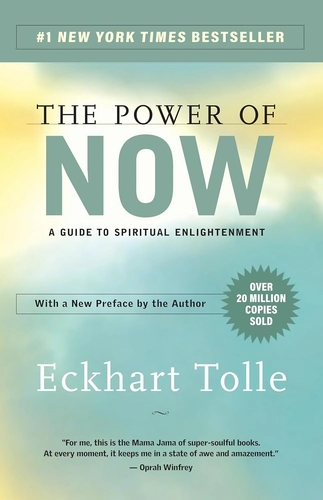
Many overthinkers spend more time mentally revisiting the past or anticipating the future than experiencing the present. You might be eating dinner while worrying about tomorrow’s meeting, or trying to enjoy a weekend while remembering an awkward moment from work. Even when nothing is immediately wrong, your mind can make it difficult to feel at ease.
In The Power of Now, Eckhart Tolle explores the relationship between thoughts, awareness, and the present moment. The book encourages readers to notice when they become absorbed in mental stories instead of treating every thought as something that demands attention. With practice, this perspective can help you create some distance between yourself and the stream of thoughts running through your mind.
This book may appeal to readers who want to explore the deeper side of overthinking rather than simply collect techniques for managing individual worries. Its approach is reflective and philosophical, so some readers may find the ideas more useful when they take time to apply them to everyday situations.
Best for: People who constantly revisit the past, worry about the future, or struggle to stay present in ordinary moments.
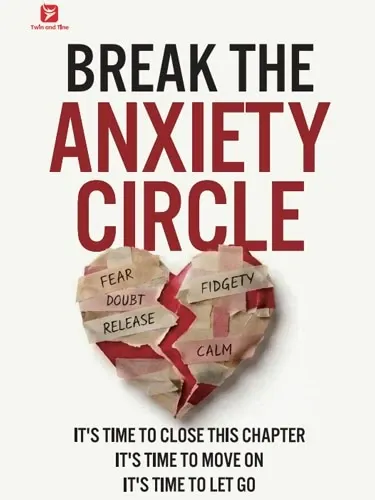
2. Break the Anxiety Circle by Miles Carter
Overthinking can become exhausting when the same thoughts keep returning without helping you reach a decision. You may know that a conversation is over, that a mistake cannot be undone, or that a situation is outside your control, but your mind continues looking for a different answer. Over time, this cycle can affect your sleep, confidence, relationships, and ability to enjoy the present.
Break the Anxiety Circle by Miles Carter focuses on the patterns that keep people caught in anxiety, rumination, and self-criticism. Rather than treating every uncomfortable thought as a problem that must be solved, the book explores ways to let go of past regrets, manage overthinking, understand emotional reactions, and build a healthier relationship with yourself. It also addresses people-pleasing, personal boundaries, and the difficulty of accepting an imperfect life.

Break the Anxiety Circle
Miles CarterA mental reset for people trapped in the overthinking loop. Understand why your mind won’t stop racing — and how to break free from anxiety, people-pleasing, and emotional exhaustion.
What makes this book relevant to chronic overthinkers is its focus on the emotional habits behind repetitive thinking. Sometimes, the problem is not simply that you think too much, but that you struggle to forgive yourself, tolerate uncertainty, or stop measuring your worth through other people’s reactions. Learning to recognize these patterns can make it easier to respond to difficult thoughts without allowing them to dictate your entire day.
Best for: Readers who struggle with rumination, self-doubt, regret, emotional sensitivity, and anxiety-driven thought patterns.
3. Chatter: The Voice in Our Head, Why It Matters, and How to Harness It by Ethan Kross
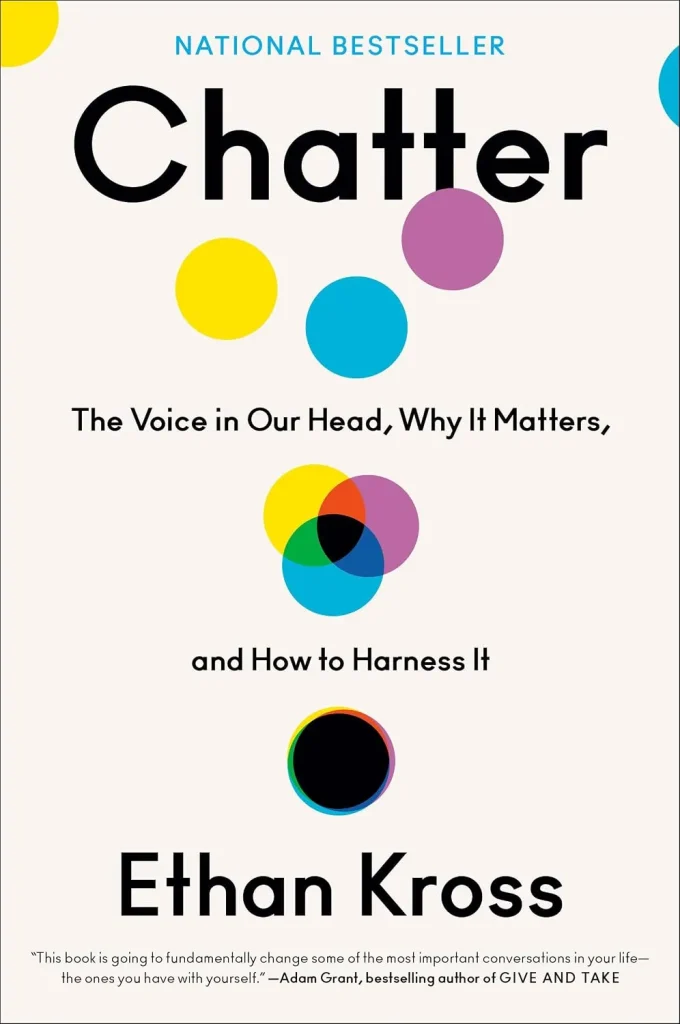
Have you ever noticed how differently you respond to a friend’s problem compared with your own? When someone else makes a mistake, you might remind them that everyone has bad days and that one awkward moment does not define them. When you make the same mistake, however, you may spend hours criticizing yourself and imagining everything that could go wrong next.
In Chatter, psychologist Ethan Kross examines the inner voice that can help us reflect but can also trap us in repetitive negative thinking. He explores why people become caught in mental loops and discusses practical strategies for gaining perspective, including changing how we talk to ourselves and using our surroundings to interrupt unhelpful thought patterns.
The book is especially useful for understanding why simply telling yourself to stop thinking about something rarely works. Instead of fighting every thought directly, you can learn to change your relationship with it and create enough psychological distance to consider the situation more clearly.
Best for: People who replay conversations, criticize themselves excessively, or struggle to step back from their own thoughts.
4. The Untethered Soul by Michael A. Singer

Sometimes, a single thought can change the direction of an entire day. You wake up feeling fine, remember a criticism someone made, and suddenly start questioning your abilities. One uncomfortable feeling leads to another, and before long, you are mentally arguing with someone who is not even in the room.
The Untethered Soul explores the distinction between the thoughts and emotions that arise in the mind and the awareness that observes them. Michael A. Singer encourages readers to notice their internal reactions without automatically becoming entangled in every feeling or mental narrative. This can offer a different perspective for people who feel controlled by their inner dialogue.
The book takes a spiritual and contemplative approach rather than presenting a conventional step-by-step program. Readers who enjoy reflective writing may find it helpful when learning to recognize emotional triggers and loosen their attachment to recurring thoughts. Its central ideas can also encourage you to pause before allowing a passing feeling to shape your decisions.
Best for: Readers who feel overwhelmed by their inner dialogue and want to explore mindfulness, emotional awareness, and letting go.
5. Don’t Believe Everything You Think by Joseph Nguyen
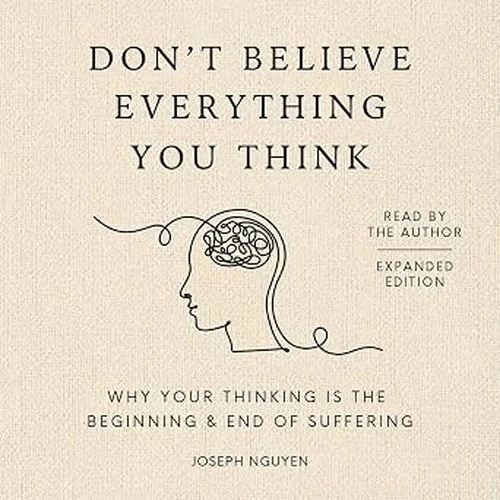
One of the most difficult parts of overthinking is how convincing your thoughts can feel. If you imagine that a friend is upset with you, the possibility may quickly become a certainty in your mind. You start searching for evidence, interpreting small details, and preparing yourself for a problem that may not exist.
In Don’t Believe Everything You Think, Joseph Nguyen examines how thinking can contribute to unnecessary psychological suffering. The book encourages readers to question their automatic identification with thoughts and recognize that not every mental conclusion deserves their trust. This perspective can be useful when you find yourself treating worst-case scenarios as predictions or assuming that every uncomfortable feeling signals a real threat.
The book is relatively short and accessible, making it an approachable option for readers who want to reconsider their relationship with thought itself. Its ideas are particularly relevant when you feel compelled to analyze every possibility before making a decision or struggle to accept that some questions do not have immediate answers.
Best for: People who overanalyze everyday situations, anticipate worst-case scenarios, or mistake anxious thoughts for facts.
How to Choose the Right Book for Overthinking
Not every overthinker gets stuck in the same way. Some people replay past mistakes, while others worry about future events or spend too much time trying to interpret other people’s reactions. Choosing a book that addresses your particular pattern can make it easier to turn what you read into meaningful changes.
| If you often… | Start with… |
|---|---|
| Worry about the past and future instead of enjoying the present | The Power of Now |
| Struggle with anxiety, regret, self-doubt, and emotional patterns | Break the Anxiety Circle |
| Replay conversations and criticize yourself | Chatter |
| Get caught up in emotional reactions and inner dialogue | The Untethered Soul |
| Treat every worrying thought as a fact | Don’t Believe Everything You Think |
You also do not need to read all five books at once. Pick the one that most closely matches your current struggles, then spend a little time each day applying one idea to a real situation. For example, when you catch yourself replaying an awkward conversation, notice what you are doing, separate what actually happened from what you fear it means, and decide whether there is any useful action left to take.
Stop Letting Overthinking Take Up So Much of Your Life
Overthinking can feel like an attempt to protect yourself. You review every detail because you want to avoid mistakes, anticipate problems because you want to feel prepared, and analyze relationships because you do not want to disappoint anyone. But when thinking becomes repetitive rather than productive, it can leave you mentally exhausted without making you any more certain about what to do next.
The goal is not to eliminate every negative thought or force yourself to feel positive all the time. It is to recognize when thinking has stopped helping, become more comfortable with uncertainty, and learn to direct your attention toward what you can actually influence. Progress may begin with something as ordinary as letting an unanswered message wait, making a decision without reviewing it ten times, or allowing an imperfect conversation to remain in the past.
If your overthinking is closely connected to anxiety, regret, self-criticism, or difficulty setting boundaries, Break the Anxiety Circle by Miles Carter is a practical place to begin. Its focus on rumination, emotional reactions, self-forgiveness, and healthier personal boundaries can help you examine the patterns that keep your mind returning to the same worries. The aim is not to make every thought disappear, but to help you spend less of your life fighting with your own mind.
If you found this helpful, these books go deeper into the same themes.



Break the Anxiety Circle
$19.90

From Debt to Wealth
$19.90

