At some point, almost every parent has a moment when they realize that instinct alone is not answering the question in front of them. Your child keeps doing something you do not understand, a familiar conversation turns into another argument, or a parenting approach that seemed reasonable suddenly stops working.
That is usually when parents start looking for a book.
The difficulty is that parenting books are not interchangeable. One might help you understand why children behave the way they do, another might give you better ways to communicate, while a third may ask you to look more closely at your own behavior as a parent. Choosing one therefore depends less on finding a universally “best” title and more on figuring out what you want help with.
Here are three books that offer distinctly different places to start.
If You Want to Understand the Bigger Picture
The Parent You Aspire to Be by Miles Carter is a good starting point for parents who feel that their family problems tend to overlap.
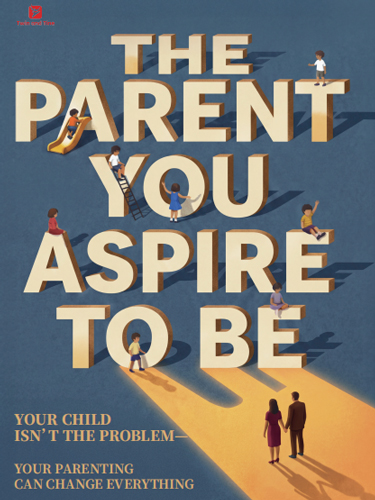
The Parent You Aspire to Be
Miles CarterPractical guidance for tantrums, backtalk, lying, screen addiction, emotional outbursts, and everyday parenting struggles.
Consider a common situation: your child refuses to follow a rule, you repeat the request, the child becomes upset, and the conversation turns into an argument. It is tempting to label that as a behavior problem and focus entirely on how to make the child cooperate.
But several things may be happening at once. The child may be frustrated, the expectation may not have been communicated clearly, the situation may involve a struggle for independence, and the parent’s own frustration may be changing the tone of the interaction.
The Parent You Aspire to Be looks at parenting through those connections. Rather than treating behavior, emotions, communication, and parental reactions as separate subjects, it encourages parents to consider how they influence one another.
That broader perspective is particularly useful when you feel as though you are solving the same problem over and over again in different forms. Maybe today’s conflict is about screen time and tomorrow’s is about homework, but the underlying pattern between parent and child feels remarkably similar.
The book gives parents a reason to step back and ask what is actually happening in the interaction instead of immediately deciding that the solution is to become stricter, more permissive, or more involved.
If Your Biggest Problems Happen During Conversations
Some parents do not need a broad parenting philosophy as much as they need help with the moments when talking to their child goes wrong.
You ask a child to do something, and they say no. You explain why, and they argue. You repeat yourself, become frustrated, and suddenly the original request is buried under a much bigger disagreement.
How to Talk So Kids Will Listen & Listen So Kids Will Talk by Adele Faber and Elaine Mazlish takes a much more communication-focused approach to these situations.
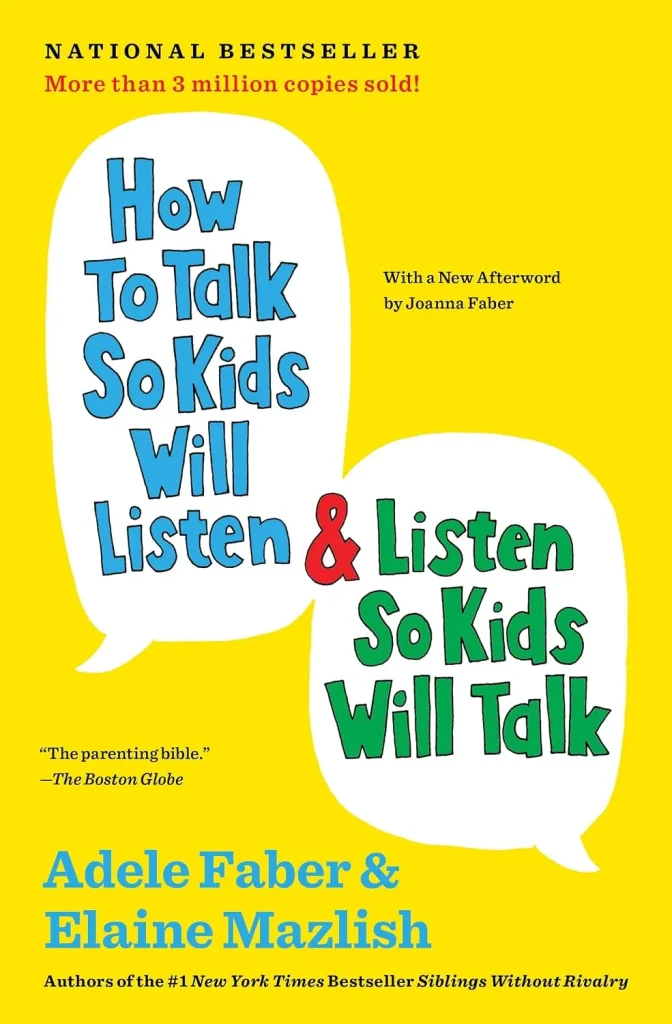
The book is useful because it examines not only what parents want children to do but also the way parents communicate expectations, acknowledge feelings, and respond during difficult exchanges. That makes it particularly relevant for families where everyday conversations seem to become unnecessarily tense.
It also highlights an important distinction: listening to a child’s feelings does not mean agreeing with every demand. A child can be disappointed about a decision while the parent still maintains the limit.
That can be a valuable idea for parents who want to communicate more effectively without feeling that they have to choose between being understanding and being firm.
If You Want to Raise a More Capable Child
There is another question many parents eventually face: Am I helping my child, or am I doing too much for them?
Parents often step in because it feels efficient. You organize the task, remind them again, fix the mistake, or take over when they are struggling because you know how to solve the problem faster.
But children also need opportunities to make decisions, deal with manageable mistakes, and gradually take ownership of everyday responsibilities.
The Self-Driven Child by William Stixrud and Ned Johnson approaches parenting through autonomy, motivation, and the development of a child’s sense of control.
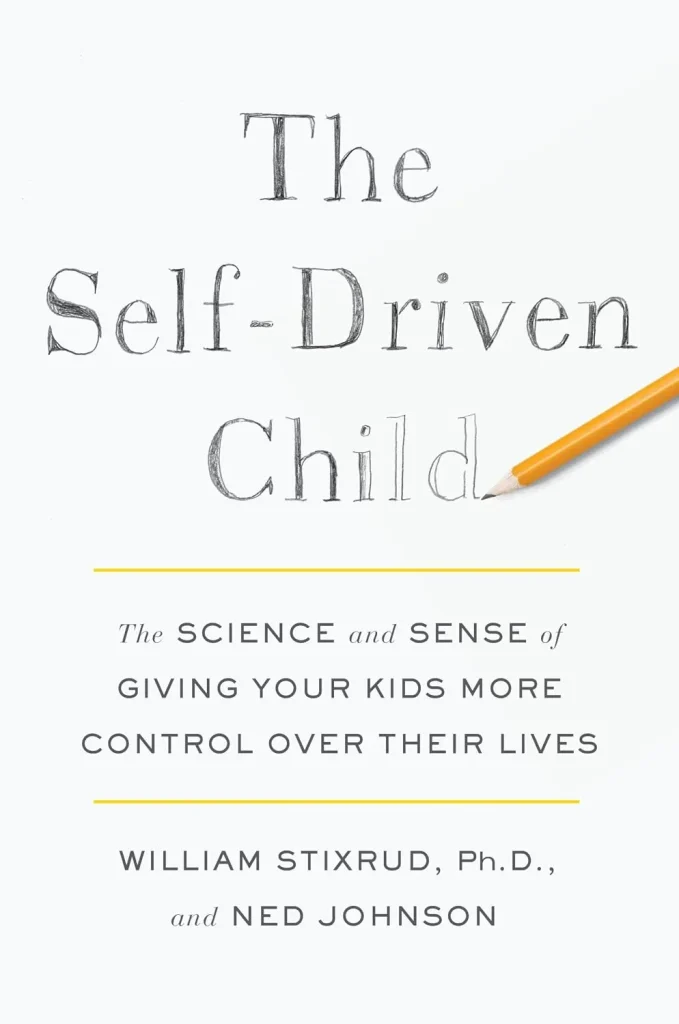
Its ideas can be especially relevant for parents who are highly involved in their children’s lives and want to find a better balance between support and independence. The book encourages parents to think about when guidance is necessary and when stepping back may give children a chance to develop skills for themselves.
That makes it quite different from The Parent You Aspire to Be and How to Talk So Kids Will Listen & Listen So Kids Will Talk. Instead of focusing primarily on communication or the broader parenting dynamic, it puts more attention on the child’s growing autonomy.
These Books Answer Different Parenting Questions
The three books are worth separating because they solve different problems.
The Parent You Aspire to Be asks you to look at the entire parenting interaction. What is happening with your child’s behavior, your emotions, your communication, and the family pattern around the problem?
How to Talk So Kids Will Listen & Listen So Kids Will Talk focuses more closely on the conversation itself. What are you saying, how is your child receiving it, and how can you communicate expectations without turning every request into a confrontation?
The Self-Driven Child asks a different question: how much should parents manage, and how much room should children have to make decisions and build capability?
None of these questions is more important than the others. They simply become relevant at different points in family life.
What Should You Look for in a Parenting Book?
A parenting book is much more useful when it helps you understand something you repeatedly see at home.
A long list of techniques may sound impressive, but it is less helpful if none of them explain why the same problem keeps returning. A stronger book can give you a framework that changes how you interpret familiar situations, which in turn can change the choices you make during those situations.
It is also worth paying attention to whether a book gives you room to think rather than making you feel that every family should follow exactly the same formula. Parents have different personalities, children respond differently, and the same approach will not always work equally well in every situation.
The best books are therefore often the ones that make you a better observer of your own family.
A Parenting Book Should Change What You Notice
One of the biggest benefits of reading about parenting is not memorizing what to say next. It is learning to notice what you previously overlooked.
You may start recognizing that a certain argument always happens during transitions. You may notice that your child becomes more resistant when they feel rushed. You may realize that you tend to repeat an instruction several times before following through, teaching your child that the first request does not really matter.
Those observations can be more valuable than any single parenting trick.
Once you see a recurring pattern, you have something specific to work on.
Why Start With The Parent You Aspire to Be?
For parents who are not dealing with one isolated issue but instead feel that several things at home are connected, The Parent You Aspire to Be offers a particularly broad starting point.
Its focus on behavior, emotions, communication, and parental responses makes it useful when a family problem does not fit neatly into one category. Rather than giving parents another rule to memorize, it encourages them to look at the interaction itself and understand what may be contributing to the pattern.
That can be especially valuable for parents who have already collected plenty of individual tips but still feel unsure when a difficult situation actually happens.
Instead of asking only, “How do I stop this behavior?”, the book encourages a more useful question: “What is happening between us, and what can I change about the way I respond?”
Final Thoughts
There is no single parenting book that answers every question a parent will have. Family life changes, children change, and the challenge that matters most this year may look completely different next year.
That is why these three books make useful starting points for different reasons. The Parent You Aspire to Be offers a broader look at behavior and family dynamics, How to Talk So Kids Will Listen & Listen So Kids Will Talk focuses on everyday communication, and The Self-Driven Child explores autonomy and parental involvement.
For parents who want one book that can help them step back and make sense of the bigger picture, The Parent You Aspire to Be is a strong place to begin.