You Make One Mistake and Keep Paying for It
You make a mistake at work and think about it on the drive home. You send a message that comes out differently from what you intended, and you replay it several times before going to bed. Even when everyone else seems to have moved on, your mind keeps returning to the same question: “Why did I do that?”
Being hard on yourself can look like self-improvement from the outside. You tell yourself that you are simply trying to do better next time, but the constant criticism rarely stays limited to one mistake. One awkward conversation becomes evidence that you are bad at communicating. One poor decision becomes proof that you cannot trust yourself. Before long, you are not learning from what happened anymore; you are using it to judge yourself.

When Self-Criticism Becomes Your Default Setting
There is a difference between taking responsibility and constantly putting yourself on trial. Taking responsibility means recognizing what went wrong and deciding what to do differently. Self-criticism keeps reopening the case even after there is nothing new to learn.
That habit can affect much more than your mood. You may become afraid to make decisions, hesitate before speaking, compare yourself with other people, or avoid situations where you think you might not perform well. The pressure can become so familiar that being gentle with yourself starts to feel strangely uncomfortable.

You Do Not Need to Pretend Everything Is Fine
Becoming kinder to yourself does not mean telling yourself that every decision was good or every outcome was acceptable. You can recognize that you handled something badly and still refuse to turn that moment into a permanent judgment about yourself.
That distinction is important because many people believe self-criticism is what keeps them accountable. In reality, there are times when it simply keeps them stuck. You keep revisiting what happened because part of you still believes that enough analysis will eventually make you feel certain that you will never make the same mistake again.
Break the Anxiety Circle Addresses the Pattern Behind It
Break the Anxiety Circle by Miles Carter is a strong fit for readers who are tired of constantly picking themselves apart. The book connects self-worth with overthinking, anxiety, emotional regulation, people pleasing, perfectionistic tendencies, and the difficulty of letting go.
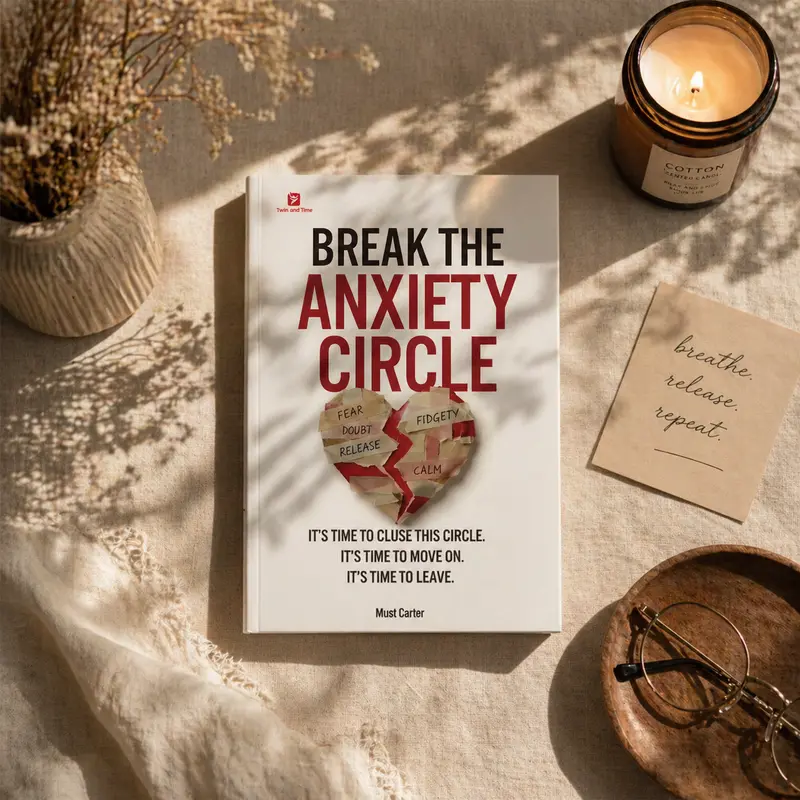
That matters because being hard on yourself rarely exists in isolation. You may criticize yourself because you care too much about other people’s opinions. You may replay mistakes because you are afraid of repeating them. You may demand more from yourself because you believe achievement will finally make you feel secure.
The book helps readers look at those connections instead of treating self-criticism as one isolated habit.
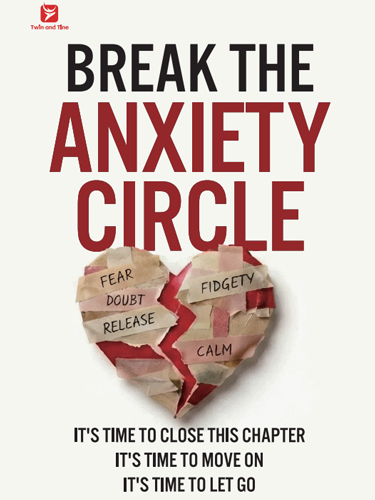
Break the Anxiety Circle
Miles CarterA mental reset for people trapped in the overthinking loop. Understand why your mind won’t stop racing — and how to break free from anxiety, people-pleasing, and emotional exhaustion.
Learn to Leave Some Mistakes Where They Happened
One of the hardest skills is knowing when reflection has done its job.
You can think about what you could have handled differently, make a note of what you learned, and then stop. You do not need to keep replaying the same moment in the hope that another hour of thinking will somehow change the past.
This is where learning to let go becomes important. Letting go does not mean forgetting what happened. It means refusing to keep using the past as evidence against yourself.

Your Inner Voice Shapes More Than Your Mood
Think about how you speak to yourself after something goes wrong. Do you immediately look for what you did wrong? Do you compare yourself with someone who seems to handle the same situation better? Do you assume that one mistake says something permanent about your abilities?
The answers can reveal how much pressure you are carrying without realizing it.
Changing that inner dialogue takes practice, but it does not require constant positive thinking. Sometimes the healthier response is simply to be more accurate. “I handled that badly” is very different from “I always ruin everything.”
Stop Making Every Setback About Who You Are
A bad decision is a behavior. It is not an identity.
When those two things become mixed together, every setback feels much heavier. You are no longer correcting something specific; you are trying to repair your entire opinion of yourself.
Break the Anxiety Circle gives readers a practical way to step back from that pattern. Its focus on self-worth and emotional regulation can help you notice when your thoughts have moved from “something went wrong” to “there is something wrong with me.”
That is a much more useful distinction than simply telling yourself to think positively.
What Starts to Change
You may notice that mistakes take less time to recover from. You may stop needing to replay every awkward interaction before you can move on. Decisions can become easier because you are no longer demanding absolute certainty from yourself before acting.
There can also be more room for ordinary imperfection. You finish something without immediately looking for the flaw. You hear criticism without automatically turning it into self-attack. You can admit that you would handle something differently next time without spending the whole day feeling ashamed of what happened.
Those are not dramatic transformations, but they can make everyday life feel considerably lighter.
A Different Way to Treat Yourself
Being less hard on yourself does not mean lowering every standard. It means understanding that constant self-criticism is not the same thing as growth.

For anyone looking for a book for being too hard on yourself, Break the Anxiety Circle offers a useful place to start because it looks at the anxious thinking and self-worth patterns that keep self-judgment going. Instead of trying to become someone who never makes mistakes, you learn how to make mistakes without letting them define how you see yourself.