My two kids were screaming over a blue cup. A blue cup. We owned six cups. Only one was blue, and that was the whole war.
I stood in the kitchen doorway, coffee going cold in my hand, and thought, what causes sibling rivalry, really? It cannot just be cups. It cannot be that simple.
So I started watching. Not judging. Watching.
Quick Answer: What causes sibling rivalry?
Sibling rivalry usually comes from a fear of losing your attention, not from the object they are fighting over. The cup, the toy, the seat, those are just where the fear lands that day.
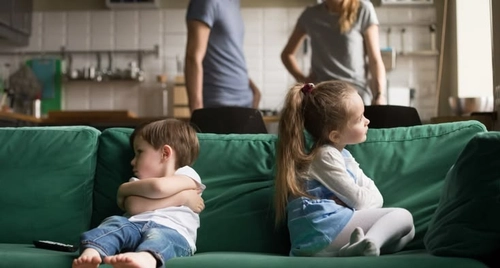
Why Do They Fight Over Everything?
The cup was never about the cup. I learned that slowly, the way you learn most things with kids, by getting it wrong first.
When my son grabbed the blue cup, he was not thirsty. He was checking something. He wanted to know, if I take this, will she still get one too? Will Mom still look at me the same way?
Kids run these little experiments all day. They are not being cruel. They are gathering data about their place in the family.
A friend of mine put it well. She said her two girls fight most on the days she is distracted. Not on the days she is busy. On the days she is distracted. There is a difference, and kids feel it.
What Causes It When Nothing Seems Wrong?
Sometimes there is no obvious trigger. Nobody is sick. Nobody is tired. The day is fine. And still, by 4pm, someone is crying about a sock.
What I noticed is this. The fights cluster around transitions. Getting out the door. Coming home. Dinner. Bedtime. Those are the moments when my attention splits, and both kids feel it at once.
One child pulls my sleeve. The other yells. I turn toward the yeller, because the noise is louder. And the quiet one learns something dangerous. To get Mom, you have to make noise.
That lesson repeats. Then it hardens into a habit. Then the habit looks like a personality. She is the difficult one. He is so easy. I have said those things. I regret them.
Dr. Laura Markham, who writes about sibling relationships, suggests that most fighting is a bid for connection, not a character flaw. That matched what I saw.
What Do They Mean by Unfair?
Unfair is the word I hear most. Not I am sad. Not I am scared. Unfair.
I used to argue with it. It is fair, I gave you the same amount. That never worked. It made things worse, actually, because now I was arguing with a feeling using math.
Now I just say, you think it is unfair. And I wait.
Half the time, that is enough. The child wanted to be seen in their complaint, not corrected out of it. My older one once said, after a long pause, you always help her first. That was the real thing. The unfairness was a symptom. The real thing was a fear about order, about who comes first in my eyes.
The Reset Ritual
I made something up. I call it the Reset Ritual, and it takes about ninety seconds.
When the fighting starts, I do not solve the problem. I do not ask who started it. I sit down on the floor, at their level, and say one sentence. Something is hard right now.
Then I stay quiet. Sometimes for a full minute. This is the hardest part for me, because my instinct is to fix and explain and referee.
One kid usually talks first. Last week it was my daughter. He always gets the window seat.
I said, you want the window seat.
She nodded. Her brother, hearing this, said, I can sit in the middle tomorrow.
I did not suggest that. He did. That is the point of the ritual. When I stop refereeing, they start negotiating. Not always. But more often than I expected.
A book that helped me understand this pattern is The Parent You Aspire to Be by Miles Carter. The line that stuck with me is this. The problem is not that your child won’t listen. It is that the same fight keeps repeating. That idea changed how I see every argument in my house. It is not about the cup. It is about the pattern underneath it.
When the Reset Ritual Fails
Some days it fails completely. Both kids keep screaming. I keep my voice low anyway. I say, I cannot help while there is yelling. I will be in the kitchen.
Then I leave. Not as punishment. As a boundary. Nine times out of ten, one of them follows me within two minutes, calmer, ready to talk.
The tenth time, I make tea and let them sort it out. Some fights resolve themselves if I stay out of them.
Why Fairness Backfires
I spent a year trying to be perfectly fair. Equal scoops. Equal turns. Equal praise, counted and measured.
It made everything worse. The kids started policing me. You gave her more. You hugged him longer. I had trained them to audit my love.
Now I aim for what one writer called enough, not equal. Some days one child needs more. That is not unfair. That is just Tuesday.
When they protest, I say, you are right, she got more today. You will get more another day. I am keeping track of both of you, always.
I do not know if they believe me yet. I say it anyway.
FAQ
Is sibling rivalry normal?
Yes. Almost every family deals with it. It is a normal part of learning how to share attention, space, and love.
How do I stop my kids from fighting?
You cannot stop it completely. But you can reduce it by staying calm, not taking sides, and giving each child regular one-on-one attention.
What if one child is always the instigator?
Usually, the child who acts out is the one who feels most disconnected. Instead of punishing, try giving that child more positive attention when things are calm.
Does age gap matter?
It changes the shape of the fighting, but not the root. Kids close in age fight faster and forgive faster. Kids further apart fight less but may carry quiet resentment.
When should I worry?
If fighting becomes physically dangerous, if one child is always being hurt, or if it is affecting their daily life, talk to a professional.
A Closing Thought
Last month, the blue cup broke. It fell off the counter and that was that.
Nobody cried. My son looked at the pieces and said, now we can all have a turn.
I laughed. Then I nearly cried, because it took a broken cup for me to see what he had known all along. The cup was never the problem. The waiting was. He just wanted to know his turn would come.
It will. I will make sure of it.
References
- Markham, Laura. Peaceful Parent, Happy Siblings. TarcherPerigee, 2015.
- Faber, Adele, and Elaine Mazlish. Siblings Without Rivalry. W. W. Norton, 2012.
- Carter, Miles. The Parent You Aspire to Be.
- American Academy of Pediatrics. “Sibling Relationships.” HealthyChildren.org.

The Parent You Aspire to Be
Miles CarterPractical guidance for tantrums, backtalk, lying, screen addiction, emotional outbursts, and everyday parenting struggles.

