Everyone experiences worry from time to time.
Thinking carefully about a problem, preparing for a challenge, or considering possible outcomes can be helpful. However, anxiety thinking is different because it often continues even when there is no immediate problem to solve.
Anxiety thinking refers to patterns of thoughts that are strongly influenced by fear, uncertainty, and the desire to prevent negative outcomes.
These thoughts can feel convincing, even when they are based more on possibilities than facts.
Understanding anxiety thinking is an important step toward managing worry and developing a healthier relationship with your thoughts.
What Does Anxiety Thinking Look Like?
Anxiety thinking can appear in many different forms.
Some common patterns include:
Constantly imagining worst-case scenarios
The mind automatically focuses on what could go wrong instead of considering a balanced view.
Overanalyzing past situations
People may repeatedly review conversations, decisions, or mistakes and search for something they could have done differently.
Seeking complete certainty
An anxious mind often wants guarantees before moving forward, even though many situations in life cannot be predicted.
Assuming thoughts are facts
A person may think:
“What if something goes wrong?”
and slowly begin feeling as if the possibility is already reality.
Recognizing these patterns can help people understand that anxious thoughts are experiences, not always accurate predictions.
Why Does the Brain Create Anxious Thoughts?
Anxiety thinking develops from the brain’s natural protective system.
The human brain is designed to notice possible risks and prepare for challenges.
This ability has helped people survive and adapt.
However, in modern life, this protective system can sometimes become overly active.
The brain may continue searching for threats even when there is no immediate danger.
This can create patterns of:
- Excessive worrying
- Mental exhaustion
- Fear of uncertainty
- Difficulty relaxing
Understanding this process helps people approach anxiety with awareness instead of frustration.
The Difference Between Problem Solving and Anxiety Thinking
Not all thinking is harmful.
The difference often comes down to whether thinking leads to action or creates endless repetition.
Healthy problem solving:
- Identifies a challenge
- Considers possible solutions
- Takes action
Anxiety thinking:
- Repeats the same concerns
- Searches for impossible certainty
- Creates more fear without progress
Learning to recognize this difference can help people stop spending unnecessary energy on worries that cannot be solved through more thinking.
How Anxiety Thinking Becomes a Cycle
Anxiety often follows a repeating pattern.
A thought appears.
The thought creates fear.
The fear makes the thought feel more important.
The mind focuses on it even more.
Eventually, the cycle becomes stronger.
This is why many people feel unable to “just stop worrying.” The problem is not a lack of effort. The mind has developed a repeated response pattern.
Breaking this cycle requires understanding how it works.
How Break the Anxiety Circle Helps Readers Understand Anxiety Thinking
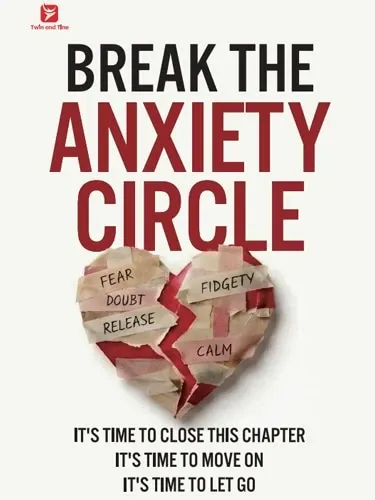
Break the Anxiety Circle by Miles Carter focuses on the patterns that allow anxiety to continue.
The book explores how thoughts, emotions, and reactions connect with each other and create repeated anxiety cycles.
Readers can learn how to:
- Recognize unhealthy thinking patterns
- Understand emotional triggers
- Reduce the power of repetitive worries
- Develop more balanced responses
Instead of viewing anxiety as something random, the book helps readers see the structure behind their experiences.
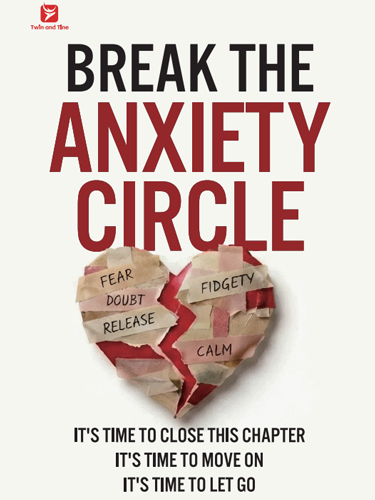
Break the Anxiety Circle
Miles CarterA mental reset for people trapped in the overthinking loop. Understand why your mind won’t stop racing — and how to break free from anxiety, people-pleasing, and emotional exhaustion.
Changing Your Relationship With Anxious Thoughts
Managing anxiety does not mean eliminating every uncomfortable thought.
Everyone experiences uncertainty, fear, and stress.
The goal is learning how to respond differently.
When people understand their thoughts, they become less controlled by them.
They can begin asking:
“Is this thought helping me?”
“Is this something I can actually control?”
“What response would support me right now?”
These questions create space between anxiety and action.
Understanding Anxiety Is the Beginning of Change
Anxiety thinking can feel overwhelming when people do not understand why it happens.
However, awareness can transform the way people experience anxiety.
By recognizing patterns, understanding triggers, and developing healthier responses, people can gradually create a calmer relationship with their thoughts.
For readers who want to understand why worry repeats and how to move beyond anxious thinking cycles, Break the Anxiety Circle by Miles Carter provides practical insights into building greater clarity and emotional balance.