The first time my son slammed a fist through the drywall, I froze. I had tried ignoring, timeouts, holding him close… nothing stopped it. He was eight, maybe ninety pounds, and every refusal to cooperate came with flying objects, curses, and that wild look in his eyes. Last week he stood behind my car so I couldn’t leave to pick up his siblings. Another time he ran off for an hour and a half, and I had no idea where he’d gone. I felt trapped, like there was no map for this.
Then another parent said five words that changed everything: “Heavy work before his fuse blows.” Suddenly the whole script flipped. It’s not about making him obey. It’s about what his body needs before his brain can even hear me. That’s the thread I’ve been holding onto, and it’s slowly stitching our days back together.
Quick Fixes When Your Child Refuses to Cooperate
If you’re in the middle of a standoff right now, start here:
- Spot the tiny signs tension is rising, often minutes before the refusal explodes.
- Move your child’s body first, talk second.
- Let consequences involve repair work, not just sitting alone.
- Protect yourself physically and emotionally while staying as calm as humanly possible.
- Build trust during the quiet moments so the storms start to shrink.

Why Does My Child Refuse To Cooperate So Defiantly?
I used to ask myself a hundred times a day: what did I do wrong? I could see other kids complying while mine was throwing shoes at my head. Once a doctor suggested he might have some intense brain wiring challenges, which we’re still trying to understand. Another professional mentioned the possibility of mood surges beyond typical defiance. None of that gave me a script in the moment, though.
What finally clicked was something simpler. For him, “no” isn’t calculated rebellion. It’s a nervous system hijack. His body gets flooded with agitation, and cooperation becomes physically impossible. The refusal is a smoke alarm, not the fire. I stopped hearing “I won’t” and started hearing “I can’t calm down yet.” That shift didn’t fix everything, but it let me stop taking it personally, and that gave me enough air to think.
What Can I Do When My Child Refuses To Cooperate And Lashes Out?
After the wall punch, after the car incident, after the running away, I finally accepted that words alone were useless in the heat of the moment. Telling him to stop only poured gasoline on it. So I started with one non-negotiable rule: keep everyone safe. I’d say, “I need to keep your sister safe right now. I’m going to stand by the door.” No pleading. No lectures.
Then I’d offer a physical release, not as a punishment, but as a pressure valve. “Can you help me push this couch over a few inches?” Or, “Let’s do ten bear crawls down the hall first, then we can talk.” A therapist once handed me a list full of ideas like pulling a sibling on a towel, crab walking, carrying a heavy backpack loaded with books. At first it felt bizarre, like rewarding bad behavior. But it wasn’t a reward. It was a reset. His body got the heavy input it craved, his breathing deepened, and the storm started to pass. I didn’t get cooperation right away, but I got a quieter brain, and that was the only window that ever worked.
The Heavy Work Reset
I now swear by something I call the Heavy Work Reset. The second I spot the early signs—a clenched jaw, a louder-than-usual protest, that restless pacing—I jump in with a physical task before the refusal locks in. “Hey, the firewood needs moving. Can you stack it by the shed? I’ll time you.” One time, after he’d been throwing toys, I skipped the timeout and handed him a laundry basket full of canned goods to carry up and down the stairs. He groaned, but two minutes in, his face softened. Ten minutes later he was cracking a joke. The work itself became the calm-down.
Other resets we lean on: pressing his hands together as hard as he can and holding it, “wall push-ups” in the hallway, tug-of-war with a towel, blowing cotton balls across the table with a straw. The trick is to introduce it like a side quest, not a consequence. “I have a crazy challenge for you…” He still refuses sometimes, of course. When he’s already in full meltdown, I can’t always get him there. But I’ve learned that timing is everything. Catch that sliver of opportunity before the point of no return, and the reset saves us both.
When Your Child Refuses To Cooperate And Runs Away
The disappearing acts terrified me. He’d bolt out the door and vanish, and my mind would spiral. I couldn’t physically restrain him. Instead, I turned my focus to what happened in the calm after he came back. We’d sit together, even in silence, and I’d say, “When you run, I feel scared. I need to know you’re safe. What can we do differently next time you feel that big wave?” The answers were never perfect, but slowly we built a plan. He chose a spot in the yard where he could go to swing or dig—a “not running away, just taking space” spot. I made sure he knew I wouldn’t chase or interrogate him there. Over weeks, the running shrank. Some days he still needed to escape, but he stayed on the porch, and that was our progress.
What About Consequences After They Refuse To Cooperate?
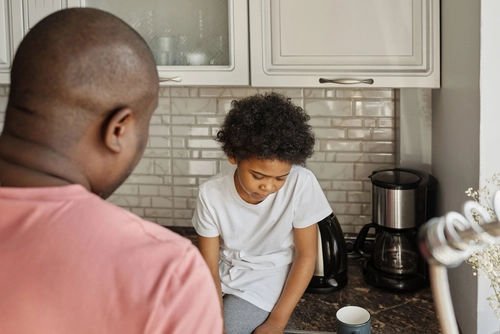
I used to think consequences had to happen fast. But with my son, anything I said while he was triggered just escalated things. Another parent taught me to wait hours, even until the next day if needed. Then we’d sit down, calm bodies, and I’d lay it out: “You threw the remote and broke the lamp shade. It’s not your lamp, so we need to fix this. How can you make it right?” He’d grumble, but eventually he’d offer to do extra chores or use some of his allowance to replace the shade. The natural small consequence—fixing what he broke through effort—taught more than any grounding.
I also don’t replace things he destroys if they’re his own, unless they’re essential. And when he pushes a sibling, the repair looks like doing something kind for that sibling later, not just saying a forced sorry. It’s messy and inconsistent, but the shift toward “repair over punishment” has slowly built a tiny internal voice that now, sometimes, stops him before he acts.
FAQ: When Your Child Refuses To Cooperate
Q: What do you do when a child refuses to cooperate and hits you?
A: Move yourself to safety first, even if that means stepping into another room for a minute. Say, “I won’t let you hurt me. I’ll be right here when you’re ready.” Once the immediate aggression cools, do a heavy work reset—like pushing against a wall—before trying to talk.
Q: How do I get a defiant child to cooperate without yelling?
A: Yelling never worked for us. It just mirrored his chaos. I now whisper or stay completely silent until I can offer a physical redirect. Something about the quiet actually pulls him in. Then I give a choice: “Do you want to crab walk to the bathroom or hop like a frog?” Giving his body a say before his words has been the only consistent door.
Q: My child refuses to cooperate at school but not at home—why?
A: We saw the opposite. At school he held it together beautifully because demands were lower and he could coast. The meltdowns saved themselves for home, where he felt safe. If it’s reversed for you, maybe he’s masking all day and letting loose in your presence—a sign of deep trust. Either way, talking with the teacher about quiet signals and movement breaks can help bridge the gap.
Q: Can heavy work really stop a child from refusing to cooperate?
A: It doesn’t “stop” it magically. What it does is give a nervous system that’s barreling toward explosion an off-ramp. It lowers the tension enough that cooperation becomes possible again. I see it as pulling the battery out of a screeching fire alarm—then we can actually talk when it’s quiet.
Q: What if my child refuses the heavy work reset too?
A: That happens. If they’re already too far gone, focus on safety first—remove yourself and others from harm. Try again when they’re regulated. The reset works best as a prevention tool, not a cure in the middle of a meltdown.
One Last Thing
I still have days where his refusal to cooperate scares me. I stand there smelling drywall dust and feeling like I’m failing. But I also remember the afternoon he stacked a whole cord of wood, grumbling at first, then grinning, and for ten whole minutes we sat on the porch without a fight. That’s what I hold onto. Not the perfect child, just the moments where the reset worked and we both got to breathe.
References
- Greene, R. W. (2014). The Explosive Child: A New Approach for Understanding and Parenting Easily Frustrated, Chronically Inflexible Children. Harper Paperbacks.
- Kranowitz, C. S. (2005). The Out-of-Sync Child Has Fun: Activities for Kids with Sensory Processing Disorder. Perigee Books.
- American Academy of Pediatrics. (2018). Positive discipline strategies. HealthyChildren.org. Retrieved from https://www.healthychildren.org
