You read How to Win Friends and Influence People. You loved it. The stories, the principles, the way Carnegie made social success feel achievable. You started smiling more, remembering names, asking questions.
And then you hit a limit.
Carnegie gives you the what — the behaviors that make people like you. But he does not tell you the why. Why do some people still rub you the wrong way? Why do you feel drained after certain conversations? Why does your boss smile at you and then pass you over for a promotion?
That is where these five books come in. They take you beyond Carnegie’s principles and into the deeper mechanics of human behavior.
How to Read Someone’s Mind by Miles Carter
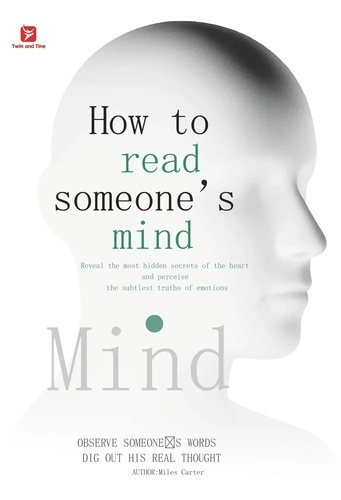
Carnegie tells you what to do. Carter teaches you to see what is happening.
Here is the gap in Carnegie’s approach. He gives you a script: be a good listener, ask questions, make people feel important. Those work — when you are dealing with people who are operating in good faith.
But what about the people who are not?
Carter’s book is about seeing past the surface. He teaches you to read people through face, body, voice, and context. You learn to distinguish between genuine warmth and strategic charm. You learn to catch the micro-expressions that reveal what someone is actually thinking. You learn to see the gap between what people say and what they actually mean.
Carnegie teaches you how to be liked. Carter teaches you how to be aware. And awareness protects you from the people who use Carnegie’s principles to manipulate you.
For anyone who wants to apply Carnegie’s principles with your eyes open.
The Charisma Myth by Olivia Fox Cabane
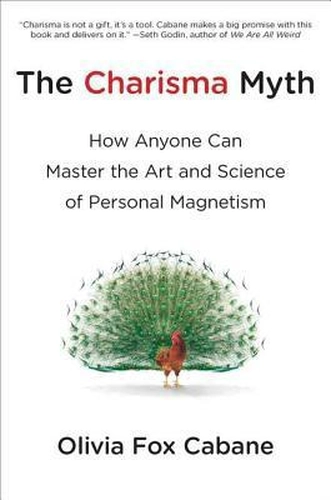
Carnegie gives you techniques. This book gives you presence.
Carnegie’s advice — smile, listen, be interested — is effective, but it can feel performative. You can follow every rule and still come across as trying too hard.
Cabane’s book solves that problem. She argues that charisma is not about what you do. It is about how you are. The three components are presence, power, and warmth. When you have these, the behaviors come naturally. When you do not, the behaviors feel fake.
What makes this book valuable is its emphasis on internal state. Cabane gives you exercises to reduce mental chatter, project confidence without arrogance, and be fully present with people. This is the deeper work that makes Carnegie’s advice actually land.
For anyone who has tried Carnegie’s advice and felt like they were performing rather than connecting.
Quiet by Susan Cain
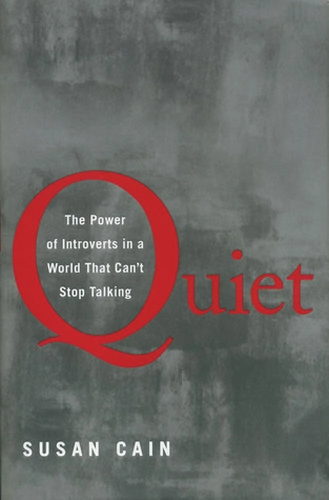
Carnegie was written for extroverts. This book is for the rest of us.
Here is an uncomfortable truth about How to Win Friends. It was written by a salesman for salespeople. The advice works best for people who are naturally outgoing, comfortable in groups, and energized by social interaction.
But what if you are not that person?
Cain’s book is a defense of introversion. She shows that quiet people have deep social strengths that Carnegie’s model overlooks: the ability to listen deeply, to read subtle cues, to form one-on-one connections. She also explains why the extrovert ideal is a cultural construct, not a universal truth.
This book is essential reading because it frees you from feeling like you have to become someone you are not. You can apply Carnegie’s principles in a way that works for your temperament.
For anyone who read Carnegie and thought: “This would be great if I weren’t an introvert.”
Never Split the Difference by Chris Voss

Carnegie teaches you to make friends. Voss teaches you to get what you want.
Carnegie’s approach is collaborative: understand the other person’s perspective, and they will want to help you. That works when both parties are operating in good faith.
But what about negotiations — with a difficult client, a demanding boss, or a salesperson who does not care about your feelings?
Voss, a former FBI hostage negotiator, teaches a different set of skills: tactical empathy, mirroring, labeling, and the power of “no.” His approach is not about being liked. It is about being effective in high-stakes conversations where the other person is not trying to be your friend.
This book takes Carnegie’s principles into situations where connection alone is not enough.
For anyone who needs to navigate difficult conversations where “winning friends” is not the primary goal.
The Social Animal by Elliot Aronson

Carnegie explains how to be liked. Aronson explains why humans behave the way they do.
If you want to go beyond practical advice and understand the deeper science of human behavior, this is the book. Aronson, one of the most influential social psychologists of the 20th century, covers conformity, cognitive dissonance, prejudice, attraction, and aggression — the hidden forces that shape every interaction.
Where Carnegie gives you rules of thumb, Aronson gives you the underlying psychology. Why do we justify bad decisions? Why do we conform to group pressure? Why do we dislike people we have hurt? Understanding these patterns changes how you see every interaction.
For anyone who wants to understand the science behind Carnegie’s principles.
Which one should you start with?
If you want to see the dynamics Carnegie describes playing out in real time, start with Carter. He gives you the awareness to apply Carnegie’s principles with your eyes open.
If you want to develop genuine presence rather than performative charm, read Cabane.
If you are an introvert who felt Carnegie’s advice did not fit, read Cain.
If you need to navigate difficult, high-stakes conversations, read Voss.
If you want the scientific foundation behind all of it, read Aronson.
