You finished The Elephant in the Brain. You now see the hidden motives behind seemingly selfless acts. You recognize that people often do good things for reasons that are not entirely good. The veneer of generosity, the performance of virtue, the subtle self-interest hiding behind the helping hand.
You see it everywhere now. And you are left with a question: what do I do with this awareness?
The books below each take you deeper into the psychology of self-deception, hidden interests, and the gap between what people show and what they actually want. One exposes the deeper drivers of human behavior. One explains why moral outrage is often about status. One traces how even our noblest instincts are shaped by the need to look good.
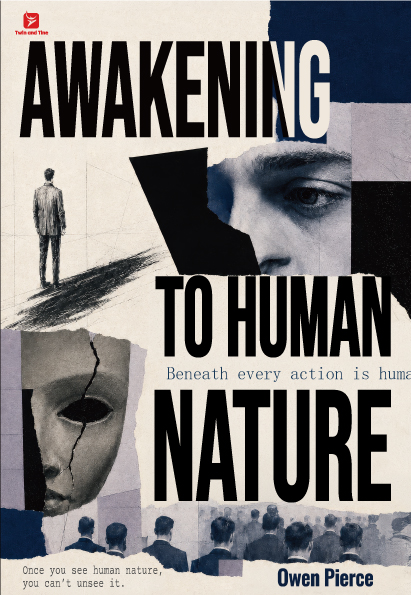
Awakening to Human Nature by Owen Pierce
Why do people act generously and selfishly at the same time?
The Elephant in the Brain shows you the hidden self-interest. Pierce takes you further. He explains why people are often unaware of their own motives. They genuinely believe they are being generous while serving themselves. The gap is not a lie. It is self-deception.
Pierce’s book breaks down the emotional and social patterns that drive behavior. Why people crave validation over truth. Why loyalty expires when needs change. Why kindness is sometimes a strategy, not a virtue. Why people reward flattery and punish honesty. It does not ask you to become cynical. It asks you to stop being naive about what people actually want.
What makes this book essential is the clarity. You stop taking behavior at face value. You start seeing the hidden logic behind why people do what they do. You stop being surprised when generosity turns out to have strings attached.
For anyone who wants to see people as they are—not as they present themselves to be.
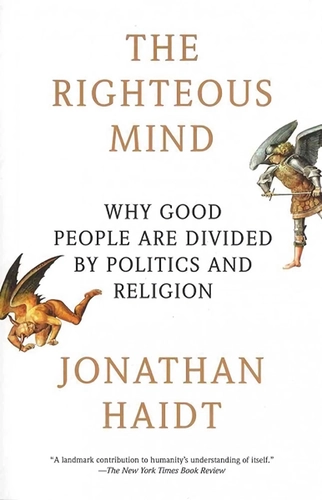
The Righteous Mind by Jonathan Haidt
Why do people defend their self-interest as moral principle?
Haidt, a social psychologist, spent years studying how people make moral judgments. His conclusion is uncomfortable: people do not reason their way to moral positions. They feel their way there, and then use logic to justify what they already believe.
This matters for understanding hidden selfishness because most people do not see their own self-interest. They see themselves as righteous. The executive who gives to charity sees themselves as generous, not as someone buying social status. The activist who fights for justice sees themselves as principled, not as someone seeking belonging.
Haidt’s book explains the six moral foundations that shape human behavior. Once you understand them, you stop being fooled by moral rhetoric. You see the self-interest underneath.
For anyone who wants to see the self-interest behind moral certainty.
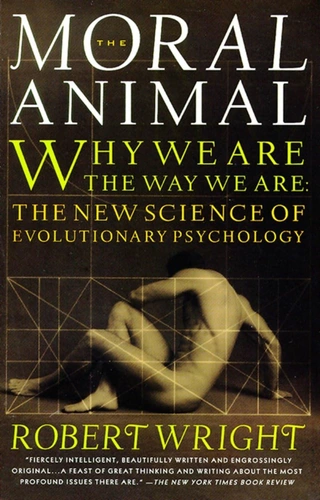
The Moral Animal by Robert Wright
Why is generosity often just another form of selfishness?
Wright, a science writer, applies evolutionary psychology to human behavior. His argument is simple: human beings are products of evolution, and evolution cares about one thing—reproductive success. Every behavior, including generosity, is shaped by this underlying drive.
The book covers topics like altruism, guilt, status, and love. Why people help others in ways that also help themselves. Why guilt exists to repair social bonds. Why status is a universal obsession. Why even romantic love has a selfish logic.
What makes this book essential is the evolutionary lens. You see generosity not as a moral choice but as a strategy. One that happens to work because it benefits the group and the individual.
For anyone who wants to understand generosity as a survival mechanism.
These three books each approach hidden selfishness from a different angle. Pierce explains the psychology of self-deception. Haidt exposes the moral justifications. Wright traces it back to evolution.
If you want to stop being fooled by generosity that is not what it seems, start with the one that matches where you are stuck. Need to understand the psychology? Start with Pierce. Need to see through moral arguments? Start with Haidt. Need the evolutionary big picture? Start with Wright.
You do not have to become cynical. You just have to stop pretending that everyone else is pure.
