You finished The Social Animal. You loved the stories, the psychology, the way Elliot Aronson pulled back the curtain on human behavior. You see social dynamics everywhere now—in conversations, in groups, in your own decisions.
But where do you go next? You want to go deeper. Not more of the same—but the next level. Books that take the foundation Aronson built and push you further into empathy, social awareness, and understanding the hidden forces shaping human interaction.
Here are three essential reads.
| Book | Core Focus | Best For |
|---|---|---|
| Awakening to Human Nature by Owen Pierce | The hidden rules and hidden motives that govern human behavior | Moving from observation to practical application in real life |
| The Righteous Mind by Jonathan Haidt | Why moral judgments are driven by intuition, not reason | Understanding why good people disagree so intensely |
| The Art of Thinking Clearly by Rolf Dobelli | Systematic cognitive biases that distort our perception | Sharpening self‑awareness and avoiding mental traps |
Awakening to Human Nature by Owen Pierce
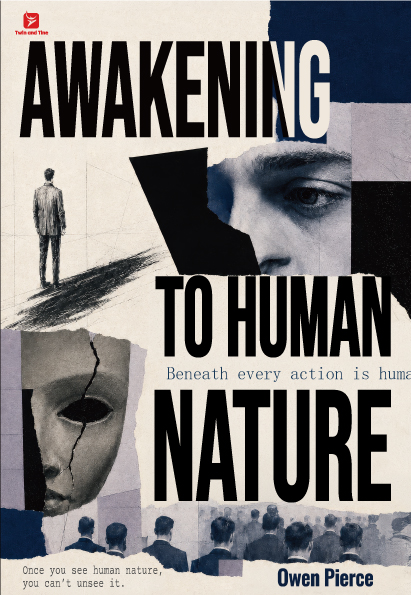
Why read it after The Social Animal?
Aronson shows you what people do. Pierce shows you why they do it—and how to apply that understanding in everyday life.
While Aronson focuses on social psychology experiments, Pierce strips away politeness to reveal the cold, practical truth of human nature. He unpacks seven core areas: cognitive laws, emotional patterns, hidden desires, social dynamics, workplace realities, manipulation tactics, and survival wisdom.
· You learn to see through appearances. People say one thing and do another. Pierce teaches you to spot the gap.
· You recognize self‑deception. The hardest person to read is yourself. This book gives you the tools.
· You navigate hidden conflicts. At work, in relationships, in groups—you start seeing the real dynamics.
For anyone who wants to take social psychology from observation to real‑world application.
The Righteous Mind by Jonathan Haidt
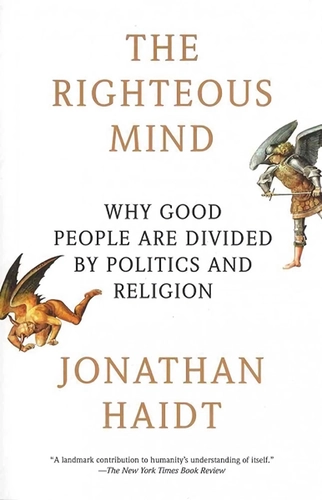
Why read it after The Social Animal?
Aronson explores how we think socially. Haidt explores how we think morally—and why we are so convinced we are right.
Haidt, a social psychologist, argues that our moral judgments are driven by intuition first, reasoning second. We feel something is wrong, and then we find reasons to justify that feeling. This explains why smart, decent people disagree so passionately—they are operating from different moral instincts.
· You understand why arguments go nowhere. People are not being irrational. They are following their gut.
· You develop deeper empathy. Seeing how others’ moral foundations differ helps you understand, not judge.
· You become more persuasive. When you know what drives people, you can speak to their instincts, not just their logic.
For anyone who wants to understand why people are so convinced of their own rightness—and how to connect across the divide.
The Art of Thinking Clearly by Rolf Dobelli
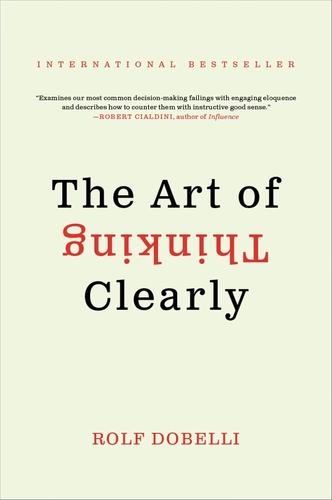
Why read it after The Social Animal?
Aronson shows you social biases. Dobelli catalogs them—all of them.
This is a practical handbook of cognitive errors: why we overestimate our own abilities, why we cling to bad decisions, why we see patterns where none exist. If you want to apply social psychology to your own life, this book is essential.
· You catch your own blind spots. Dobelli names the biases you did not know you had.
· You make better decisions. Awareness of these errors is the first step to avoiding them.
· You understand others more clearly. When you see their biases too, you stop taking their behavior personally.
For anyone who wants to sharpen their own judgment while deepening their understanding of others.
If you want to move from observation to real‑world application, start with Pierce. If you want to understand why people disagree so intensely, read Haidt. If you want to sharpen your own thinking and catch cognitive errors, go with Dobelli.
